
Reviewed · SURF LESSONS
Surfing Course – Beginner with Hotel Pick Up
Learning to surf in Bali can feel like a grab bag of random logistics, crowded beaches, and vague coaching. What makes this course worth a look is how tightly it’s organized for first-timers, with hotel pickup and a max group size of five. One thing to keep in mind: you may still want to check what extras, like photos, cost on the day, because not everyone feels the add-ons match the base price.
I like that you are not expected to guess what to wear or how to prep. You get the basics sorted for you, including a Rip Curl rash guard and leggings, plus the surfing kit that helps you focus on learning rather than borrowing gear. The lesson is also physically light-to-moderate, but you should be ready for short periods of paddling and getting up and down.
The coaching style is a big part of why people return. When I see names like Budi, Rey, and Namang attached to the experience, the common thread is patient instruction and feeling safe enough to try again. Still, because the schedule depends on conditions and your start time, you should plan for a day where things can shift slightly, even with a set structure.
Key details that matter before you go
- Max five per class means you get closer coaching and less waiting around
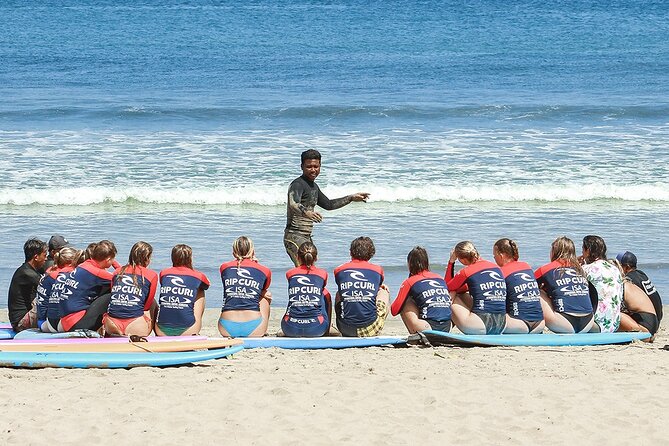
- About 15 minutes of theory on sand before you’re in the water
- All-inclusive surf gear plus helmet and reef booties when reef trips are needed
- Hotel pickup within set areas around Badung and Denpasar, then transfer back
- Fresh showers, soap, shampoo, towel and private changing rooms
- Small-group pacing designed for beginners, not just people who already surf
Where this beginner surf course fits in Kuta and South Bali
This is a beginner-focused surfing course run by Rip Curl School of Surf, with the activity based around Kuta and the wider South Bali area. The big selling point for me is the combo of pickup and small groups, because it turns a sometimes-chaotic “let’s go surf” plan into something you can treat like a real appointment.
In practice, you are usually picked up from hotels across a defined set of neighborhoods, including Legian, Seminyak, Oberoi, Canggu, Kuta, Jimbaran, Uluwatu, Nusa Dua, and Sanur. That matters because traffic and distance can eat half your energy, especially if you’re brand new and nervous. Coming back after the lesson is also built in, so you do not end up searching for a ride while sandy and tired.
The only realistic caution: this is not a private, flexible tutoring session. With classes and time slots running, the goal is to get you through a proven beginner flow in about two hours, not to tailor everything to your exact learning pace.
More Surf Lessons in Kuta
- HOT PROMO. Beginner Surf Lessons in Bali
★ 5.0 · 193 reviews - Surf Lesson with a Personal Instructor at Kuta Beach
★ 4.5 · 192 reviews - The best surf lessons in Kuta
★ 5.0 · 144 reviews
The lesson flow: theory on land, then your first pushes into waves
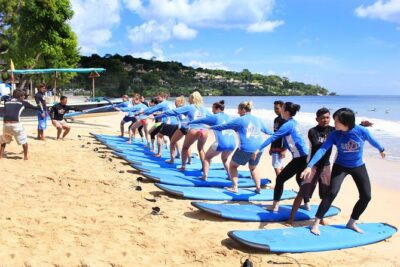
Plan for roughly two hours total. You start with a short theory and dry-land segment, about 15 minutes, then move to the water for the hands-on part. The classroom portion focuses on the basics of how to control your board on sand, including drills that help you practice the motion of getting on and getting stable.
That land practice is more important than it sounds. If you’ve never surfed before, your brain needs a quick “this is what my feet are supposed to do” moment before you’re asked to paddle, pop up, and balance. It also helps you avoid the common beginner pattern of rushing straight into the sea without a plan.
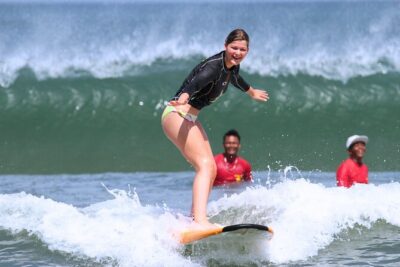
After that, you head into the water with your instructor. Your coach pushes you into your first waves, which is a beginner-friendly approach because you’re not stuck trying to launch yourself while you’re still learning what the board even feels like. You’ll spend time repeating the same core skills, and because the class stays small, the instructor can adjust cues without losing the whole group.
One more practical note: the course includes sealed drinking water and fruit at the end. That small detail makes a difference after you’re done, especially if you sweat a lot in Bali sun.
What you get included: gear, rash guard, safety items, and comfort upgrades
For $28, the value comes from the “you don’t have to think” checklist. You get surfing equipment like the surfboard and leg rope, plus a surf helmet. There’s also reef booties during reef trips, which is a smart inclusion if the route involves rocky or shallow areas.
Then there’s the clothing layer. You’ll wear a Rip Curl School of Surf rash guard and leggings. That’s useful for two reasons. First, it helps with sun protection and skin comfort when you’re paddling. Second, it keeps you from worrying about whether your swimsuit will get sand stuck in it for the next two hours.
Comfort items are also included, and these are the things that separate a good surf day from a miserable one. You get a towel, private changing rooms, and lockers, plus a shower setup with fresh water, soap, and shampoo. I also like the mention of imported zinc. That tells me they’re thinking about sun care, not just equipment.
And yes, there’s insurance. The course includes one million USD liability insurance, plus the activity provides a study book for the lesson, with downloadable soft copies from the website. That turns your time on the board into something you can actually review afterward, even if you forget the finer points once your muscles are sore.
The small-group 5:1 setup: how you get coached instead of watched
The ratio is listed as regular course 5:1 student to instructor/assistant, and the class size is kept very tight, maximum five people. For beginners, that’s the difference between learning and surviving.
With a larger group, instructors tend to give general tips and then watch from the side while you try to figure out balance and timing. With fewer people, the instructor can spot what’s going wrong in real time, like feet placement, how you rotate when you pop up, or whether you’re paddling in a way that keeps the board from turning.
In the real world, you also benefit from momentum. When you are learning, you want short attempts with quick correction, not long waits. The small-group structure supports that, and it helps explain why people emphasize patient coaching. Even without you speaking the same language perfectly, good instructors use simple body cues, repeated drills, and a calm pace.
The minor consideration is that beginner lessons still depend on water and wave conditions. So even with coaching, not every moment will feel like a perfect wave ride. That’s normal in surf learning, and the small-group size is what helps you bounce back quickly.
Something different for the next Kuta day:
- Nusa Penida day trip: boat, 4 snorkeling, Manta rays & Land tour
★ 5.0 · 2,033 reviews - Bali Nusa Penida West Private All-Inclusive Tour
★ 5.0 · 1,277 reviews - Mount Batur Sunrise Trekking Private Tour with Breakfast and Hotel Transfer
★ 5.0 · 885 reviews - Individual Bali Day Trip with Private Driver and Free WiFi
★ 5.0 · 755 reviews
Pickup, meeting point, and timing, with start times you can plan around
Pickup is offered for hotels in a specific coverage area. The neighborhoods listed cover most of what people typically base themselves on in South Bali, including Kuta, Legian, Seminyak, Canggu, and Nusa Dua, plus Jimbaran and Uluwatu.
A key detail: you can choose from four convenient start times. The schedule is confirmed one day in advance, and one start time listed is 8:00 am. If you’re trying to avoid midday heat, an earlier slot can make the lesson feel easier and less exhausting.
For the meeting point, the start location is Rip Curl School of Surf at the Prama Sanur Beach area, with the activity ending back at the meeting point. In real terms, that means your experience is planned to loop back to the school site, not to drop you at a random beach exit.
One more practical point: bring only what the lesson asks for. You need your boardshort or bikini since swimwear is not included, and everything else is handled for you. A mobile ticket is used as well.
The water part: what it feels like and what to expect as a total beginner
Your first moments in the water can be half excitement, half confusion. The course is set up to reduce that confusion with a clear step-by-step progression. You start with sand drills, then you move into the sea with a coach. The instructor pushes you into your first waves, which helps you focus on riding rather than launching.
If reef trips are part of the route that day, you’ll use reef booties. That matters because your feet are part of your balance system. If you’re uncomfortable or worried about stepping where you shouldn’t, your attention shifts away from learning.
A few other included touches also help you feel more at ease. You’ll have a helmet, sealed water, and a structured end-of-lesson routine with showers and fruit. One standout detail from past experiences is how smooth the change-and-wash setup feels after you’re done, with private changing rooms and lockers that reduce awkward sand shuffle.
If you’re concerned about physical effort, the course asks for moderate physical fitness. That’s a polite way of saying you should be comfortable doing short bursts of paddling and getting up and down without needing a long recovery break between attempts.
Price and value: why $28 can be a bargain or a mismatch
At $28 for about two hours, this course can feel like a steal, mainly because so many items are bundled. You get hotel pickup and return within the coverage zone, all-inclusive surf equipment, safety gear (helmet and reef booties when relevant), and structured coaching in small groups. Add in shower facilities, towel, bottled water, fruit, and liability insurance, and you’re paying for a full setup, not just “someone points you at the ocean.”
Where the value can get tricky is with extras. One surf school experience that left a bad taste for a reviewer involved photo costs, where a portion of what was paid felt tied to pictures. That doesn’t mean photos are bad or overpriced across the board, but it does mean you should ask one simple question before you purchase: what is included in the lesson price, and what is optional?
Another value check: confirm you’re booked in the beginner group format you want. There was at least one case where the lesson type did not match expectations, leading to a less cost-friendly outcome and less satisfying coaching logistics. That’s rare, but it’s worth a quick confirmation call or message before you show up, especially if you care about the exact duration.
Coaches and facilities: what tends to earn the best reactions
The strongest feedback patterns are about instructors and the “I feel safe” factor. Names like Budi come up for patient coaching and calming presence, especially for first-timers facing waves that feel bigger than expected. Rey and Namang are also mentioned in positive light for being helpful and fun, which matters because learning to surf is easier when you’re not tense.
Communication can also set the tone. One experience described WhatsApp contact before the lesson, plus a driver who arrived on time and was friendly. That’s practical and underrated. When you’re heading to a beach you’ve never visited, timing and clarity reduce stress.
On the facilities side, people like the showers and changing rooms. Getting to rinse off with soap and shampoo is a big deal after you’ve paddled through saltwater and sand. Fresh fruit at the end, including watermelon in one noted case, is a nice finishing touch that makes the whole experience feel complete rather than cut short.
Small frustrations to expect, and how to handle them like a pro
Even strong surf schools can stumble on the small stuff. Here are the main considerations that come directly from the realities of a beginner operation.
First, photos may be a deciding factor. If picture packages are sold separately, ask upfront what the cost is and whether the lesson includes anything automatically. If you care about photos, you’ll be happier if you plan for it rather than react later.
Second, double-check lesson type. If you booked a group beginner course, make sure you are not accidentally scheduled for a private lesson. Private sessions can be great, but they often cost more and can change the overall value for a budget traveler.
Third, language can matter. One negative experience mentioned an instructor whose English was far from good. That does not mean every coach has the same communication style, and many instructors likely handle English well, but if you need clear instruction, let the booking team know you’re a total beginner and ask about language comfort. You can also look for instructors with a reputation for calm explanations.
Finally, time depends on weather. The activity requires good weather. If surf conditions are not safe or appropriate, the schedule may change or you may be offered a different date, or a refund, depending on how it’s handled.
Should you book this beginner surf course in Kuta?
I’d book this if you want a structured two-hour beginner lesson with hotel pickup, all-inclusive gear, and a small group that keeps coaching personal. It’s also a good fit if you appreciate the “small details” that make a beginner day easier, like helmet safety, showers, lockers, and water and fruit.
I’d pause or ask a few questions first if photos are important to you or if you are very price-sensitive and comparing across schools. Also, confirm your lesson format when you book, so you know you’re getting the group course you paid for.
If you want a calm, beginner-friendly way to get your feet wet, this course has the ingredients: tight group size, coached attempts from your first waves, and a setup that respects your time and comfort. For many first-timers in Kuta, that’s exactly what makes surfing feel doable.
FAQ
How long is the beginner surfing course?
It’s approximately 2 hours.
What group size should I expect?
The regular course keeps a maximum of five people per class, with a 5:1 student to instructor/assistant ratio.
Do I get hotel pickup in Kuta and nearby areas?
Pickup and transfer are included for hotels in the Legian, Seminyak, Oberoi, Canggu, Kuta, Jimbaran, Uluwatu, Nusa Dua, and Sanur areas.
What time does the class start?
The meeting point lists a start time of 8:00 am, and you can choose from four convenient start times.
Is surfing gear included?
Yes. You get a surfboard and leg rope, plus a surf helmet, and reef booties during reef trips. You also receive a Rip Curl School of Surf rash guard and leggings.
Do I need to bring my own swimsuit?
Yes. Swimwear (bikini or boardshort) is not included. You bring that, and the rest of the course items are provided.
Is food included?
No food is included.
What facilities are provided after the lesson?
You have fresh water shower facilities with soap and shampoo, plus a towel, private changing rooms, and lockers.
Can I cancel if weather is bad or plans change?
You can cancel for a full refund if you cancel at least 24 hours before the experience starts. The activity requires good weather, and if it’s canceled due to poor weather, you’ll be offered a different date or a full refund.
Newest reviews out of Kuta
- Private Beginner 1 on 1 Surf Lesson at Kuta Beach★ 5.0 · 39 reviews
- Kuta Bali Jewelry Making Class, With 7 grams of Pure Silver★ 5.0 · 40 reviews
- Waterbom Bali Tickets with Private Transfers★ 4.5 · 39 reviews
- Snorkeling In Nusa Penida Island With Manta Ray From Bali★ 4.5 · 40 reviews
- 5 Secret Gili Boat Trip & Snorkeling in Southwest Of Lombok★ 4.8 · 42 reviews
- Bali: Watersport Tanjung Benoa Adventure Exclusive★ 4.7 · 42 reviews
- Private Bali Driver with Car – Flexible Full Day Tour★ 5.0 · 44 reviews
- Bali: Uluwatu Kecak Dance Show, Bali Temple, and Lobster Dinner★ 3.5 · 44 reviews
Surf Lessons, compared.

Legian Beach, Bali: Beginner or Intermediate Surf Lessons
Read our review →
Beginner & Intermediate Surf Lesson with Equipment
Read our review →

2-Hour Surf Class with a Professional Instructor
Read our review →
Surf Lesson with a Personal Instructor at Kuta Beach
Read our review →Browse the lists this tour appears in