
Reviewed · NUSA LEMBONGAN
Advanced Open Water Course – Advanced Certification in Lembongan (next to Bali)
This SSI Advanced Open Water course in Nusa Lembongan is interesting because it turns your basic certification into more real-world underwater skills fast. I like that the training is less theory-heavy than Open Water, so you spend more time doing the work with an instructor.
A second reason I’m a fan of this setup is the small group size (max 5), which usually means more focused coaching when you need it. In past sessions, instructors like Valentin and Kaka are repeatedly praised for making people feel safe and genuinely cared for.
One drawback to plan for: you must already be Open Water certified, and the schedule depends on good weather for the sites around Lembongan.
Key things that make this course worth your time
- SSI Advanced Open Water certification with training to 30 meters / 100 feet
- Five in-water skills sessions with an instructor, including deeper profile work and navigation
- Compass navigation practice using kick cycles, visual landmarks, and time
- Pick-your-interest specialties, like photography, buoyancy control, fish identification, or exploring wrecks
- Comfort-focused dive center facilities like Wi-Fi, lockers, toilet, shower, and a change room
- Small-group format with a maximum of 5 travelers, plus all equipment included
From Open Water to Advanced: why Nusa Lembongan is a smart step
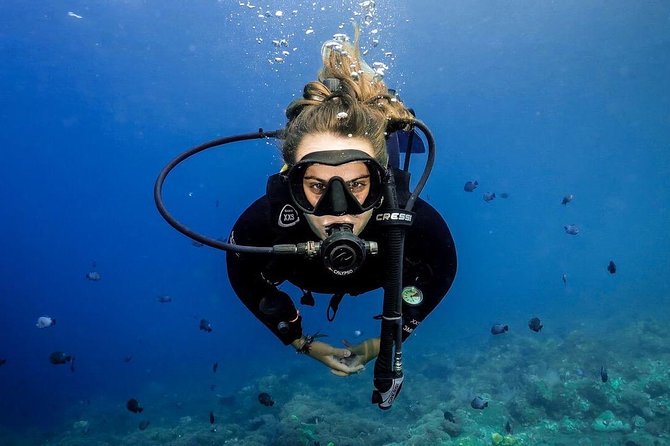
If you already have Open Water certification, the Advanced Open Water course is where you stop feeling like you’re following the textbook. You start learning how to think, plan, and handle more conditions with calmer confidence. That matters because the “newness” fades quickly once you do a few trips, and then you need better tools.
Lembongan is a practical choice because you can do this as a tight, focused 2-day package next to Bali. You also get a comfortable base with lockers, showers, toilets, and even Wi-Fi, so you are not stuck in a rough, bare-bones setup between training sessions.
The course is built around SSI’s Mellower approach, which is basically the opposite of the classroom-heavy vibe you might fear. Instead of hours of lecture, you get training that pushes skills forward, then you apply them underwater.
More of Lembongan:
- From Bali: 3 Snorkeling Spots Tour to Lembongan and Penida
★ 4.4 · 2,083 reviews - From Lembongan: Nusa Penida Snorkeling Day Trip
★ 4.6 · 1,126 reviews - Open Water Course in Nusa Lembongan – Get Certified on remote island (next Bali)
★ 5.0 · 864 reviews
The course structure: 2 days, 5 skills sessions, 1 instructor guiding you
This is a short course by design. In about 2 days, you complete five training sessions with a certified instructor, and you walk away certified as an Advanced Open Water diver.
You can start this right after your Open Water course, which is good news if you like momentum. You do not need to wait months. The key requirement is simply that you already hold Open Water certification, so you are not learning basic gear and buoyancy fundamentals from scratch.
Group size is capped at 5, so the instructor can actually watch what you do. That’s not a minor detail. Good instruction is mostly about noticing what you personally need to adjust, then giving cues you can apply immediately. In the feedback for this operator, people repeatedly highlight safety and hands-on teaching, with instructors including Valentin, Kaka, Hugo, Silvère, and Sara.
What you actually learn: depth planning, navigation, and your chosen specialty
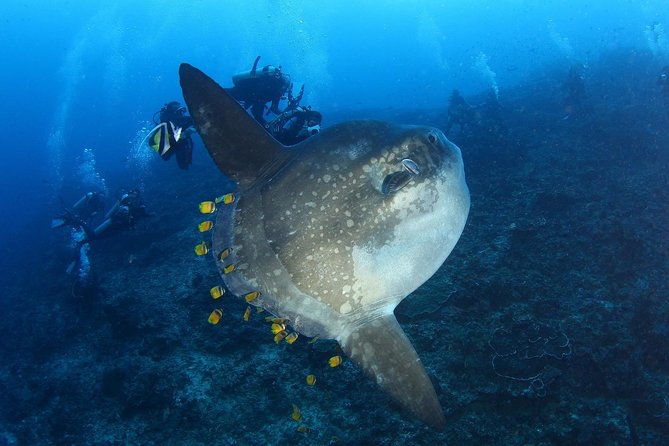
The biggest shift in Advanced Open Water is that you practice skills that help you handle different situations without panic. You also start thinking more like a diver who can plan ahead, not just react.
The deeper training profile (up to about 30 meters)
One of your training sessions is designed to take you close to 100 feet / 30 meters. This part is not just about going lower. It also focuses on how to plan the profile and deal with the body’s responses to deeper conditions. Even if you feel fit on paper, deeper work rewards calm pacing and good situational awareness.
If you are the type who wants a clear mental checklist, this is a strong match. You will learn how planning changes with depth and how challenges can feel different when you go deeper than Open Water.
Something different for the next Nusa Lembongan day:
- 2 Days Discover Scuba Diving in Nusa Lembongan – Scuba Initiation
★ 5.0 · 506 reviews - From Lembongan: Manta Point Snorkeling & West Penida Tour
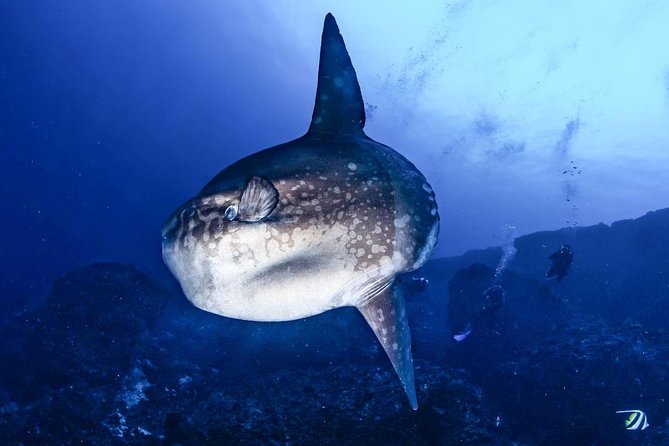
★ 4.6 · 225 reviews - 5 Fun Dives in Nusa Lembongan (for certified divers) – Swim with a Mola Mola
★ 5.0 · 205 reviews - From Lembongan: Kayak/Paddleboard/Boat Mangrove Tour
★ 4.4 · 200 reviews
Underwater navigation with a compass, kick cycles, landmarks, and time
Another core session is underwater navigation. You refine compass skills, but the method matters. The training explicitly mentions navigation using kick cycles, visual landmarks, and time.
That trio is powerful because it prevents over-reliance on one thing. Compass alone can feel abstract underwater. Landmarks alone can disappear. Time gives you a third anchor. Together, you start building navigation that works even when visibility or conditions are not perfect.
Three specialty skill areas based on your interests
The remaining three sessions are specialist choices from a list of adventure options. The course information names areas like photography, buoyancy control, fish identification, and exploring wrecks.
This is where you can shape the course toward what you actually want to do next. If you want to take better underwater photos, you can focus on skills that help you move smoothly. If you want to enjoy marine life more, fish identification guidance is a great fit. If you are curious about wrecks, you get to learn how that kind of environment changes your approach.
Crystal Bay, Manta Point, Mangrove Point, Toyapakeh, and Jungut Batu Beach: how the route helps
Your training runs across five stops, so you are not stuck in one setting the entire time. That variety helps you learn how skills transfer across different underwater environments and conditions.
Here’s how to think about each stop in terms of course value, plus what to keep in mind:
Crystal Bay
Crystal Bay is the first stop, which usually means it is where the day’s flow starts and where you can settle into the routine. It’s also a good place to sharpen basics like calm breathing, trim, and buoyancy control while you focus on what your instructor is asking.
The practical consideration: if conditions are a bit rough on the surface, your mental game matters. Start the course calm, because the whole point is better control.
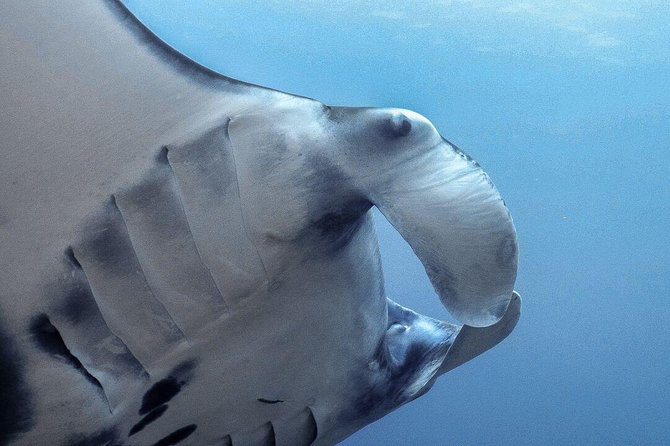
Manta Point
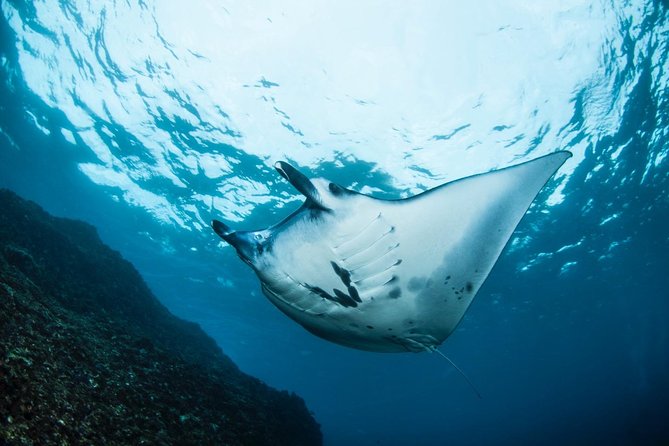
You go to Manta Point as a dedicated stop. The name is a big hint about the type of wildlife people hope to see here, and it gives your course time a more exciting backdrop than a purely training-only outing.
The tradeoff with any wildlife-focused stop is that sightings are never guaranteed. The best mindset is to treat it as a bonus, not the only reason to be there.
Mangrove Point at Nusa Lembongan
Mangrove Point brings a different feel compared to open-water environments. Mangroves often mean more sheltered conditions, which can be a comfort factor during training, especially when you are practicing navigation skills and maintaining steady control.
The consideration: mangrove areas can look very different, and you might have more visual “noise” from branches and surroundings. That makes navigation practice more realistic, because you learn to use landmarks and time, not just vibes.
Toyapakeh
Toyapakeh is another stop on the training route. This is where you keep progressing your skills without letting the training get repetitive.
Practical tip for yourself: once you learn a skill cue from your instructor, try using it immediately at the next stop. That short feedback loop is one of the best ways to lock it in.
Jungut Batu Beach
Jungut Batu Beach is your final stop. Ending in a beach area can help with the transition out of the water and the wrap-up part of the day.
The consideration: after multiple sessions, fatigue can sneak in. Keep your focus on the basics. Good buoyancy and calm breathing often matter more in your last session than in your first.
Equipment, comfort, and why the small group matters
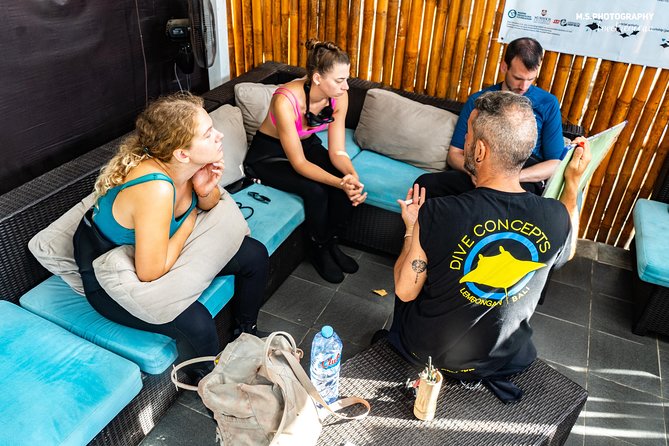
This package includes the key rental gear: mask, snorkel, fins, buoyancy control jacket, regulator, wetsuit, and a weight belt, plus other instruments used during training. That means you can travel light. You are not trying to rent or haul a full setup across islands.
On top of that, the center has facilities that make a two-day course easier to live through: Wi-Fi, lockers, toilets, showers, and a change room. There is also a restaurant on-site where meals are an extra cost, but at least you are not hunting for food right after getting wet.
The small group size is where it turns from “a tour” into “training.” When there are only up to 5 people, instructors can watch more closely and correct in time. Based on the repeated compliments in the feedback, the standout theme is safety plus patience, with multiple instructors named for being warm, professional, and detail-oriented.
Price and value: what $431.28 really covers
The price is $431.28 per person for an approximately 2-day course. At this level, you are paying for four main things:
- SSI certification training, not just a recreational experience
- An instructor who plans and supervises your skills and progress
- Five training sessions across multiple sites
- Full equipment and support gear
What’s not included is also clear: digital souvenir photos and videos cost extra, and accommodation is not included (though dormitory and bungalows are available at the center). That matters for budgeting. If you need lodging, build that cost into your trip, or choose a nearby base and commute only if you prefer that setup.
When a course includes gear and instructor time upfront, it usually saves you from surprise add-ons. You still control your personal extras, like photos or meals at the restaurant, but the core training package stays predictable.
Weather, scheduling, and staying sane on a two-day island plan
This course requires good weather. If conditions are poor, the operator offers a different date or a full refund. That’s the realistic island-diving reality: water conditions and sea conditions decide whether training can happen safely.
Because your total time on the water is only 2 days, weather risk is worth respecting. If your trip schedule is tight, plan buffer time around the course date. You will enjoy it more if you are not stressing about missing another flight the next day.
Also note the confirmation timing: you should receive confirmation within 48 hours of booking, subject to availability. That means you can usually plan, but you still should not lock in a nonrefundable schedule immediately next door.
Who this course suits, and who should think twice
This Advanced Open Water course is a great fit if you:
- Already hold Open Water certification and want to progress quickly
- Want more practical underwater skills, not just classroom learning
- Like structured coaching, where an instructor watches and corrects your technique
- Are curious about specialty interests, from photography to fish identification to wreck exploration
You might think twice if:
- You are not comfortable with deeper conditions, even with training and supervision
- You have health limits that make moderate physical fitness unrealistic (the course lists moderate physical fitness level)
- You are traveling with a schedule so tight that weather changes would cause major stress
Good news: service animals are allowed, so if that is relevant to you, this option can work.
Should you book Advanced Open Water in Lembongan?
I’d book it if you want a focused upgrade with real instruction and a comfortable setup. The strongest reasons are practical: five supervised training sessions, up to 30 meters, compass navigation skill-building, and the chance to choose specialty work that matches what you actually want underwater.
I’d hold off if you are unsure about deeper work or you cannot tolerate weather-driven schedule changes. On a two-day plan, flexibility is not optional.
If you do book, do one thing that makes the course better right away: show up ready to practice. Keep your body calm, follow your instructor’s cues, and treat each session as a chance to improve one small part of your control. That is how people get the most from the training, and it is exactly what the named instructors like Valentin, Kaka, Hugo, Silvère, and Sara seem to do well, based on the consistent feedback.
FAQ
Do I need Open Water certification before this course?
Yes. You need to be Open Water certified first to take this Advanced Open Water course.
What certification depth does the course train me for?
The course qualifies you to dive to depths up to 100 feet (30 meters), with SSI.
How many training sessions are included?
You complete five different training sessions as part of the Advanced Open Water course.
Is equipment included?
Yes. The package includes masks, snorkel, fins, buoyancy control jacket, regulator, other instruments, wetsuit, and a weight belt.
Do I choose specialties during the course?
Yes. You plan your learning path with your instructor by choosing from a long list of adventure specialty areas of interest.
What center facilities are available?
The dive center facilities include Wi-Fi, toilet, shower, locker, and change room.
Is accommodation included?
No. Accommodation is not included, but dormitory and bungalows are available at the dive center.
What happens if weather is bad?
This experience requires good weather. If it is canceled due to poor weather, you will be offered a different date or a full refund. Cancellation is free up to 24 hours in advance for a full refund.
Newest reviews out of Nusa Lembongan
- From Bali: Lembongan & Mangrove Buggy Tour with Buffet Lunch★ 4.6 · 40 reviews
- One-way Ticket Fast Boat from Sanur Bali or Nusa Lembongan★ 5.0 · 47 reviews
- Lembongan Electric Bike tour★ 5.0 · 56 reviews
- Nusa Lembongan Highlights Day Trip All-Inclusive★ 5.0 · 65 reviews
- Open Water + Advanced Course – Premium Certifications Package in Nusa Lembongan★ 5.0 · 66 reviews
- Nusa Lembongan Island: Snorkeling & Mangrove Forest Day Tour★ 5.0 · 97 reviews
- 7 Fun Dives in Nusa Lembongan (for certified divers) – Premium Value Package★ 5.0 · 118 reviews
- From Bali: 2-Day Nusa Penida and Lembongan Complete Tour★ 4.3 · 132 reviews
Nusa Lembongan, compared.
3 Snorkeling Spots Tour to Lembongan and Penida
Read our review →
From Lembongan: Nusa Penida Snorkeling Day Trip
Read our review →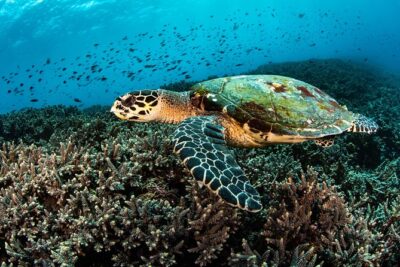
Open Water Course in Nusa Lembongan – Get Certified on remote island (next Bali)
Read our review →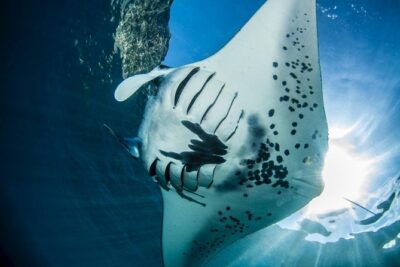
2 Days Discover Scuba Diving in Nusa Lembongan – Scuba Initiation
Read our review →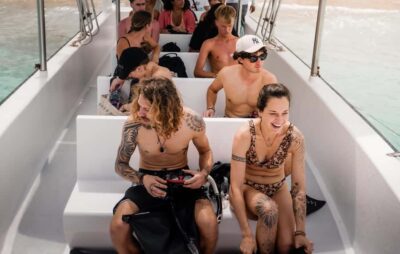
From Lembongan: Manta Point Snorkeling & West Penida Tour
Read our review →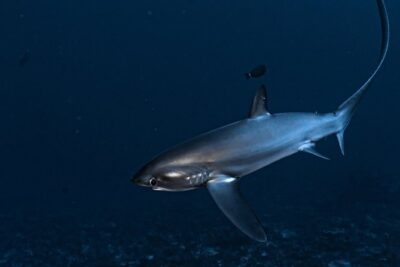
5 Fun Dives in Nusa Lembongan (for certified divers) – Swim with a Mola Mola
Read our review →
From Lembongan: Kayak/Paddleboard/Boat Mangrove Tour
Read our review →
Browse the lists this tour appears in