
Reviewed · BATIK CLASSES
Yogyakarta: Batik Painting Workshop
Batik is one of those crafts where you can see the magic happen step by step. One part is sketching, one part is drawing with heated wax, and then color really takes over. I like that the process is taught in a calm, hands-on way, with patient English-speaking instructors such as Suzy/Susi and steady support from artists like Harry. I also love that you leave with a finished piece you made yourself, so it is not just a photo stop.
The only drawback to watch for is mess and timing. You will be working with wax and dye, so wear something you do not mind getting stained, and choose a simpler design if you hate rushing, since complex patterns can take longer than the typical range.
Key things to know before you go
- Small groups (up to 10) mean real one-on-one help when your lines get wobbly
- Wax-resist technique: your design stays crisp because wax blocks dye
- You can start from a stencil or design your own, depending on how much planning you want
- English instruction keeps the steps clear, including troubleshooting when mistakes happen
- You take the batik home as your most memorable Yogya souvenir
- Plan around drying and wax removal, the two phases that take most of the patience
How Batik Painting Really Works, Step by Step
Batik is a wax-resist dyeing technique. The basic idea is simple, and that is why it is so satisfying: you cover parts of the cloth with wax, dye the fabric, then remove the wax later. Wherever the wax was, the dye cannot reach, so your pattern appears.
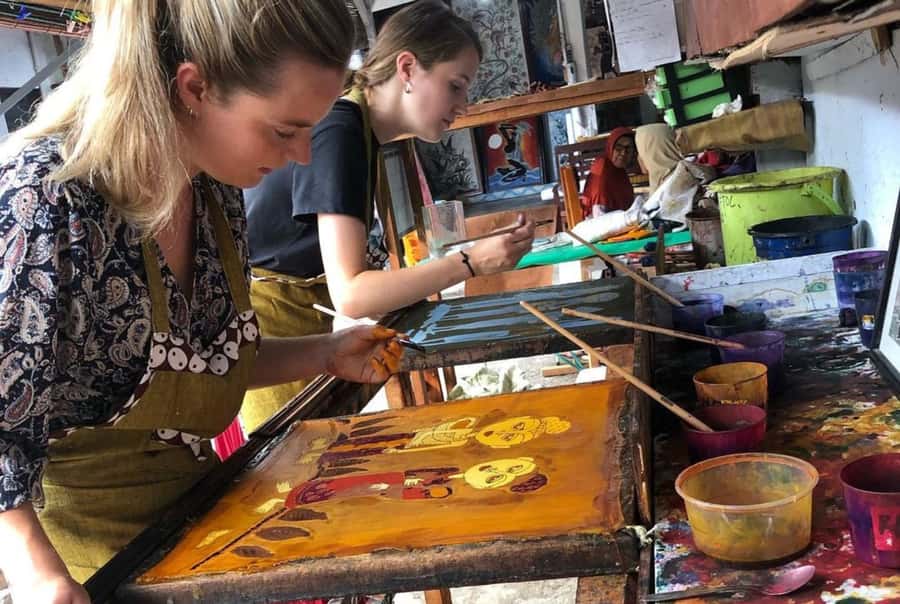
In this workshop, you follow a clear flow. First you sketch your design onto cotton cloth. Then you use the canting tool, fill it with heated special wax, and “draw” along your lines so the wax follows your pattern. After that you choose colors and paint in the dyed areas. Later comes the part people underestimate: drying and wax removal. Once the wax is melted off with hot water and you rub the cloth clean, you see the final result.
What makes this class feel worth your time is that it teaches both the craft and the logic behind it. You are not just copying a picture. You learn what changes the outcome, like line thickness, where wax is placed, and how color behaves after the fabric goes through the later baths.
More Batik Classes in Yogyakarta:
- Yogyakarta: 2-hour Batik Making Course with Souvenir
★ 4.9 · 304 reviews - Batik Master Class with Full Process
★ 5.0 · 103 reviews - Yogyakarta: Batik Making Class with Expert
★ 4.7 · 45 reviews
Pencil Planning: Your Design Starts Simple
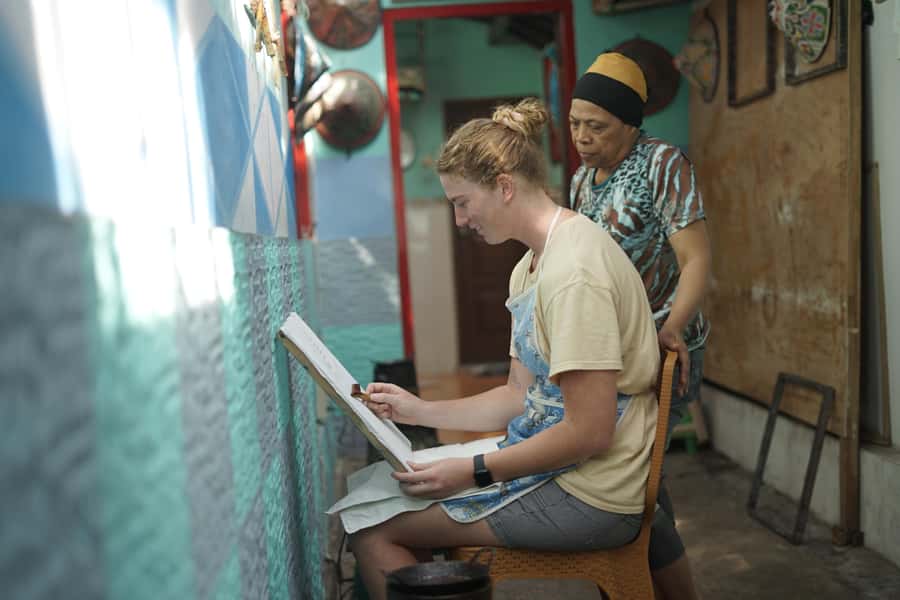
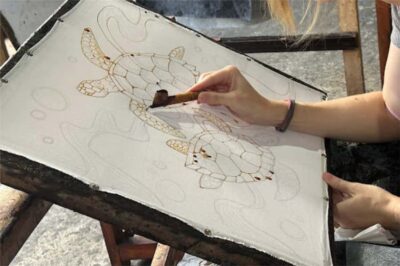
Your first job is drawing the pattern onto the cloth. You can be creative with what you choose, but you get structure too. The studio typically provides options such as pre drawn designs, and you can also do your own.
Here is the practical trick I recommend: if you want a complex design, sketch it on paper before you arrive. One person found that doing prep work ahead helped because the full process includes several stages. If you already have the pattern in your head, you spend your workshop time doing craft, not reinventing the plan.
Also, keep in mind that you are drawing on fabric, not sketch paper. Cotton cloth takes ink and pencil a bit differently, and the wax lines will be built on top of your penciled guidance. So aim for clear shapes and avoid tiny details that you know will be hard to reproduce once wax and dye are involved.
Wax Lines with the Canting: Where the Craft Gets Real
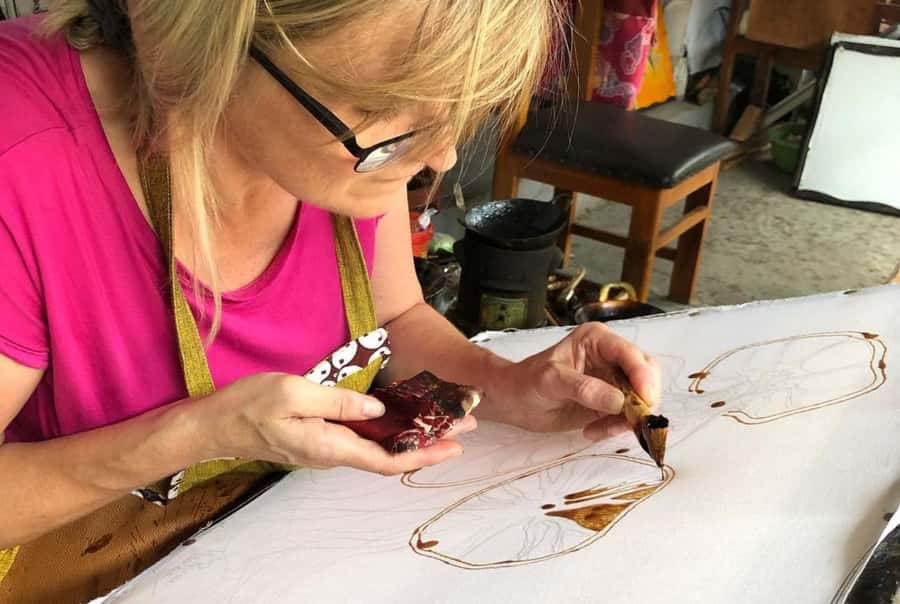
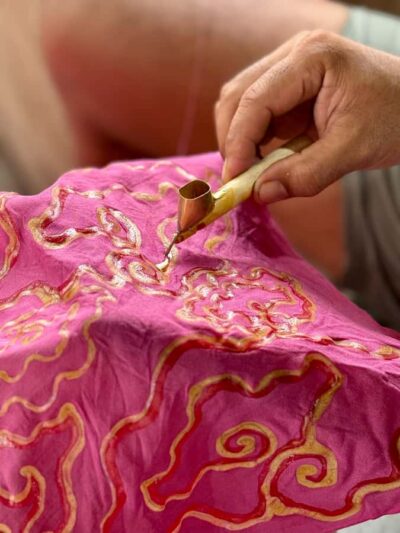
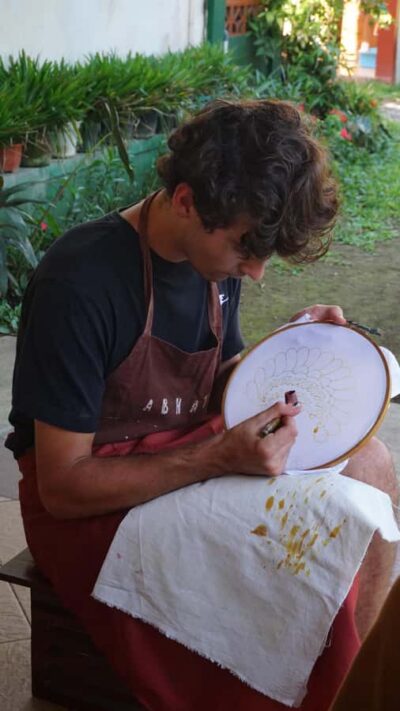
This is the signature moment. Wax is heated on a stove, and you fill the canting tool with the liquid wax. Then you trace the pattern you penciled earlier. The wax creates the boundaries of your design and functions like a dye shield.
If you are worried about making mistakes, do not. The workshop approach is built for beginners. If something goes wrong, wax can be removed, and you can redraw the wax line work. That is huge, because it turns your stress into problem solving instead of failure.
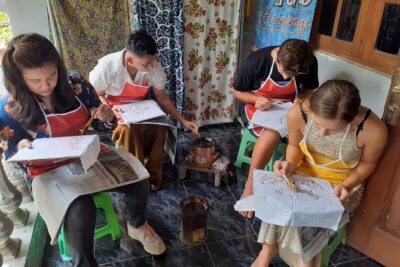
You should also know what to expect physically. Wax is hot, and the canting has its own rhythm. Your lines may start uneven, but you get feedback as you go. In a small group, instructors can step in quickly to adjust your control and keep you moving toward completion.
A small-but-important note: your clothing is at risk. Even with aprons provided, accidents can happen. Bring a shirt you do not mind staining, and consider long sleeves or darker colors if you have them.
Painting with Color: Choosing Dyes and Watching the Results
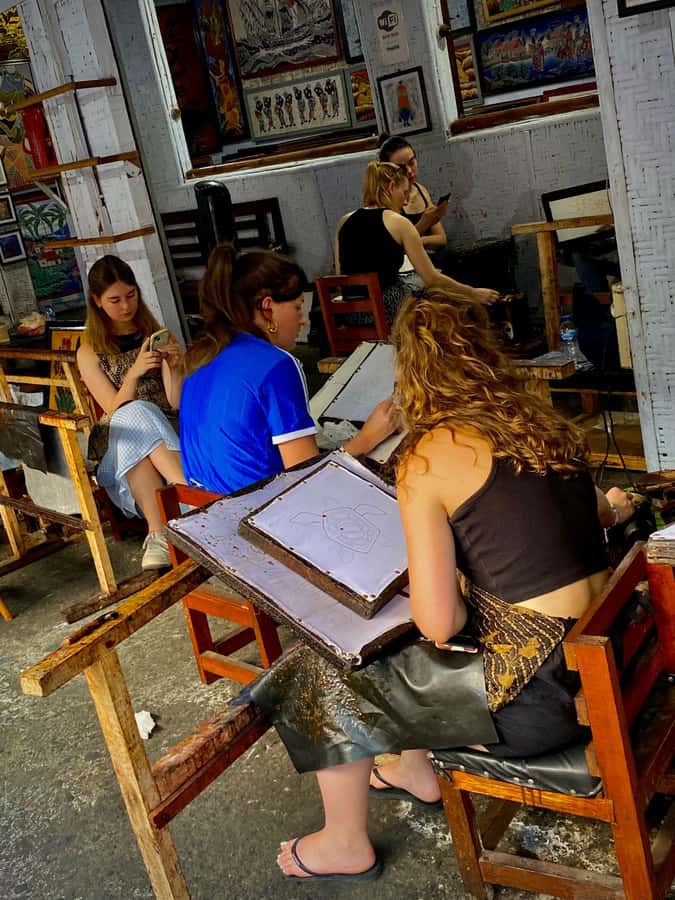
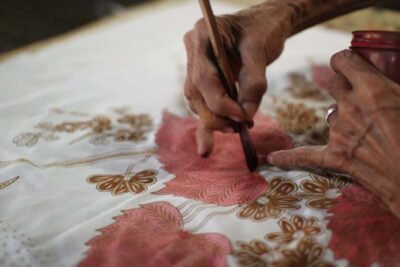
Once the wax work is done, you move to dye. You pick colors for your batik, dip your brush in the dye, and paint over the fabric until the entire cloth area is filled with color where you want it.
This phase feels almost too easy compared with wax work, until you realize how dye behaves. One helpful detail I took from the experience stories: color can look different after later steps such as acid bath and sunlight exposure. In other words, the shade you think you chose may not be the final shade until the cloth has been fully processed. The good news is that teachers can help you with mixing and selecting colors, and they can guide you toward results that make sense on batik cloth, not just on a palette.
In the 5-hour session, you can usually manage multiple colors without being rushed. If you are tempted to go wild with details and colors, just remember the workshop has several phases. Multiple colors are fun, but wax lines and dye application still take careful time.
Drying also matters. After you finish painting, you wait for the fabric to dry before moving forward. This drying time is part of why the workshop feels longer than you expect if you are used to quick tours. It is also why the process looks relaxed once you are in it. You are not constantly being rushed to the next task.
Something different for the next Yogyakarta day:
- Yogyakarta: Borobudur sunrise(guarantee climb up)& Prambanan
★ 4.9 · 1,545 reviews - Borobudur Sunrise from setumbu Hill , Merapi Volcano & Prambanan Full Day Tour
★ 5.0 · 1,030 reviews - Yogyakarta: Jomblang Cave and Pindul Cave all inclusive Trip
★ 4.9 · 854 reviews - Yogyakarta: Borobudur and Prambanan Temples Guided Tour
★ 4.9 · 828 reviews
Wax Removal and the Big Reveal with Boiling Water
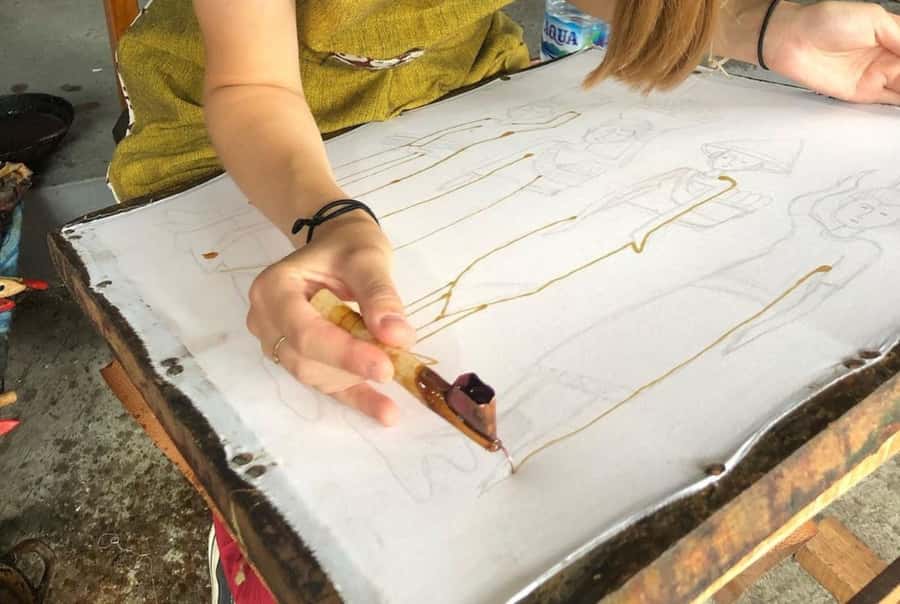
Now you get to see why batik looks so crisp. The workshop removes the wax using heated water. Water is boiled, then the cloth is put into the hot water while stirring and occasionally lifting it. The wax melts and comes off as you work through the removal process.
Then comes the finishing cleaning step. The cloth goes into water again, and you rub it with your hands so remaining wax comes off fully. After that, it is dried.
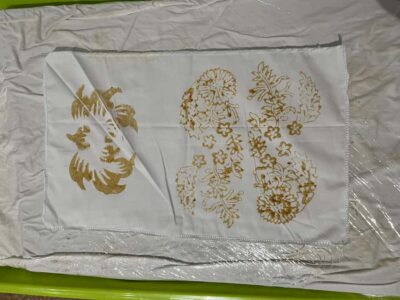
This final reveal is the payoff. Before the wax is removed, your design is visible mostly as wax boundaries and pencil guidance. After removal, your pattern appears through the dye resist effect, and suddenly your choices make sense. Thick wax lines, clean dye coverage, and good boundary control all show up in the finished look.
It is also where you learn patience. People new to batik sometimes want to rush, but the removal steps have to be thorough or the wax can leave residue. If you are working with instructors watching your timing, you will get through it with less guesswork.
Your Finished Souvenir: What You Take Home
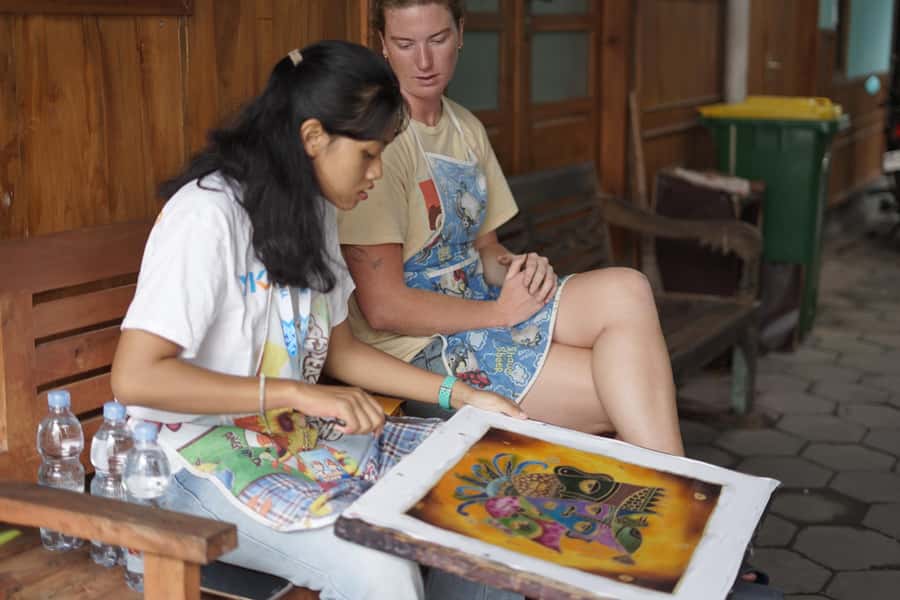
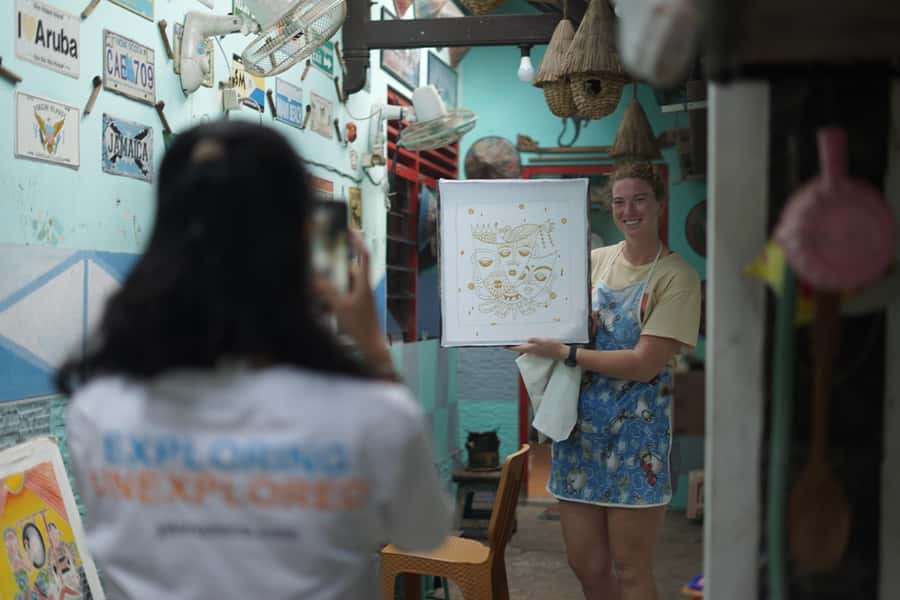
The biggest reason this workshop beats most craft stops is simple: you take your batik home. You finish with a cotton piece that reflects your design, your color choices, and your wax-line work.
In other words, it is not a souvenir that was made for you while you watched. You made it. That is the difference between buying a nice textile and coming home with a story you can actually explain.
If you like gifts with meaning, this is a strong choice. If you like practical keepsakes, it is also useful as a conversation piece that fits Yogya life, from casual home decor to framed cloth ideas. The studio experience is designed to help you end with something you are proud to carry around.
Price and Value for $26 in Yogyakarta
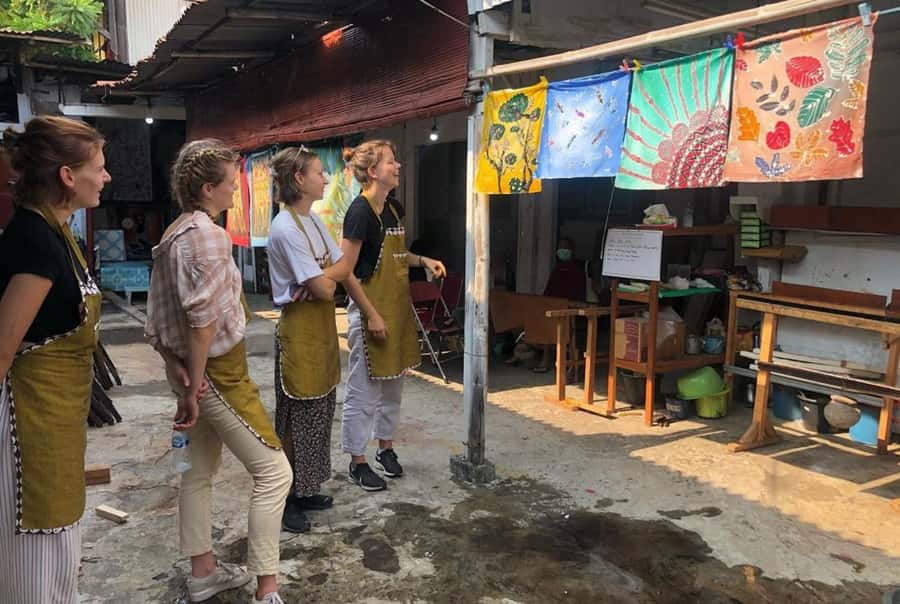
At $26 per person for about a 5-hour session, this workshop is solid value for a hands-on cultural activity. You get a trained instructor, and you are not expected to bring your own tools or materials. The included list covers the key items: cotton cloth, all tools and materials, and instructor support.
So what are you really paying for? You are paying for time with someone who knows batik, access to equipment, and the materials to make a real finished product. If you have ever priced handcrafted textiles in Indonesia, you know they are not usually cheap. Here, you are getting the skill part of the purchase plus the end result, and that is why the value feels fair.
Also, the small group size matters. Limited to 10 participants, you get more attention when you need it. In a larger class, mistakes are common and corrections are slower. In a smaller one, you have a better chance of finishing on time with your intended design.
If you care about doing one quality activity in Yogya that feels authentic and repeatable, this is one of the best cost-to-satisfaction ratios.
Logistics That Matter: Meeting Point, Timing, and What to Bring
This one has a specific rhythm, so plan around it. The venue is shared one day before your event date. That means you will not be guessing where to go on day one. Check your voucher and email before you head out.
Arrival timing also matters. There is a maximum arrival time of 10 AM. If you show up late, you risk losing part of the sequence, and batik has several connected steps, not a pick-and-choose menu.
Hotel pickup and drop-off are not included. The activity is designed around you getting yourself to the meeting point on your own schedule. At the same time, transport for the activity is rated highly based on past experience scores. So if you are coordinating local transit, expect it to be well managed, just do not assume hotel pickup is automatic.
Two more practical tips from the workshop setup:
- Use WhatsApp during booking for better communication.
- Wear clothes you can tolerate around dye and wax. An apron helps, but accidents are still possible.
Who This Workshop Is Best For (and Who Might Pass)
This batik class works for a wide range of people. It is great for couples, family groups, and friends because it gives you shared progress. You can talk while you draw, laugh when wax spills happen, and feel proud when your cloth finally dries and you see the reveal.
It is also a strong solo activity. You do not need artistic talent. The point is learning the technique and finishing a piece you made with help.
If you love crafts and want a cultural skill that you can explain later, you will enjoy the whole flow. If you hate mess and stains, you might find it annoying. If you are short on time, pick a design that is not too ambitious, because more complexity can stretch the process.
One more fit question: do you enjoy waiting through steps? Batik requires drying and wax removal. If you need nonstop movement, you might feel the workshop is slower than a typical sightseeing tour, but that is also what makes it relaxing for many people.
Should You Book This Yogyakarta Batik Workshop?
I think you should book it if you want a hands-on Yogya experience that ends with a real souvenir, not just a memory. For $26 and a 5-hour window, you get instructor guidance, all materials, a small group setting, and the chance to learn a wax-resist technique that is central to Indonesian craft.
I would hesitate only if you hate stains, struggle with patience, or want a super simple, low-effort activity. Wax and dye are part of the deal. Bring the right clothes, keep your design manageable, and you will be fine.
If your goal is authentic and creative, with a finish product you can take home, this is an easy yes.
FAQ
How long is the batik painting workshop?
The workshop is scheduled for 5 hours. The overall batik process can take about 3 to 5 hours depending on the complexity of your design.
How big is the group?
It is a small group limited to 10 participants.
Is the instructor English-speaking?
Yes, the instructor speaks English.
What is included in the price?
Cotton cloth, all tools and materials, and an instructor are included.
What do I take home?
You take home your finished batik creation.
Do I have to design my own pattern from scratch?
You can choose to draw your own design, and you can also select from prepared designs.
Is hotel pickup and drop-off included?
No, hotel pickup and drop-off are not included.
Where do I meet for the workshop?
The workshop venue is provided to you one day before your event date. Check your voucher before you go.
What is the latest time I should arrive?
The maximum arrival time is 10 AM.
What is the cancellation policy?
You can cancel up to 24 hours in advance for a full refund.
Newest reviews out of Yogyakarta
- Ramayana Ballet Performance In Prambanan Temple With Dinner★ 5.0 · 41 reviews
- Yogyakarta: Ramayana Ballet Performance with Optional Dinner★ 4.4 · 42 reviews
- Yogyakarta: Batik Making Class with Expert★ 4.7 · 45 reviews
- From Yogyakarta: Borobudur and Prambanan Temples in 1 Day★ 5.0 · 45 reviews
- Yogyakarta: Borobudur Sunset Climb Up Shared Guided Tour★ 4.7 · 46 reviews
- Prambanan Temple Afternoon Tour★ 4.9 · 48 reviews
- Jomblang Cave, Pindul Cave and Oyo River Tour★ 5.0 · 50 reviews
- Yogyakarta: The Jomblang Cave adventure all inclusive tour★ 4.9 · 50 reviews
Batik Classes, compared.
Browse the lists this tour appears in