
Reviewed · WORKSHOPS
Traditional Javanese Archery Class
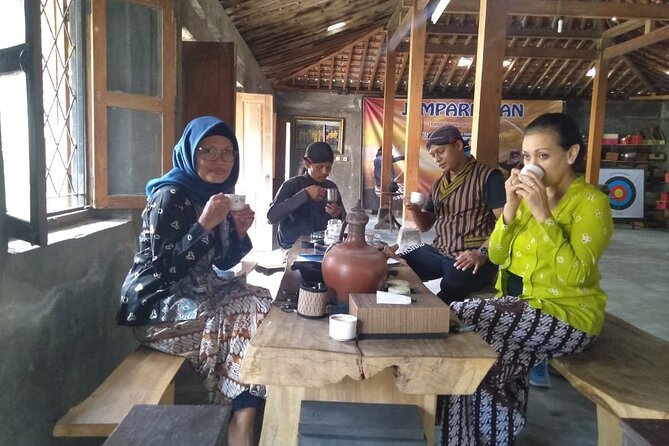
Traditional Javanese Archery Class is interesting because it pairs a famous temple area with a very specific local skill, jemparingan archery, where you shoot from a seated position. It feels less like a show and more like a real cultural practice session you can understand with your body.
I love the focus on technique, not just watching, because you learn how to use the traditional tools properly and why the sitting position matters. I also like that Mr. Agung, a professional archer and national athlete from Yogyakarta, leads the teaching and explains the Javanese philosophies behind the stance.
One possible drawback: you do need moderate physical fitness, and the class depends on good weather, so plans can shift if conditions are poor.
Key highlights at a glance
- Jemparingan sitting technique taught in a hands-on way, not just as a demonstration
- Mr. Agung leads the class, with a background as a professional archer and national athlete from Yogyakarta
- Kraton connection explained through how the technique was used by guardians or snipers
- Small group size with a maximum of 10 people, so you get real attention
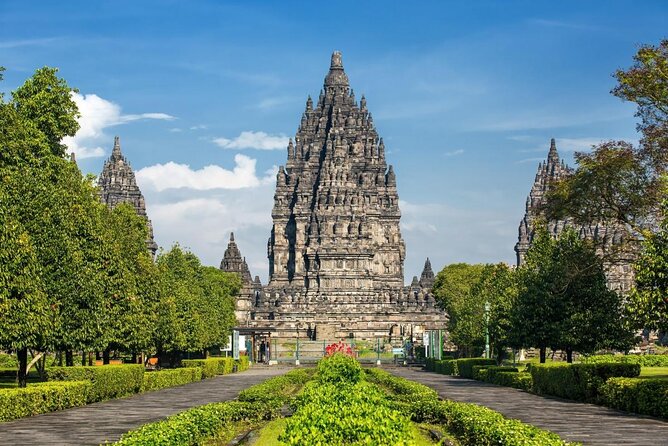
- Near public transportation and a clear start point around Prambanan
- Mobile ticket for an easier check-in day-of
Jemparingan Archery at Prambanan, a very local skill
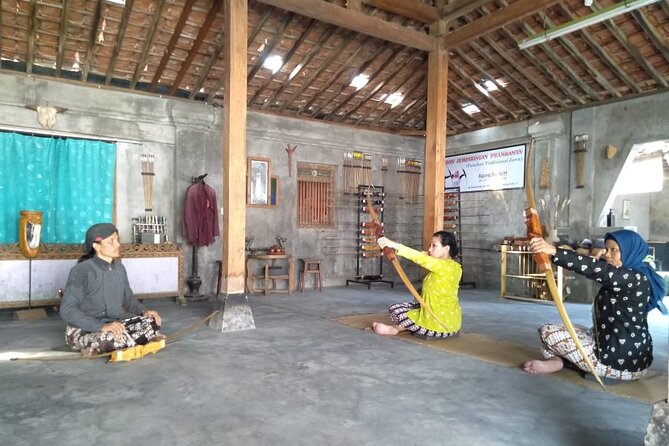
Yogyakarta is packed with things to see, but this experience is built around doing something. You step into jemparingan, the traditional Javanese archery style where the shot comes from a seated position. That one detail changes everything. It is not the typical stand-and-shoot archery vibe you might be picturing from home.
What makes it especially appealing is the way it is framed. You are not only learning a movement. You are hearing how the sitting stance connects to history and function, including how it was used by guardians or snipers connected to the Kraton of Yogyakarta. That adds meaning fast, because you can feel why stability and form would matter when you are aiming carefully.
And yes, it is also just fun. There is something satisfying about learning a controlled technique, then trying it under instruction. The overall tone feels friendly and welcoming too, which matters when you are doing something unfamiliar and want to ask questions without feeling rushed.
Booked alongside this on Yogyakarta itineraries:
- Yogyakarta: Borobudur sunrise(guarantee climb up)& Prambanan
★ 4.9 · 1,545 reviews - Borobudur Sunrise from setumbu Hill , Merapi Volcano & Prambanan Full Day Tour
★ 5.0 · 1,030 reviews - Yogyakarta: Jomblang Cave and Pindul Cave all inclusive Trip
★ 4.9 · 854 reviews
Getting there, and how the meeting works near Prambanan
The day starts around Prambanan Temple. Your accredited guide meets you at the parking area, then you head together to the Jemparingan place for the lesson. This is helpful because it reduces the mental load. Instead of figuring out small local directions on your own, you simply show up at the meeting point and follow the guide.
Your start address is listed as Pendhapa Jemparingan Cageran, Tamanmartani, Kec. Kalasan, Kabupaten Sleman, Daerah Istimewa Yogyakarta 55571, Indonesia. Practically, you can use the Prambanan parking meeting as your anchor, then let the guide handle the short move to the activity site.
Two things I appreciate about this setup. First, it keeps the experience close to a well-known landmark area, so you are not stuck hunting for a rural location on your own. Second, the tour notes it is near public transportation, which is a big deal in a city where you do not want to waste your time on complicated logistics.
The sitting-archery lesson, what you will actually do
This is a class, not a quick photo stop. You will be introduced to traditional Javanese archery, then you learn to practice using the archery tools properly. The core technique is the sitting position, and that is where you will spend the bulk of your time.
Here is what that likely means for you on the day. You will start with explanation of posture and how to hold and shoot using the traditional approach. Then you practice with coaching, aiming to improve form. Because it is taught as technique first, it tends to feel structured rather than chaotic, even if you have never tried anything like this before.
The sitting stance is also where the cultural piece clicks. The lesson includes Javanese philosophies of this position, explained by the instructor. Even if you do not memorize every idea, you will understand the logic of the posture: it is built for control, steadiness, and precision.
Expect the session to last about 1 to 2 hours total. That is long enough to learn and try again, but short enough that you do not feel trapped for your whole afternoon. If you like experiences that have a clear start and end, this timing is comfortable.
Mr. Agung, and why a national-level archer changes the feel
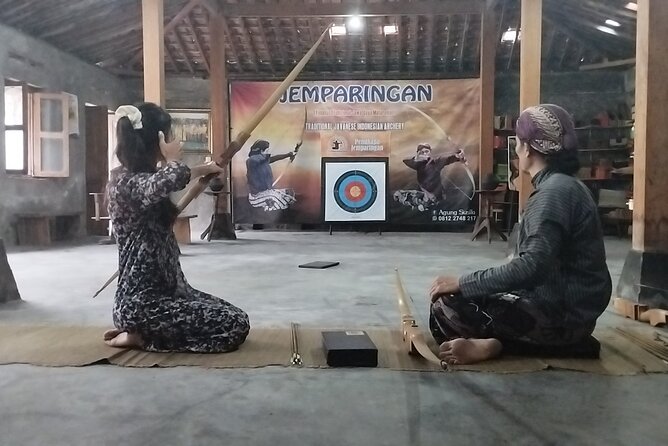
A huge part of the value here is who teaches. The class is led by a professional archer, and the information you are given connects Mr. Agung to national-level athletics from Yogyakarta. That matters because it usually changes how instruction sounds and how quickly you improve.
In a typical performance-style attraction, someone might explain the history, then you just watch. Here, you are practicing. With a high-level archer teaching, the focus tends to be on technique cues you can actually use: how to sit, how to set your body for aiming, and how to handle the traditional tools correctly.
It also helps that the class includes more than movement coaching. Mr. Agung shares information and teaches professionally, including the philosophy behind the sitting position. That combination, skill plus meaning, is what makes the experience feel more than a novelty.
And based on the strong overall satisfaction, the teaching also lands in a friendly way. When people can ask questions and feel guided, learning becomes less intimidating and more enjoyable.
Something different for the next Yogyakarta day:
- Yogyakarta: Borobudur and Prambanan Temples Guided Tour
★ 4.9 · 828 reviews - Borobudur Sunrise, Merapi Volcano & Prambanan Full Day Tour
★ 4.8 · 717 reviews - Borobudur Temple Climb To The Top & Prambanan Temple – 1 day tour
★ 5.0 · 638 reviews - Menoreh Village Cycling
★ 5.0 · 611 reviews
Why the Kraton story makes the archery make sense
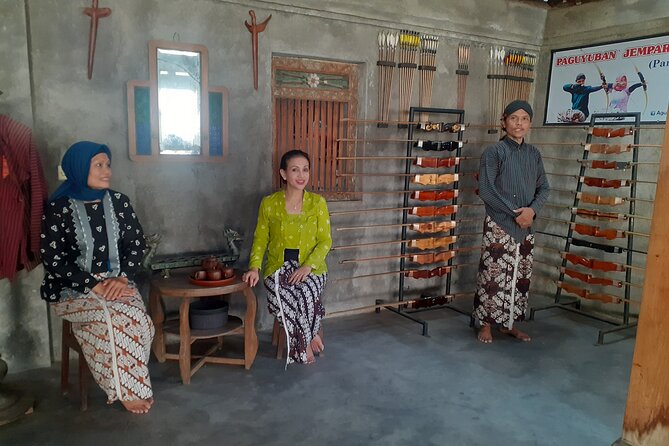
The lesson connects jemparingan to the Kraton of Yogyakarta, including how it was used by guardians or snipers. I like stories like this because they do not just add drama. They explain why a technique developed the way it did.
When you hear that the sitting stance had practical use for guardians or snipers, the posture stops being just tradition and becomes functional. Even if you are not trying to recreate a defensive role, your brain understands the reason behind the form: stability and accuracy.
Then comes the Javanese philosophy component. This is where you start to see the technique as a cultural method, not just a sporting one. Javanese philosophies are often about balance, respect for discipline, and the idea that how you do something reflects deeper values. You may not catch every nuance, but you will feel that the instructor is treating the archery as something with etiquette and purpose.
For you, that means the lesson stays coherent. You are not just shooting. You are learning a system.
Time, weather, and small-group reality checks
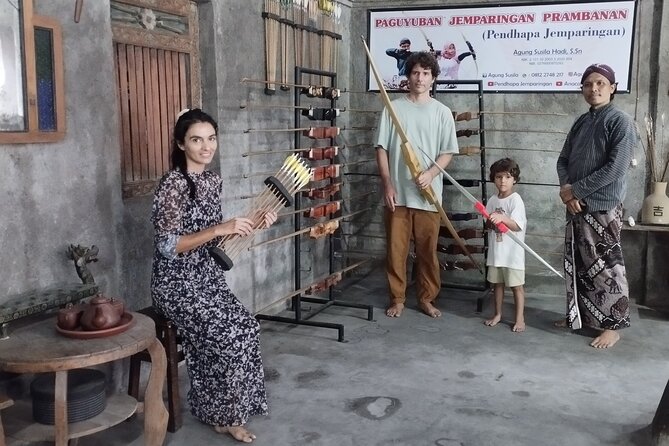
This experience runs about 1 to 2 hours, and it caps at a maximum of 10 travelers. That small group size is a quiet advantage. In archery, you do not want to be waiting around forever while someone else gets time. A smaller class usually means more coaching attention and quicker feedback.
You should also come with moderate physical fitness. The sitting position might be comfortable for some people, but you should still expect you will hold posture and practice movements for a while. If you know you struggle with controlled physical positions, plan accordingly.
Weather is another practical factor. The tour explicitly requires good weather. If it is canceled due to poor weather, you are offered a different date or a full refund. So if you are booking during the wetter part of your trip, consider keeping that day flexible.
One more detail that keeps your day simpler: confirmation is received at the time of booking, and you get a mobile ticket. That reduces the usual stress of trying to remember paperwork when you are already juggling temple visits and transit.
Price and value: $27 for a real lesson, not a spectacle
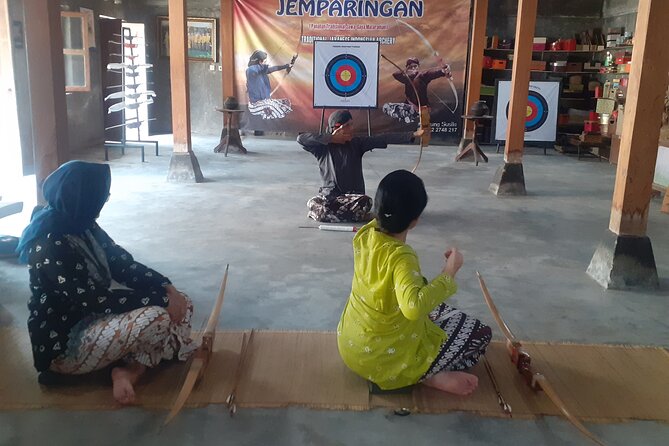
At $27 per person, this is priced like an affordable activity that still gives you something meaningful. The big value point is that it is hands-on instruction with a professional archer, not just a tour narration. You pay for time with the teacher, practice of the technique, and the cultural context.
When I look at pricing, I always ask: Are you getting skill-building, or are you just consuming content? This class leans toward skill-building because you learn and practice using the traditional tools properly.
The session length also helps the value equation. A 1 to 2 hour experience is long enough to feel like you gained something tangible, like a technique you can explain, not just something you watched.
And small-group teaching can be a hidden cost driver in a good way. With a maximum of 10 travelers, your attention is more likely to feel personal, which helps you get more out of the money and less out of the waiting.
Who should book this class in Yogyakarta
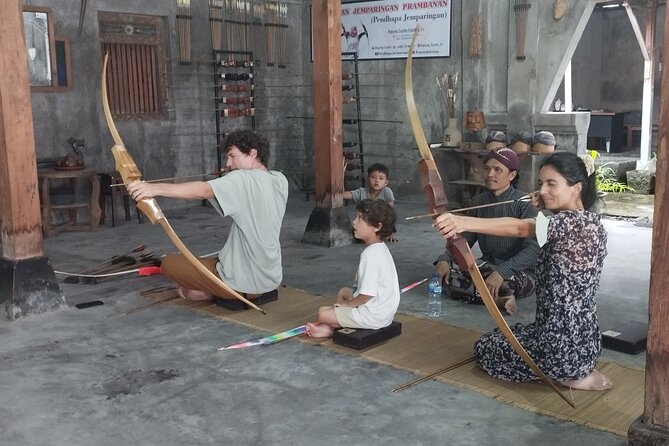
This is a great match if you want one of your Yogyakarta activities to be practical and skill-based. If you enjoy hands-on cultural experiences, you will likely find this satisfying because jemparingan is taught as an actual technique with philosophy attached.
It is also a good fit if you like authenticity over flash. The connection to Kraton guardianship or sniper use, plus the explanation of Javanese philosophies, gives you cultural depth that is tied to the body mechanics of the shot.
You might also enjoy this if you want a break from temple crowds and photo sessions. Prambanan is impressive, but this lesson adds a different flavor to the same area.
On the other hand, this may not be the best choice if you want something purely passive, or if you want a long, leisurely cultural walk. This is structured around learning and practicing, so you should be comfortable participating.
Practical tips so you feel confident on arrival
Because the experience is weather-dependent and requires a moderate fitness level, I suggest planning your day with breathing room. If your schedule is tight and weather shifts, you may need flexibility for a reschedule option.
Wear clothes you can move in while staying seated for a while. Also bring a simple layer in case the morning or evening air feels cooler in the open outdoor setting. You do not need fancy gear. The important thing is feeling comfortable enough to practice with focus.
When you meet your guide at the Prambanan parking area, take a moment to confirm where you are headed. The guide will accompany you up to the Jemparingan place, and that transfer is part of the flow, so you should keep it easy and pay attention when directions come.
And if you are the type who likes to learn fast, come with curiosity. Ask about the sitting stance philosophy and what it is meant to support in the technique. Mr. Agung’s teaching includes these ideas, so you will get more out of the session if you let yourself engage.
Should you book Traditional Javanese Archery?
If you want a hands-on cultural activity in Yogyakarta, I would book this. The strongest reasons are simple: you practice jemparingan, you learn from Mr. Agung, and the class size stays small. The session also includes cultural context tied to Kraton use and Javanese philosophy, so it does not feel like empty novelty.
What might hold you back is mainly practical. The class needs good weather, and you should be okay with a moderate physical fitness level for a seated technique practice session.
If your timing is flexible enough to handle weather, and you are excited to try something new with clear instruction, this is one of those experiences that can make your trip feel more personal. You leave with a technique you understand, not just a memory you photographed.
FAQ
How long does the Traditional Javanese Archery class take?
It lasts about 1 to 2 hours.
Where do I meet for the activity?
Your guide meets you at the Prambanan Temple parking area, and the experience ends back at the meeting point. The listed start address is Pendhapa Jemparingan Cageran, Tamanmartani, Kec. Kalasan, Kabupaten Sleman, Daerah Istimewa Yogyakarta 55571, Indonesia.
What is the group size?
The activity has a maximum of 10 travelers.
Do I need a certain fitness level?
Yes. Travelers should have a moderate physical fitness level.
What is the cancellation policy?
You can cancel for free up to 24 hours in advance for a full refund. If you cancel less than 24 hours before the experience starts, the amount you paid is not refunded.
What happens if the weather is bad?
This experience requires good weather. If it is canceled due to poor weather, you will be offered a different date or a full refund.
Newest reviews out of Yogyakarta
- Ramayana Ballet Performance – Purawisata Jogjakarta★ 4.5 · 12 reviews
- Yogyakarta: Sunrise Inside Borobudur with breakfast★ 5.0 · 12 reviews
- Borobudur Private Tour From Semarang Port★ 4.5 · 12 reviews
- Yogyakarta: Jomblang Cave Day Trip with Pickup and Entry Fee★ 5.0 · 13 reviews
- Yogyakarta: Borobudur Sunrise Inside Temple & Prambanan tour★ 4.9 · 13 reviews
- From Yogyakarta: Dieng Plateau Golden Sunrise Private Day Trip★ 5.0 · 13 reviews
- From Yogyakarta: Mount Bromo Sunrise and ijen crater Blue Fire – 3 Days★ 5.0 · 14 reviews
- Merapi Volcano 4WD Jeep Tour and Kedung Kayang Waterfall★ 4.9 · 14 reviews
Workshops, compared.
Hands-On Silver Jewelry Making Near Ubud’s Monkey Forest
Read our review →
Legian Beach, Bali: Beginner or Intermediate Surf Lessons
Read our review →
Canggu Jewelry Making Class with Creative Studio Vibes
Read our review →
Browse the lists this tour appears in