
Reviewed · WORKSHOPS
Ubud: Traditional Balinese Painting Class
Ubud has a special way of turning art into daily life, and this traditional Balinese painting class is interesting because you learn the logic behind the look, not just how to copy it. You work in a 2D painting style with a local teacher, using repeated motifs and limited natural colors that make the whole world feel flatter, simpler, and actually more symbolic.
I like two things a lot. First, you get close help from the instructor, including guidance from Pak Sulendra while you sketch and then paint your own motif. Second, the class explains why Balinese art uses repeating figures from natural, historical, and religious themes, so your painting feels like it has a point, not just color.
One consideration: the session is 3 hours, and some people may feel it’s long if they want a quick hands-on stop. Also, Bali ceremonies can affect who is available that day, so it helps to keep your day flexible if you can.
Key Things That Make This Class Worth Your Time
- Learn the 2D rules of Balinese traditional painting, where repetition is part of the design
- Work with Pak Sulendra and get direct, patient guidance as you sketch and color
- Create a real finished painting on canvas, not just a practice sheet
- Use centuries-old style techniques with the idea of limited island natural colors
- Enjoy included snacks and a drink, plus a class certificate to take home
Arriving at WS Art Studio in Ubud, and getting set up fast
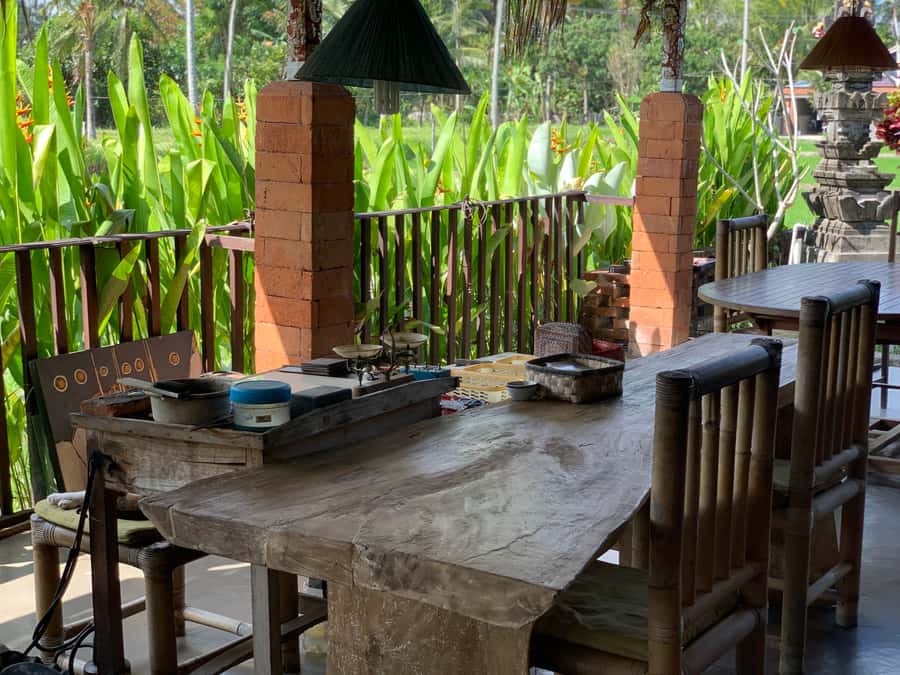
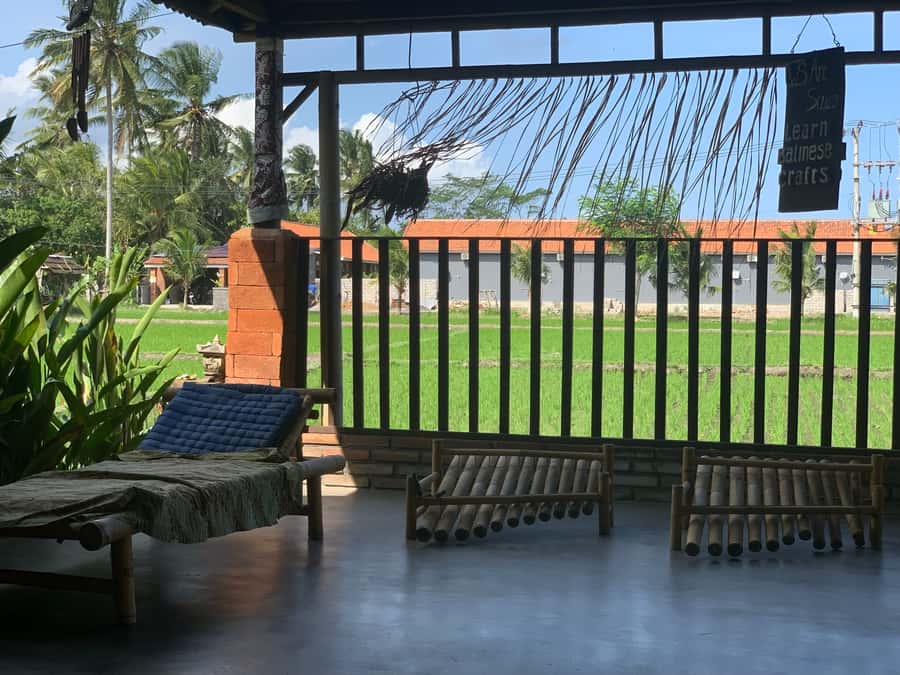
You meet at WS Art Studio Balinese Handicrafts, in Ubud. This is a workshop setting, so expect a calm place to focus, not a noisy factory line. The group stays small, with a limit of 10 participants, which makes it easier for the teacher to keep an eye on your work.
Right away, you get a welcome drink, either coffee, tea, or water. Then you settle in and start the first part of the class: planning your motif. If you came for a cultural activity that still feels hands-on, this is the sweet spot.
The class is wheelchair accessible, and it’s suitable for all abilities, including beginners. The only thing you must really bring is your camera if you want photos of your process and your finished work.
Booked alongside this on Bali itineraries:
- Bali: Sunrise Mount Batur Guided Hike with Breakfast
★ 4.8 · 9,660 reviews - Bali: Mount Batur Sunrise Guided Hike and Natural Hot Spring
★ 4.8 · 9,284 reviews - Bali: Full-Day Instagram Highlights Tour
★ 4.8 · 7,817 reviews
The first step is your motif sketch, with room for your idea
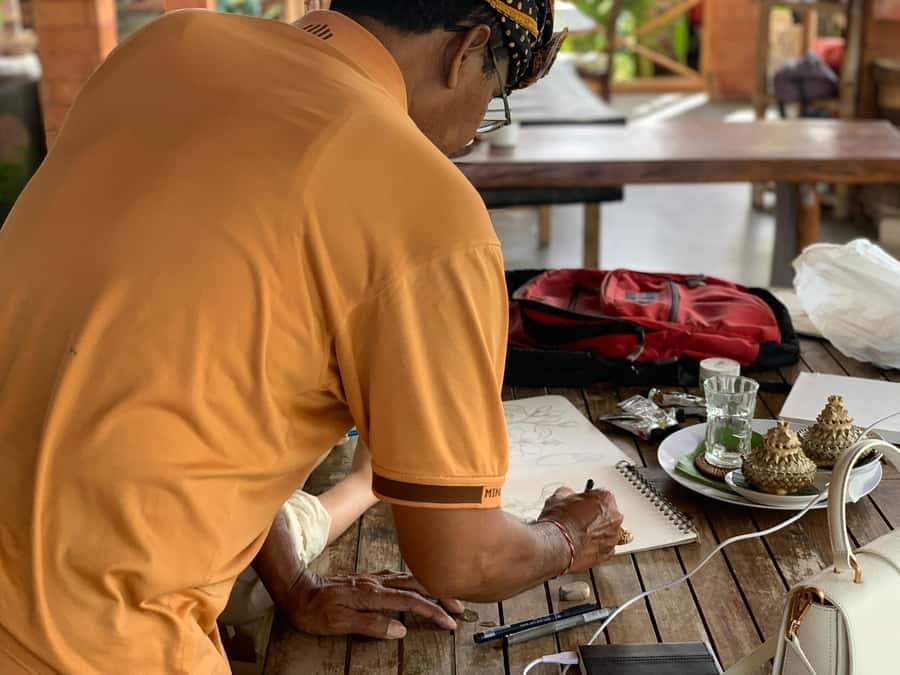
Balinese painting here starts the traditional way: with a sketch of a motif. Pak Sulendra helps you draw a plan on canvas using a traditional design. If you already have an inspired idea in mind, you can also bring something you want to base your painting on, and the teacher can help you connect it to the style.
What I like about this approach is that it respects the beginner brain. You do not need to know how to draw first. You just need to say what you want to make, then follow the method.
At this point, pay attention to how the teacher explains the motif logic, because that shapes everything that comes next. Balinese traditional art often relies on repetition, and once you see that as a design choice instead of a limitation, the painting starts to make sense.
If you want your final painting to feel more personal, this is your moment. Let the teacher know where you want to work independently, and where you want help. One simple tip that comes up again and again is to be clear about your level, because instructors can guide a lot, and you want the balance to be right for you.
Painting in the Balinese 2D world, step-by-step
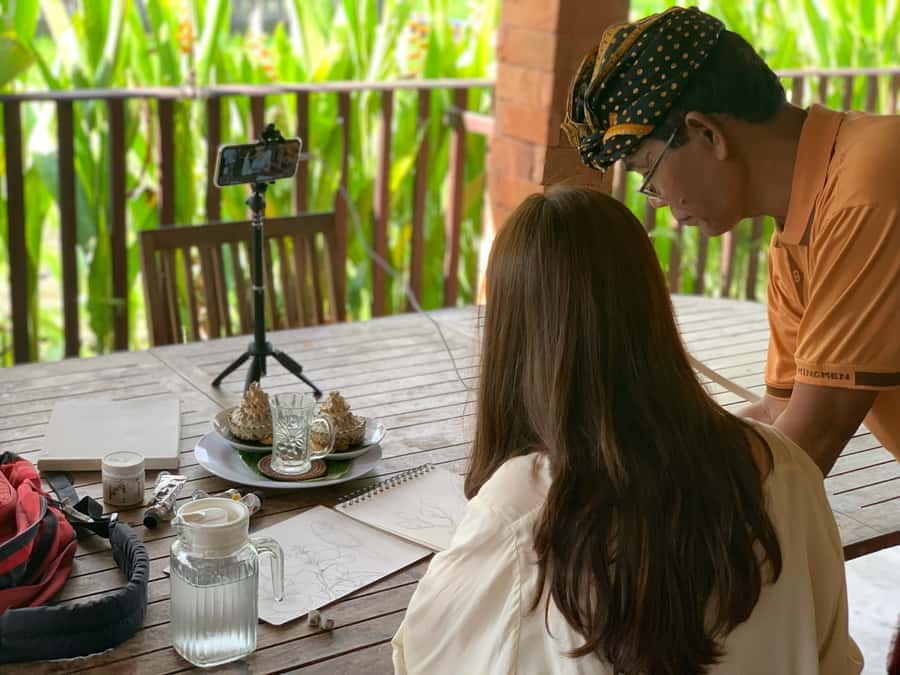
After the sketch, the class moves into color and technique. The big theme is the two-dimensional world of Balinese traditional painting. This is not about painting depth like you might see in Western realism. Instead, the visual power comes from pattern, repeated elements, and the overall rhythm of figures.
You learn the basics of creating a traditional painting using a style passed down through generations of Balinese painters. You’ll work with the idea of a limited palette, connected to natural colors available on the island. Even if you personally mix and layer a bit, the goal is the traditional look.
Here’s what makes this stage feel special. The teacher shows by example, and then you apply the same principles to your own canvas. That matters because you can learn the rule while still making choices, and that’s where the satisfaction comes from.
This also helps you understand Balinese art beyond the surface. The course explains that many motifs use repeating figures from natural, historical, or religious themes. Once you understand that repetition is intentional, you start seeing it everywhere, not just in your own class painting.
Colors, patterns, and the logic behind the centuries-old look
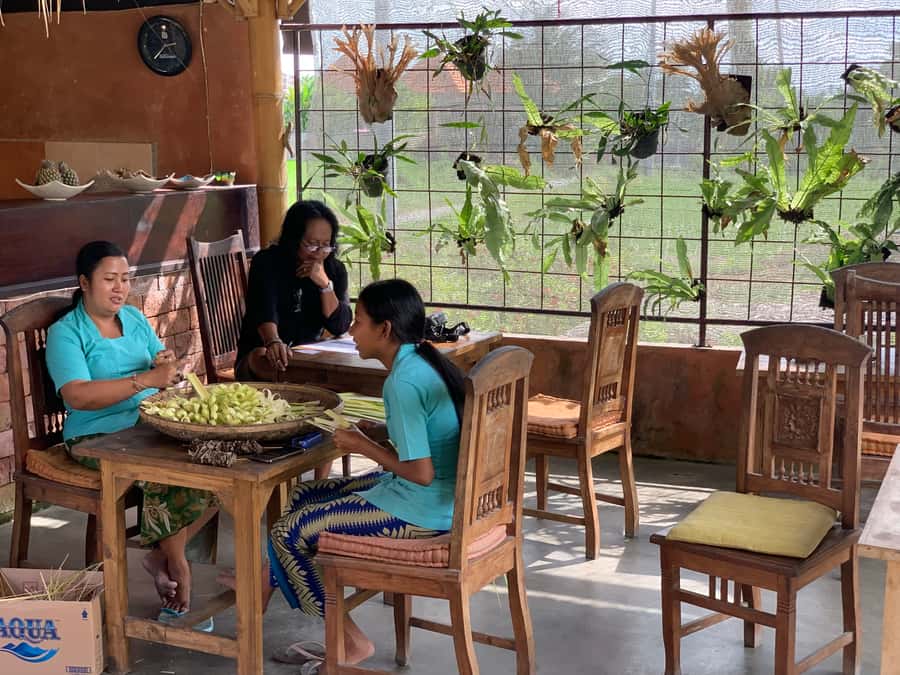
When you color your painting, you are working within a system. Balinese traditional painting uses repeating motifs, and it uses the few natural colors available on the island. The style can look simple at a glance, but it takes attention to keep the design consistent.
I find that part of the enjoyment is slowing down. You stop thinking like a tourist and start thinking like a maker. You focus on spacing, rhythm, and the way each repeated element supports the whole.
The teacher’s guidance matters here because the class aims for you to leave with a finished piece that you’re proud of. The aim is not to grade your technique. It’s to help you understand the visual language enough to produce a strong result.
If you love art, this class will feel like a hands-on lecture disguised as a fun workshop. If you don’t consider yourself an art person, it still works, because the teacher does the heavy lifting in explaining how to approach the style, and you do the actual painting.
Something different for the next Bali day:
- Bali/Nusa Penida: East & West Highlights Full-Day Tour
★ 4.7 · 6,263 reviews - Ubud: Waterfall, Rice Terraces & Monkey Forest Private Tour
★ 4.9 · 4,894 reviews - Bali: Ubud Gorilla Face ATV and Ayung Rafting Trip with Meal
★ 4.8 · 4,765 reviews - Bali/Mount Batur: Private Sunrise Jeep Tour & Hot Spring
★ 4.8 · 3,528 reviews
How the 3-hour format plays out, and why timing matters
This workshop runs 3 hours. That’s enough time to sketch, transfer ideas into the 2D style, and finish coloring in a way that looks complete. Still, there’s a reason some people find the length a bit much.
If you prefer quick, drop-in activities, this may feel like a longer commitment. On the other hand, if you want to actually learn something you can carry back home, the extra time is what allows the class to go beyond a single demo.
Because the group is small, the teacher can adjust pacing based on what you need. If you’re a fast worker, you get room to refine. If you’re slower, the instructor can help you stay on track so you still end up with a finished painting.
Also, the class is guided by an English-speaking instructor. That reduces the chance of confusion mid-session, especially during the steps where you need to understand the motif and the style choices.
The little extras that make it feel like a real experience
You’re not just handed paint and sent on your way. Included in the experience are all tools and materials, plus a small snack. The snack is Balinese fried pineapple and fried banana with palm sugar, and it pairs nicely with the welcome drink.
You also receive a class certificate. That might sound like a small detail, but it helps the whole day feel like an activity with a start and an end. It also makes the painting feel more official, especially if you plan to frame it later.
One practical point: bring your camera. The class is hands-on and visual, so photos of your process and your final painting are part of the fun. If you care about sharing, this is a good time to capture quick shots of your design progress.
Value and price: is $24 good for what you get?
At $24 per person, this class is priced like a budget-friendly art workshop, but it includes meaningful value. You get all tools and materials, guidance from an instructor, snacks, a welcome drink, and a certificate, all in a small group setting.
For the cost, you’re paying for more than paint. You’re paying for the explanation of the 2D Balinese style, the help with sketching your motif, and the chance to leave with a finished painting. If you’ve ever bought a souvenir canvas at a market, you know how quickly the price adds up for something that does not teach you anything.
That’s why the value feels real here. You get a finished artwork and knowledge at the same time. It also scales well if you travel with someone who wants a creative activity but doesn’t want to hunt around for something complicated.
Who should book this class, and who might not love it
This is a great choice if you want a creative activity in Ubud that feels rooted in local technique. If you like cultural learning that ends with a tangible result, you’ll probably enjoy the class a lot.
It’s also a good fit for groups of friends or families because it’s suitable for all ages and abilities. The instructor guides you through the whole process so you’re not stuck figuring it out alone.
If you want something more like a passive sightseeing experience, this won’t be your match. This workshop asks you to participate. You will sketch, paint, and finish something.
And if you are extremely schedule-sensitive, take note of the real-world effect of Bali ceremonies. On at least some occasions, the teacher may not be available due to a ceremony, and plans can shift. In one case, a participant was offered a related alternative like a silver jewelry class instead. You cannot count on that swap, but it’s a useful idea: build some flexibility in your day so you still land on a workshop outcome.
When ceremonies affect the teacher, plan your day with a buffer
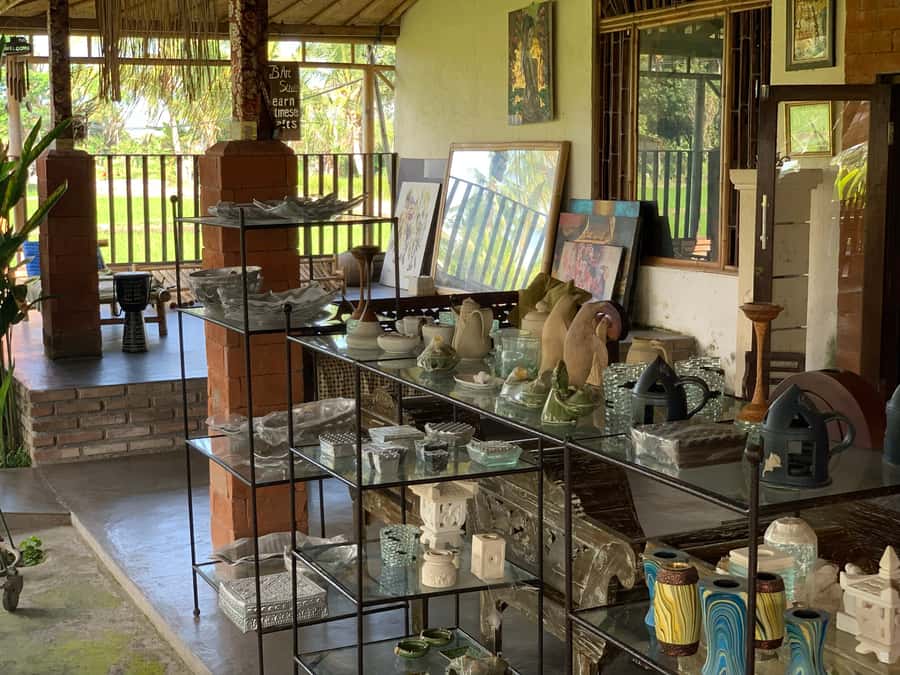
Bali runs on ceremonies, and that can affect workshop timing. The class itself is designed to be guided and structured, but if the instructor is unavailable, you may not get the exact painting plan you booked.
If you’re booking this as one of your only activities on a tight schedule, I’d add a buffer day or keep your day structure loose. That way, if something changes, you’re not stuck scrambling.
If a swap is offered, you might still end up doing something related and hands-on. But if your main goal is specifically Balinese traditional painting, treat it as the priority and keep your calendar ready for adjustments.
Should you book this Ubud Balinese painting class?
Yes, you should book it if you want to leave Ubud with a real painting you made yourself, plus a clearer understanding of why Balinese traditional art repeats figures and uses a limited palette. The small group size, the step-by-step approach, and the chance to work with Pak Sulendra are strong reasons to choose this over a basic souvenir stop.
Skip it or plan carefully if you only have room for a short activity, or if your schedule cannot handle a possible ceremony-related change. If you can be flexible and you’re open to learning a true 2D technique, this is a practical, satisfying way to spend a few hours in Ubud.
FAQ
Where is the meeting point for this class?
You meet at WS Art Studio Balinese Handicrafts.
How long does the Balinese painting class last?
The duration is 3 hours.
How much does it cost?
The price is $24 per person.
What is included in the price?
All tools and materials are included, along with small snacks (Balinese fried pineapple and fried banana with palm sugar), a welcome drink (coffee, tea, or water), and a class certificate.
Do I need any painting experience?
No experience is needed.
Is the instructor able to teach in English?
Yes, the instructor speaks English.
Can I bring my own idea to use in my painting?
Yes. You can bring your own inspired idea, or you can sketch a traditional motif with the teacher.
What should I bring with me?
Bring a camera if you want photos.
Is there alcohol included?
Alcoholic beverages are not included, but they may be available for purchase.
Newest reviews out of Bali
- Bali: Mount Batur Sunrise Hike Including Transfer & All Cost★ 4.8 · 39 reviews
- North Bali: Ulun Danu, Waterfalls, Swing and Monkey Forest★ 5.0 · 39 reviews
- Bali: Canyon Tubing Adventure★ 4.8 · 40 reviews
- Bali: Jatiluwih Rice Terraces 1 Hour Electric Bike Tour★ 4.7 · 41 reviews
- Bali: 3-Day Private Gili Islands Snorkel Tour with Hotel★ 4.2 · 44 reviews
- Bali: Penglipuran Village, Rice Terrace & Waterfall Tour★ 5.0 · 46 reviews
- Ubud: Kanto Lampo Waterfall, Art Market, Cretya & Tanah Lot★ 4.8 · 47 reviews
- Ubud: Private Romantic Photo Cruise with Food and Drinks★ 4.5 · 47 reviews
Workshops, compared.
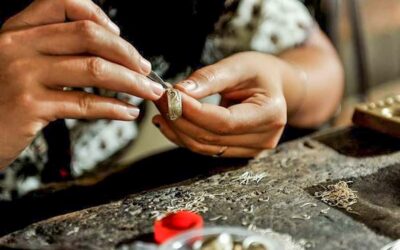
Hands-On Silver Jewelry Making Near Ubud’s Monkey Forest
Read our review →
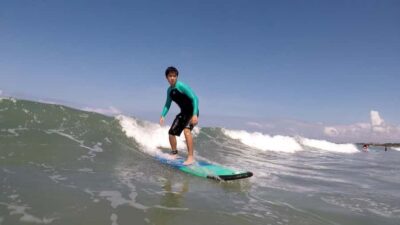
Legian Beach, Bali: Beginner or Intermediate Surf Lessons
Read our review →
Canggu Jewelry Making Class with Creative Studio Vibes
Read our review →
Browse the lists this tour appears in