
Reviewed · WORKSHOPS
Ubud: Traditional Basket Weaving Class
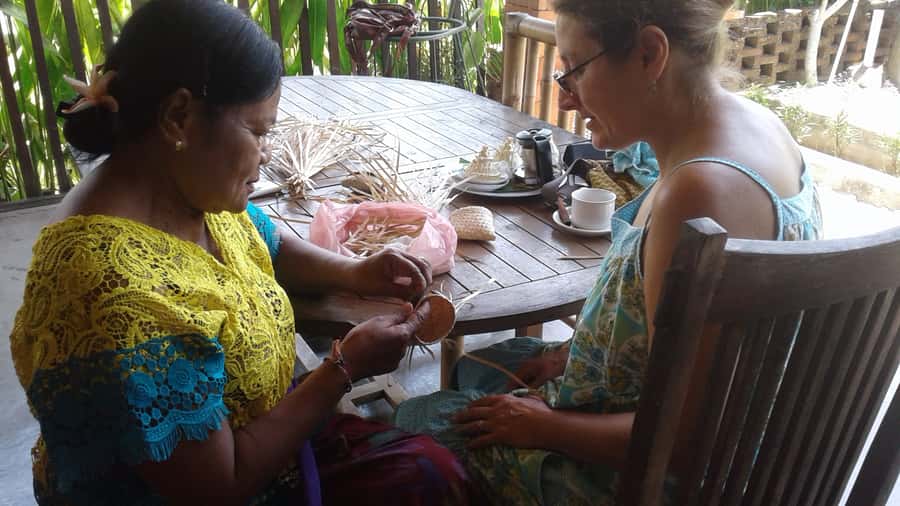
In Ubud, this traditional basket weaving class turns a local plant into something you can actually use or gift. You’ll learn how Balinese artisans weave everyday baskets from lontar fibers, guided by a teacher whose patience is part of the charm.
I love that you get gentle, step-by-step instruction, even if your hands have never held a weaving bundle before. I also like the pace of a small group (limited to 10), which makes it easier to get help without feeling rushed.
One thing to consider is logistics. The studio is off-the-beaten-path, so if you are not staying in central Ubud you will need your own transport, and it helps to plan your ride back.
Key things to know before you go
- You’ll work with lontar, a plant used in Balinese life for woven baskets
- Small group size (up to 10 people) means more attention while you learn
- Materials, snacks, and drinks are included, so you can focus on weaving
- A Balinese instructor guides you using English or Indonesian, plus lots of nonverbal teaching
- You take your basket home, making it a real keepsake, not just photos
- Bring a camera if you want pictures during the class
Traditional Ubud basket weaving, minus the touristy shortcuts
Ubud has plenty of workshops where you watch someone else do the hard work. This one is different because the point is the making. You sit down with a native plant fiber, get shown the technique, and then you do it. That shift matters. It’s the difference between a souvenir you buy and a skill you earn.
The basket you weave is more than a craft project. It comes from a plant used for practical household needs, the kind of thing you’d see woven into everyday routines on the island. Learning the method gives you a better read on local life, even if you only spend a few hours at it.
Booked alongside this on Bali itineraries:
- Bali: Sunrise Mount Batur Guided Hike with Breakfast
★ 4.8 · 9,660 reviews - Bali: Mount Batur Sunrise Guided Hike and Natural Hot Spring
★ 4.8 · 9,284 reviews - Bali: Full-Day Instagram Highlights Tour
★ 4.8 · 7,817 reviews
Finding WS Art Studio and settling into the workshop rhythm
You meet at WS Art Studio Balinese Handicrafts. Expect the location to feel like a real working studio rather than a polished showroom. One of the most common practical notes is that the studio is not in the middle of the main tourist strip, so don’t assume you can hop in and out without planning.
Here is how I’d think about the start of your visit:
- You arrive, get welcomed, and get drinks.
- You settle in with your materials already prepared.
- Then your instructor starts with an introduction to the plant and the weaving process.
If you are planning transport, build in extra time for the ride there and especially for your ride back. One visitor noted a taxi situation that turned into an unpleasant surprise, and that’s exactly the kind of stress you can avoid by arranging return transport ahead of time.
The weaving lesson: working lontar like a Balinese craftsperson
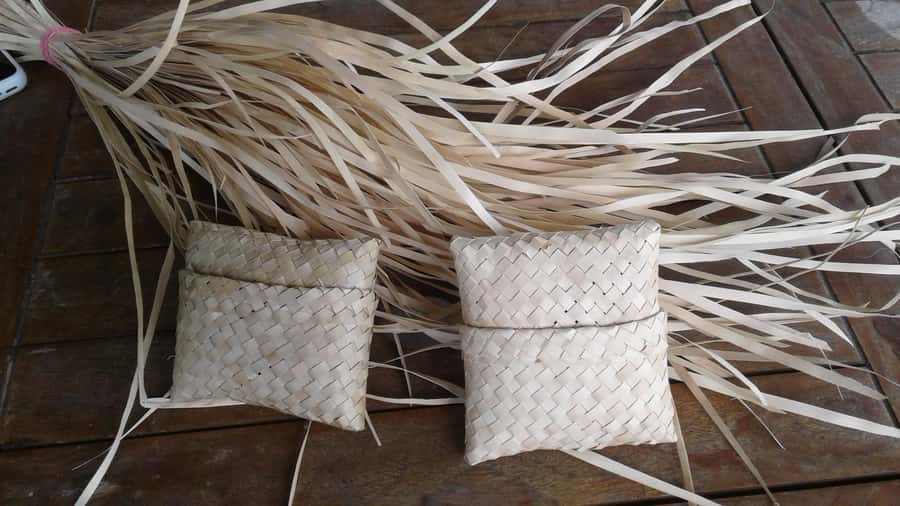
The centerpiece of the class is weaving with lontar. Lontar is part of the bamboo family, and it has been used in Balinese culture for generations to make woven baskets for family needs. That matters because it frames the class as practical knowledge, not just decoration.
The class is designed to be doable for both:
- experienced weavers, and
- curious first-timers.
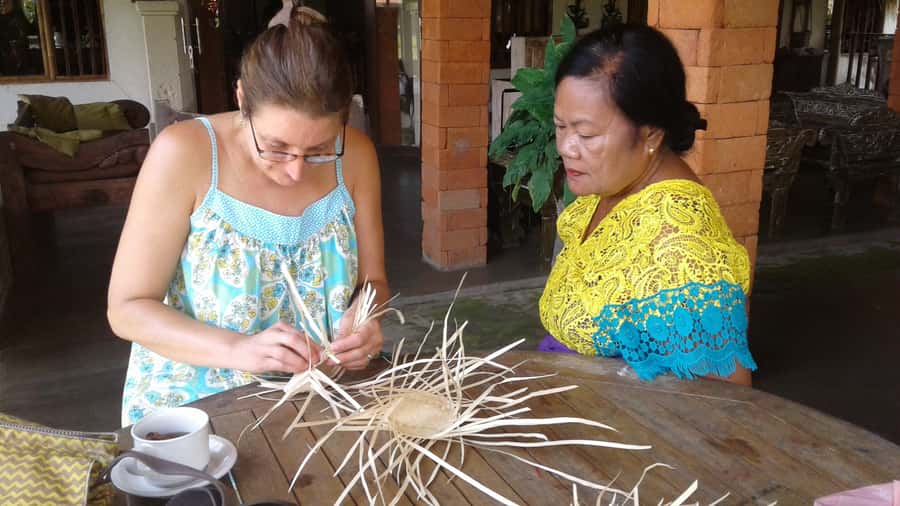
You should expect that the instructor teaches mostly through demonstration and hands-on corrections. Even when the language is listed as English and Indonesian, communication can still be partly nonverbal. That is normal for craft learning. If you have zero weaving experience, don’t worry, just stay focused on what your hands are doing.
What you’ll actually learn during the session:
- how the fibers are handled,
- how to create consistent rows and tension,
- how to follow the weaving pattern as you build shape,
- and how to combine weaving techniques for a finished basket form.
Because the program mentions learning one or more weaving combinations, your final result may be a single main keepsake or a set of pieces that work together. Either way, your work is meant to be strong enough to handle at home as a small storage item or gift.
Your instructor and the small-group support that makes it click
The standout feature here is the teaching style. Multiple people praised how patient the instructor is, including an experience described as having help from a Balinese grandmother. That shows up in the details of how learning happens: the instructor doesn’t just show once and disappear. You get ongoing guidance as you try the next step.
In a small group of up to 10 people, the instructor can move between tables and correct common issues like:
- uneven spacing,
- loose or tight weaving,
- fibers not aligning cleanly in the pattern.
If you are traveling with friends, it can be extra fun because you’ll all be working on similar steps, but with different levels of speed. One visitor mentioned the class had lots of laughter, which is exactly what you want when you are learning a new craft in the heat.
Something different for the next Bali day:
- Bali/Nusa Penida: East & West Highlights Full-Day Tour
★ 4.7 · 6,263 reviews - Ubud: Waterfall, Rice Terraces & Monkey Forest Private Tour
★ 4.9 · 4,894 reviews - Bali: Ubud Gorilla Face ATV and Ayung Rafting Trip with Meal
★ 4.8 · 4,765 reviews - Bali/Mount Batur: Private Sunrise Jeep Tour & Hot Spring
★ 4.8 · 3,528 reviews
The snack and welcome drinks: a real break, not an afterthought
This class includes a light bite: appetizer and welcome drinks. In some sessions, people also mentioned enjoying snack items such as banana and pineapple fritter. I’d treat the snacks as a pleasant part of the flow, not as a meal replacement. You are here to weave, and the food is there to keep you comfortable and energized.
Timing wise, the experience is listed at 3 hours total, while the weaving adventure is described as a 2-hour cultural activity. That usually means you spend:
- some time settling in and learning the basics,
- the main weaving block,
- and then a wrap-up where you admire your final basket and get ready to take it home.
What you’ll take home: a keepsake with real everyday purpose
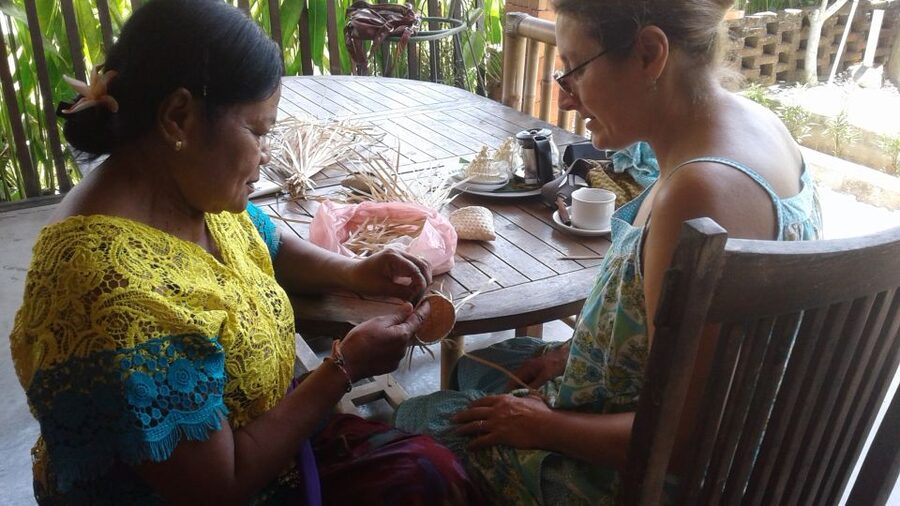
You will return home with your handmade creations. That is the heart of the value here. In craft classes, the best souvenir is the one you actually want to use.
Depending on how your weaving develops, your keepsake can be:
- a small basket for organizing,
- a functional gift,
- or a decorative item that still reflects the technique.
One person specifically liked that they learned a variety of pieces, which makes sense for classes built around one or more weaving combinations. Even if you end up with just one basket, the learning experience is what turns it into a story you can tell.
Price and value: why $24 can feel like a steal in Bali
At $24 per person, this isn’t the cheapest thing you can do in Ubud. But it’s also not a polished tourist show, and you are not just paying for the chair and the time.
You are paying for:
- all class materials,
- real instruction from a local artisan,
- a small group format (limited to 10),
- welcome drinks and an appetizer,
- and the tangible outcome, something you can keep.
When you compare it to buying woven souvenirs, this becomes easier to justify. A store-bought basket is nice, but a basket you made with your own hands hits different. You also come away with a practical understanding of why the craft exists, since lontar weaving is tied to everyday Balinese needs.
Transportation and timing: the practical bits that decide whether you enjoy it
Because WS Art Studio is described as being off the main area, transport can make or break your day. If you are staying in central Ubud, you might manage the logistics without much trouble. If you are not, arrange your own ride.
My advice:
- Plan your return transport before you start weaving.
- If possible, confirm a pickup or have a trusted method for getting back to where you’re staying.
- Build in buffer time so you are not rushing at the end of the class.
Also, bring a camera if you want pictures. The class is hands-on, so you may be able to snap photos at the beginning and during breaks, but you’ll likely spend most of your time focused on the weaving.
Who should book this Ubud basket weaving class?
Book this if you want a craft that is:
- hands-on (not spectator-only),
- practical and locally rooted,
- and friendly for first-timers.
It’s also a good choice if you are traveling with family or want a break from heat and crowds. One review noted that even a child could enjoy it, and that parents can find it a solid rainy-day or hot-day plan.
You might choose something else if:
- you strongly need fluent, long explanations in English, because the instruction may lean on demonstration and nonverbal guidance,
- or you dislike off-the-beaten-path locations where you have to manage transport yourself.
Should you book this Ubud basket weaving class?
If you like making things, this is an easy yes. The price is fair for what you get, you’ll leave with an actual woven keepsake, and the teaching style sounds patient and supportive, which is exactly what first-timers want.
Book it if you can handle the logistics of getting to and from WS Art Studio. If you plan your ride back and come ready to learn with your hands, you’ll likely find it a satisfying, genuinely Balinese way to spend a few hours in Ubud.
FAQ
Where is the meeting point?
Meet at WS Art Studio Balinese Handicrafts.
How long is the class?
The duration is 3 hours. The weaving portion is described as a 2-hour cultural adventure.
How much does it cost?
The price is $24 per person.
What do I learn during the class?
You learn traditional basket weaving techniques using a native Balinese plant, lontar, and you create a woven keepsake.
Is the class suitable for beginners?
Yes. It is suitable for both experienced weavers and curious first-timers.
What is included in the price?
All class materials are included, along with appetizer and welcome drinks. You also take your handmade creations home.
What languages does the instructor speak?
The instructor speaks English and Indonesian.
How big is the group?
It is a small group, limited to 10 participants.
Is the venue wheelchair accessible?
Yes, the activity is listed as wheelchair accessible.
What should I bring and can I take pictures?
Bring a camera if you want to take pictures.
Newest reviews out of Bali
- Bali: Mount Batur Sunrise Hike Including Transfer & All Cost★ 4.8 · 39 reviews
- North Bali: Ulun Danu, Waterfalls, Swing and Monkey Forest★ 5.0 · 39 reviews
- Ubud: Traditional Balinese Painting Class★ 4.2 · 40 reviews
- Bali: Canyon Tubing Adventure★ 4.8 · 40 reviews
- Bali: Jatiluwih Rice Terraces 1 Hour Electric Bike Tour★ 4.7 · 41 reviews
- Bali: 3-Day Private Gili Islands Snorkel Tour with Hotel★ 4.2 · 44 reviews
- Bali: Penglipuran Village, Rice Terrace & Waterfall Tour★ 5.0 · 46 reviews
- Ubud: Kanto Lampo Waterfall, Art Market, Cretya & Tanah Lot★ 4.8 · 47 reviews
Workshops, compared.
Hands-On Silver Jewelry Making Near Ubud’s Monkey Forest
Read our review →

Legian Beach, Bali: Beginner or Intermediate Surf Lessons
Read our review →
Canggu Jewelry Making Class with Creative Studio Vibes
Read our review →
Browse the lists this tour appears in