
Reviewed · MOUNT AGUNG TREKS
Bali/Mount Agung: Sunrise Trekking Adventure With Transfers
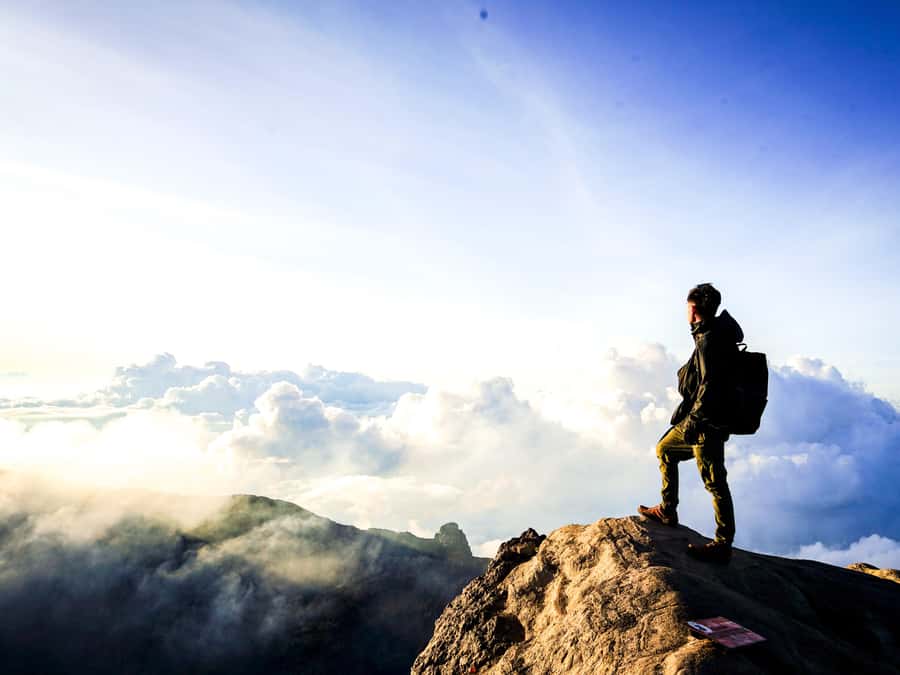
Mount Agung sunrise trekking is interesting because you go from night darkness to a wide-open view of Bali in a matter of hours, and the hike itself asks real effort. I love the big sunrise payoff and the fact you start from a spiritual place like Besakih Temple, not some random trailhead. One consideration: this is a challenging climb, with steep, hand-on-the-ground sections and a cold summit hour you feel in your bones.
What makes the experience click is the human side. A good guide can turn a scary scramble into steady progress. Guides like Mudia, Juna, Leni, and Khaki come up through the mountain rhythm and keep you moving safely, while drivers such as Kadek and Gunawan handle the late-night transport without drama. Your day runs long, plan for a full 10-12 hours from pickup to drop-off.
Key highlights to know before you go
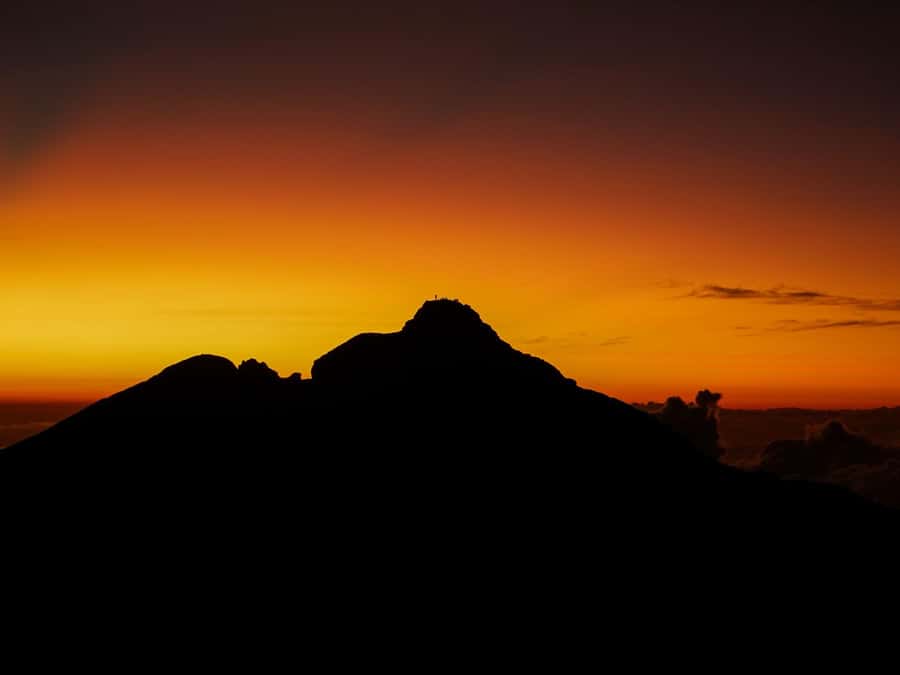
- Mount Agung at 3,142 meters gives you a true high-altitude sunrise experience over Bali
- Two trekking styles: the longer Besakih route with jungle steps, or the steeper Pasar Agung climb
- Headlamp timing matters, because you start at night and aim to be at the top for dawn
- Breakfast on top plus warm, cold-weather help when conditions get rough
- Guide support that shows up on the tough parts, including helping with footing on the descent
Mount Agung Sunrise Trek: Why this volcano morning feels like the main event
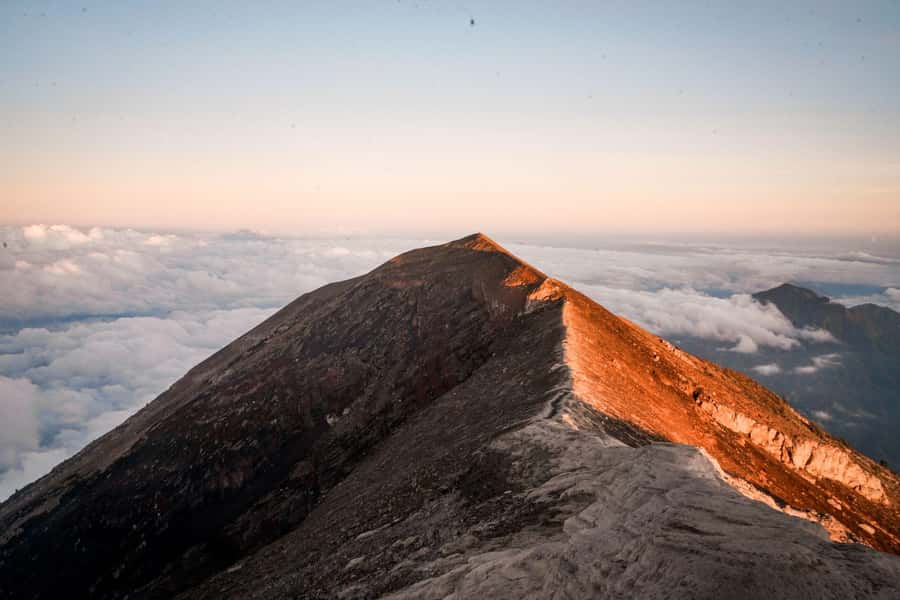
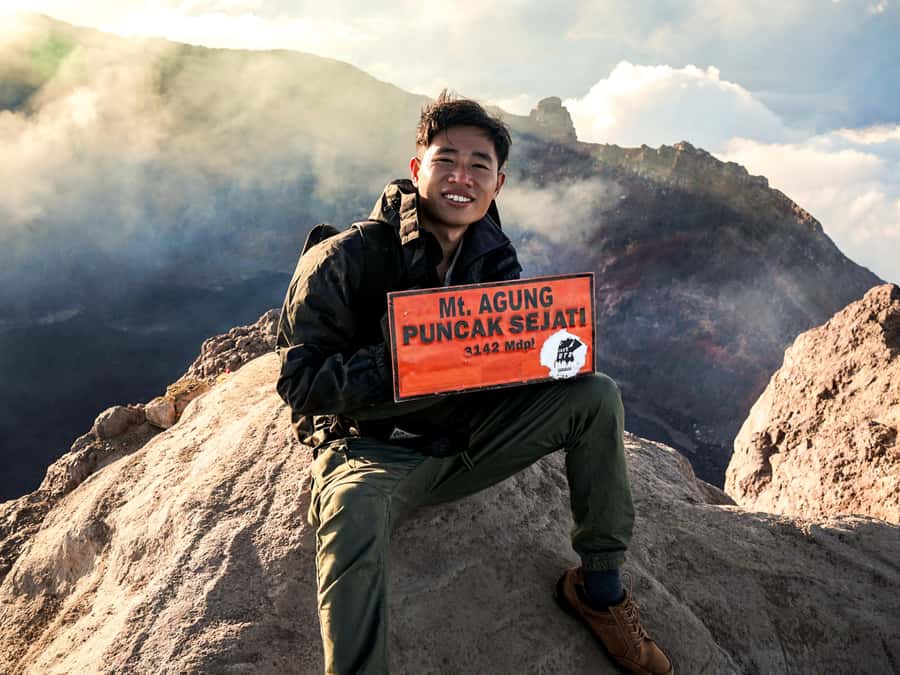
Mount Agung is Bali’s highest volcano at 3,142 meters, and it carries spiritual weight for the Balinese people. That matters because your hike is not just cardio. You’re moving through an active, living landscape of temples, beliefs, and sunrise ritual.
I like that this trip is built around a single goal: reach the summit for dawn. You start in the dark with a headlamp/torch, then you work step by step until the sky starts to shift. When the light finally lands on the caldera and islands below, it feels earned, not staged.
The big reason this trek is worth your energy is the combination of challenge and reward. It’s tough enough to give you bragging rights, but well guided enough that you’re not out there guessing. And yes, the wind and cold can surprise you, but that is part of the sunrise drama.
More Agung climbs:
- Mount Agung Sunrise Trekking Tour
★ 5.0 · 156 reviews - Mount Agung: Private Sunrise Hike with Breakfast
★ 4.2 · 60 reviews - Mount Agung Sunrise Trekking Private Tours
★ 4.5 · 128 reviews
Choosing Your Route: Besakih Temple trek vs Pasar Agung climb
You’ll typically have two main ways to do this sunrise adventure, and your choice changes how the day feels.
The Besakih Temple start (longer trek)
On the Besakih Temple route, you hike about 7 kilometers over 6 to 7 hours. You start near the temple area and move through Besakih jungle, with frequent stops to regroup and manage the climb. The final stretch is where the mountain reminds you it is a mountain: steep sections may require crawling or using your hands for extra grip.
This option suits you if you want a steadier rhythm and you like the idea of lots of time on the trail before sunrise. It’s also a better fit if you enjoy the “process” of climbing, not only the final view.
The Pasar Agung Temple start (shorter, steeper style)
The Pasar Agung Temple option is framed as a more direct climb. Think of it as an ascent of about 1,500 meters in roughly 3 to 4 hours. The terrain still takes work, and guides treat it as a literal climb, not a casual walk.
If you’re short on time, or you prefer a more intense push to the top, this route can be a great match. You also get panoramic viewpoints around 250 meters below the summit, which means you may feel rewarded even before you reach the very highest point.
More Hiking & Trekking in Bali:
- Bali: Sunrise Mount Batur Guided Hike with Breakfast
★ 4.8 · 9,660 reviews - Bali: Mount Batur Sunrise Guided Hike and Natural Hot Spring
★ 4.8 · 9,284 reviews - Bali: Mount Batur Sunrise Hike and Hidden Waterfall
★ 4.8 · 591 reviews - Bali: Mount Batur Sunset Trek with Picnic
★ 4.7 · 345 reviews
Night pickup and temple start: what your late evening actually looks like
Your day begins with pickup around 8:30 PM to 9:00 PM, depending on where you’re staying. Your transport is part of the value here, since you are not trying to figure out mountain access at night. You’ll get pickup and drop-off in designated areas, with lots of common areas covered such as Kuta, Seminyak, Canggu, Ubud, Sanur, Nusa Dua, Denpasar, and Jimbaran.
One detail to plan for: if you’re in the Uluwatu area, there is an additional 20 USD cash mentioned for the extra distance. If you hate the last-minute cash scramble, bring it before you go.
After pickup, you head to the temple area where you meet your private local trekking guide. You also get an orientation as part of the regular style of the experience. Then it is straight into the night hiking rhythm: headlamp on, pace set, and the mountain starts taking over the conversation.
For the longer Besakih style trek, the start time you’re aiming at can be as late as around 11:00 PM. Expect cold air, low visibility, and that quiet focus that comes when you know the goal is sunrise.
The ascent at 3,142 meters: pacing, handholds, and the cold hour
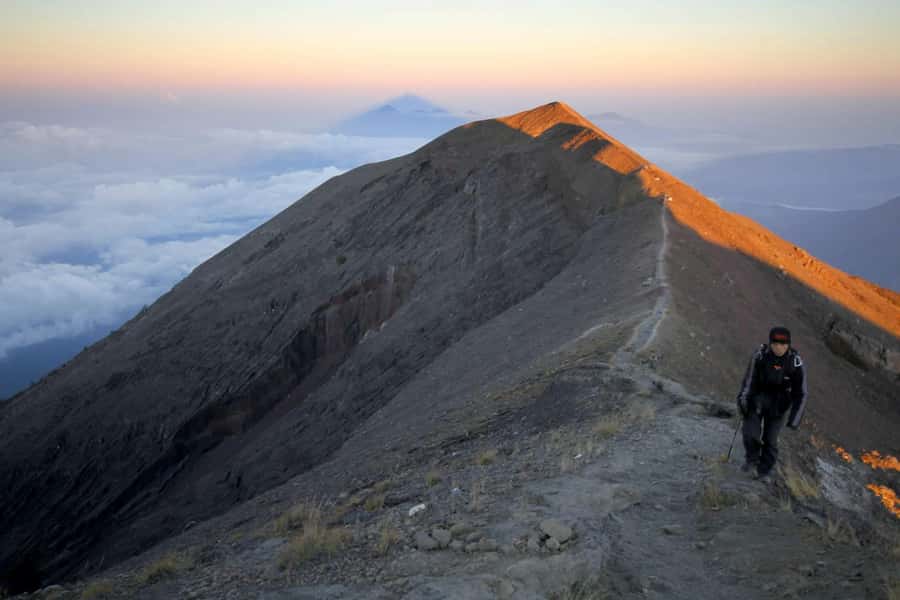
This is a challenging trek, and the mountain makes that clear in two ways: steepness and timing.
You’ll need good footing skills
Even when the trail seems manageable, you’ll face uneven sections. On the Besakih route especially, the final stretch can be steep enough that you may use your hands and crawl for stability. That sounds dramatic, but it’s usually short, controlled, and guided when you go with the right person.
Guides set the pace so you keep your legs
In the best moments of this experience, your guide makes the climb feel possible. People share how guides like Juna and Mudia handled the hard sections with patience and strong support, including helping with footing during tight areas. Another guide, Leni, is described as getting people up and down safely on the shorter Pasar Agung style climb, which tells me the most important part is technique, not bravado.
A practical tip: do not sprint early. The safest plan is to follow your guide’s pace. You want to arrive at the sunrise window with energy left, not with legs that feel like sandpaper.
Expect a cold stop, sometimes with fire
The day runs through cold hours. One person notes there can be a stop where a campfire is made because it gets really cold. If you are the type who feels cold easily, a warm layer and gloves are not optional. Even if you start warm, the summit hour can flip the switch.
Sunrise views and breakfast: what you’re really climbing for
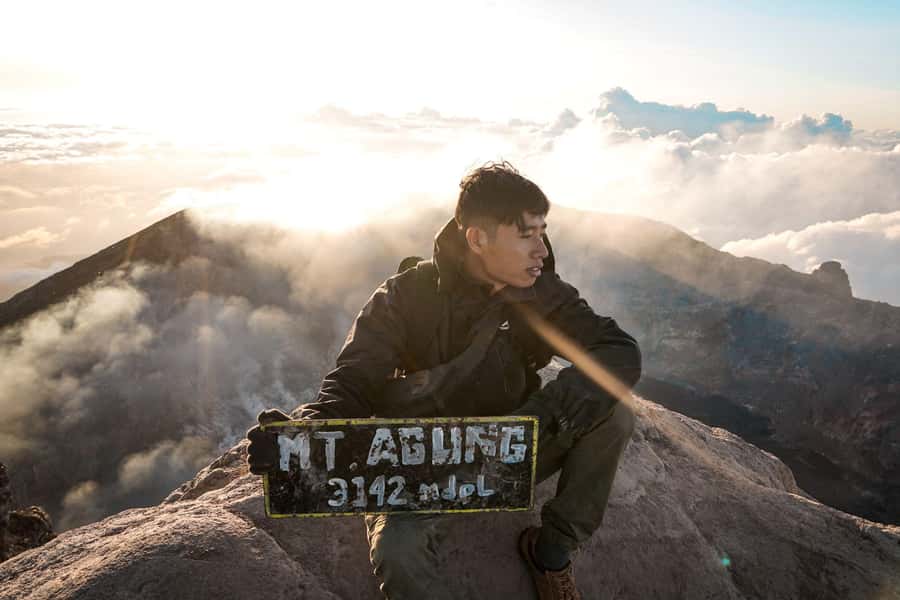
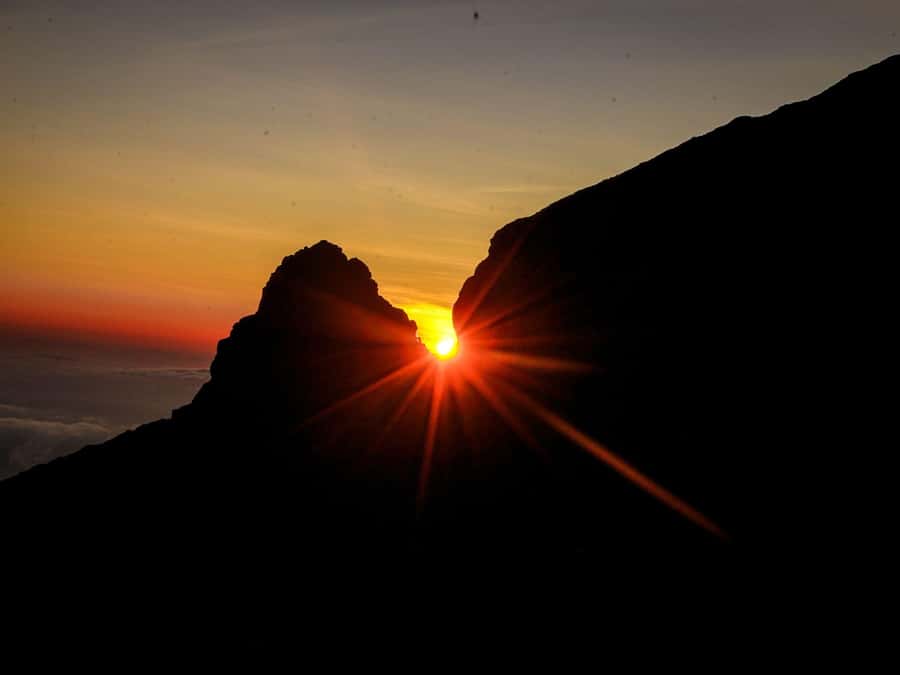
The payoff comes at dawn. The whole trek is designed so you can see sunrise from Bali’s highest point.
On the long Besakih route, you’re aiming to reach the top around sunrise, and you can expect views over the Caldera Batur and Lake Batur as the world wakes up. Even when clouds show up, sunrise light tends to create that dramatic “everything changed” feeling you only get from high points.
Then there is breakfast on the top. This sounds simple, but it matters. After a night climb, warm food and a moment to sit can reset your body for the descent. It also helps you slow down enough to actually enjoy what you’re seeing instead of rushing through it.
One person mentions a sunrise with a rainbow, which is rare, but it’s a good reminder that weather and light can turn the moment into something you remember for years. If you care about photos, be ready for low light and quick moments when the sky changes. Bring a camera and protect it from cold air moisture and sweat.
Descent safety: why the way down can feel harder than the way up
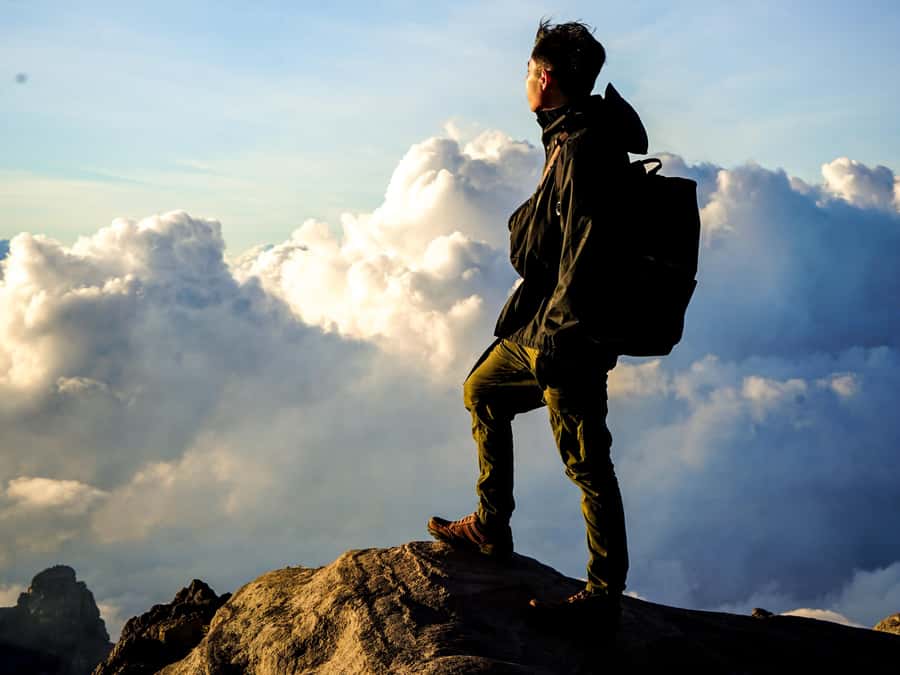
Here is the truth about volcano hikes: the climb makes you tired, and the descent makes you careful.
The descent can be described as challenging in its own way, including loose sand and stones. Your knees will notice this if your shoes have weak grip. You’ll also want a guide because you may find your confidence dipping when you realize the mountain keeps going downward for longer than you expected.
This is where the guide quality shows. Several people describe guides holding a hand, guiding steps, and helping with safety when the descent felt scary. There’s a good reason those “you’ll survive it” stories always include the words safe and supportive. It’s because the mountain does not care if you’re tired.
Practical gear note: you’ll be better off with hiking shoes with grip. If your shoes are more “city comfort” than “trail traction,” plan to adjust. You can still do it, but you’ll feel the extra risk in every step.
The guides and transfers: the difference between tough and brutal
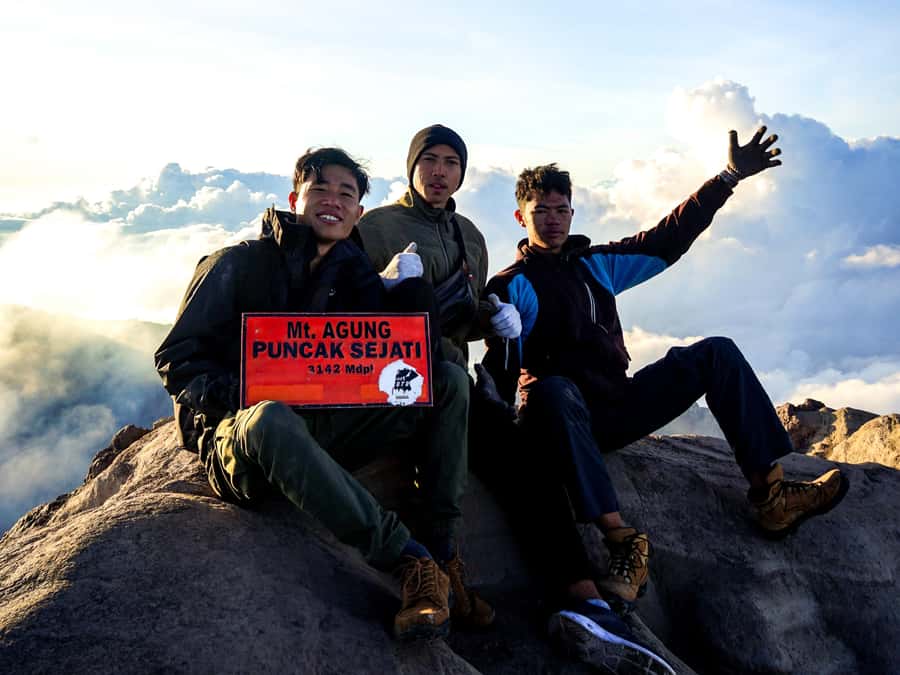
This experience is sold as a hike, but the real product is people doing their job well.
Transfers that run on time
Pickup and transport quality comes up repeatedly. People mention punctual drivers and comfortable rides, including Kadek and Gunawan. In a night trek, being late creates stress fast. When your driver shows up, safe and ready, you start calmer, and calm helps your body handle the climb.
Private guide support you can feel on the hardest sections
Guides are consistently praised for professionalism and care. Examples you’ll see in firsthand accounts include:
- Mudia, described as experienced and supportive the whole way
- Juna, described as fantastic, patient with pacing, and helpful with tight footing
- Khaki, noted as an experienced climber who supported people on the journey
- Leni, praised for safe assistance on the steeper shorter route
You’ll also see small, practical help that changes the mood. One person mentions a spare headlamp when batteries died after two hours, which is exactly the kind of detail that prevents a minor problem from turning into a bigger one. Another mentions warmth after sweating, like a jacket change and coffee.
That is the hidden value: guides handle the unexpected without making it a big event.
What’s included for $92, and what that really means for your day
At $92 per person for a 12-hour experience, the best value is that you are not paying extra for the basic necessities of a summit trek.
Included items help you move faster and worry less:
- Hotel pickup and drop-off
- Private local trekking guide
- Breakfast on the top
- Drinking water
- Hiking poles
- Headlamp/torch
- Glove
- All entrance fees
- Insurance
That pricing makes sense if you compare it to the cost of cobbling together transport, buying a headlamp, paying an entrance fee separately, and then paying a guide anyway. Here, the pieces are already aligned around the sunrise goal.
What is not included is also worth noting:
- GoPro or personal electronics
- Personal expenses (snacks on your own, extra cash needs, and anything you choose to buy)
If you’re budget-minded, pack well and avoid “I forgot gloves” problems. If you’re comfort-minded, you still get real gear from the included list, which can lower your out-of-pocket costs.
Packing list that prevents the common mistakes on Agung
You don’t need fancy gear, but you do need the basics that handle cold, wet, and uneven ground.
Bring:
- Hiking shoes with solid grip
- Jacket and warm layer for the summit hour
- Hiking pants
- Waterproof bag (for your phone and camera, especially at night and during dawn mist)
- Hat, gloves, and a flashlight or headlamp (headlamp is provided, but having your own backup can help)
Also, bring some cash for personal expenses. You’ll be on a mountain for a long time, and you do not want to run out of your own plan for small purchases.
Not allowed: alcohol and drugs. That’s both for safety and for keeping the experience focused on trekking.
Who should book this (and who should skip Mount Agung sunrise)
This trek suits you if:
- You’re physically fit enough for a challenging climb
- You enjoy difficult hikes where the reward is a real summit view
- You want sunrise as the centerpiece, not a side activity
- You prefer guided support and don’t want to plan logistics for a night climb
It is not suitable if:
- You are a beginner or you have health issues that make steep hiking risky
- You have altitude sickness concerns, since the experience is explicitly listed as not suitable for people with altitude sickness
If you get breathless easily on stairs or you have a medical condition that limits exertion, this is the wrong day to prove a point. Choose a less steep hike instead, and come back when you’re truly ready.
Weather reality: you hike in most conditions, but safety comes first
The trek operates in most weather conditions, which is good because Bali can be unpredictable. You are not guaranteed clear skies, and you should expect mist or cooler air around the summit.
If severe weather hits, the plan can be rescheduled or cancelled for safety. That is the grown-up approach. Sunrise trekking is not worth pushing when conditions turn dangerous.
Should you book this Mount Agung sunrise trekking adventure?
I think you should book it if you want a high-effort morning with real structure: pickup at night, a guide who knows the mountain rhythm, provided gear like headlamp and poles, and a summit breakfast with views over caldera country.
Skip it if you want an easy walk, you can’t handle cold, or you know you are prone to altitude issues. And if you’re on the edge, choose the route that matches your confidence. People describe the Pasar Agung option as more of a literal climb where you use your hands, so be honest about your comfort with steep terrain.
If you’re ready for a proper challenge, this is one of those Bali experiences where the work you put in directly shapes what you see at dawn. Get your layers ready, trust your guide, and let the sunrise do the rest.
FAQ
How long is the Mount Agung sunrise trekking experience?
It lasts about 12 hours in total, with trekking time included, typically around 10-12 hours for the full day.
When does pickup happen?
Pickup is around 8:30 PM to 9:00 PM, depending on your pickup location.
Where do you get picked up and dropped off?
Pickup and drop-off are available across many Bali areas, including Denpasar City, Kuta, Legian, Seminyak, Canggu, Sanur, Ubud, Nusa Dua, Jimbaran, and also areas like Karangasem, Badung, Gianyar, Bangli, and Klungkung Regency.
Where do the treks start?
You can trek Mount Agung starting from Besakih Temple or from Pasar Agung Temple, depending on the package/route you choose.
What is included in the trek gear?
You get hiking poles, headlamp/torch, and glove.
Is breakfast included?
Yes. There is breakfast on the top.
Is an entrance fee covered?
Yes. All entrance fees are included.
Is this trek suitable for beginners or people with health issues?
It is described as challenging and not suitable for beginners or those with health issues. People with altitude sickness are also not suitable for this trek.
What if the weather is bad?
The tour operates in most weather conditions, but if severe weather happens, it may be rescheduled or cancelled for safety.
What should I bring and what is not allowed?
Bring hiking shoes, jacket, hiking pants, and a waterproof bag. Alcohol and drugs are not allowed. Personal expenses are not included.
Newest reviews out of Bali
- Bali: Mount Batur Sunrise Hike Including Transfer & All Cost★ 4.8 · 39 reviews
- North Bali: Ulun Danu, Waterfalls, Swing and Monkey Forest★ 5.0 · 39 reviews
- Ubud: Traditional Balinese Painting Class★ 4.2 · 40 reviews
- Bali: Canyon Tubing Adventure★ 4.8 · 40 reviews
- Bali: Jatiluwih Rice Terraces 1 Hour Electric Bike Tour★ 4.7 · 41 reviews
- Bali: 3-Day Private Gili Islands Snorkel Tour with Hotel★ 4.2 · 44 reviews
- Bali: Penglipuran Village, Rice Terrace & Waterfall Tour★ 5.0 · 46 reviews
- Ubud: Kanto Lampo Waterfall, Art Market, Cretya & Tanah Lot★ 4.8 · 47 reviews
Mount Agung Treks, compared.
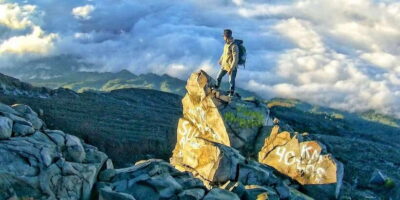
Mount Agung: Private Sunrise Hike with Breakfast
Read our review →Browse the lists this tour appears in