
Reviewed · ORANGUTAN TREKS
3ns Private Orangutan and Bornean Primates Kelotok Tour
Few trips mix comfort and wildlife watching as well as this 4-day private klotok houseboat cruise in Borneo. You get an up-close look at orangutans and other primates along the river route, and the day-to-day flow feels built for spotting animals without racing around.
What I like most is the combination of an on-board chef and included meals, plus the way the schedule is timed around real wildlife moments at feeding and rehabilitation sites. The possible drawback is simple: at the centers, no touching and no talking is enforced, so you will need to keep your voice down and act like a guest in the animals’ home.
Key highlights you should care about
- Private, small group feel (max 12), so you do not get the chaos of a large public boat tour.
- On-board chef with all meals included (breakfast, lunch, dinner, plus snacks, coffee, and pops).
- Camp Leakey with Prof. Birute MF Galdikas history tied to the orangutan rehabilitation study that began in 1971.
- Pondok Tanggui with a 9am orangutan feeding window, and an optional 2-hour jungle walk.
- Tree planting in your name in a forest planned to support orangutan diet.
- Optional night trek for nocturnal creatures, if you want a darker, quieter side of the jungle.
Why this 4-day klotok orangutan route feels so effective
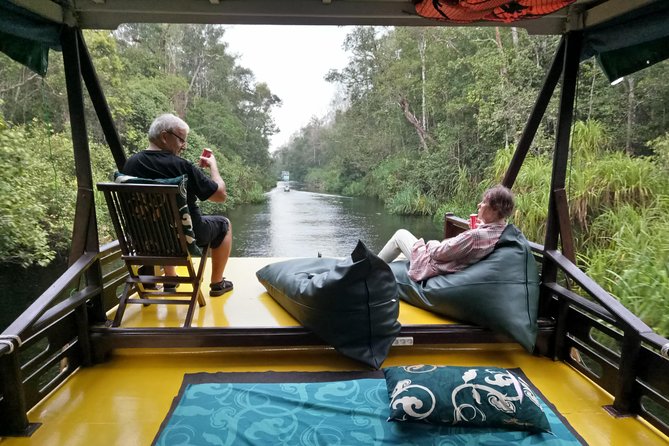
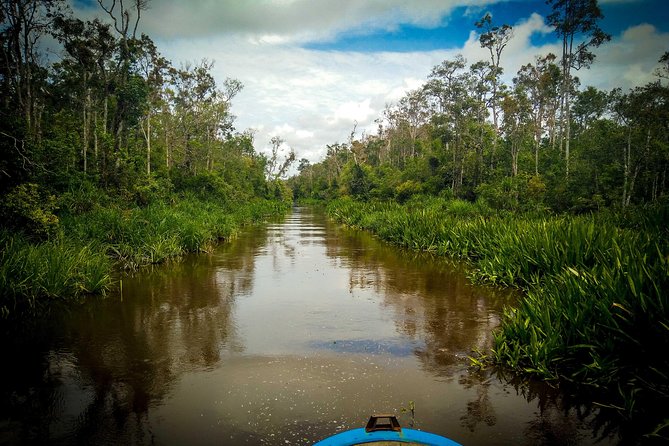
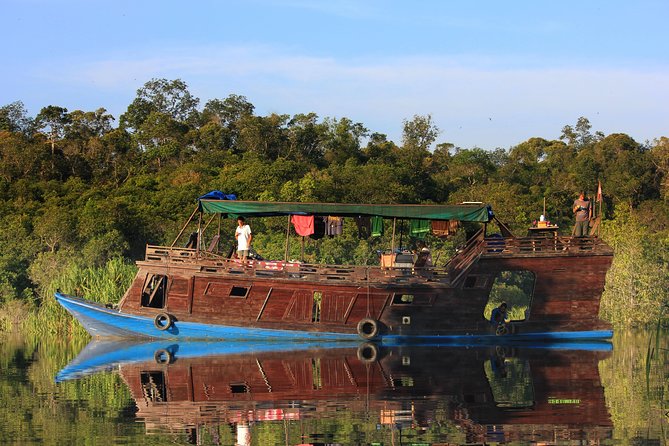
This is not a drive-in, look-at-a-brochure kind of tour. The river is the backbone of the experience, and a wooden houseboat keeps you in the right place at the right pace, so you can focus on animals and not logistics.
I also like that this tour is designed around rules that protect wildlife. At the centers, you are expected to keep quiet and hands to yourself, which helps the animals feel less pressured and lets you watch natural behavior instead of forced interactions.
More wild orangutan trekking:
- Orangutan Tour Tanjung Puting 2Nights
★ 5.0 · 97 reviews - Orangutan Houseboat Kelotok Tanjung Puting 3 Days Share Cost
★ 4.5 · 9 reviews
Price and value: what $591 includes (and what it does not)
At $591 per person for roughly 4 days, you are paying for more than a ticket. You get return transfers or accommodation transfers between Pangkalan Bun or Kumai, entry permits and tickets, and full board on the boat, including 3 breakfasts, 3 lunches, and 3 dinners plus snacks and drinks like coffee and pops.
That matters because this is a remote area where transportation, staff time, and boat operation are expensive. Also, the tour is private, and the group size is capped at 12 per booking, so you are not splitting the experience across a huge crowd.
What is not included is also worth knowing. Alcohol is available to purchase, insurance is not included, and if you plan to film with a drone, the SIMAKSI permit for flying drone is not included.
The center rules matter more than you think
The tour’s animal-watching ethic is very clear: at the centers, no touching and no talking is allowed. That sounds strict, but it is exactly why the experience is about watching, not interrupting.
You should plan your behavior around this. Speak softly when you move, follow the crew’s cues for when to pause the boat or step into viewing areas, and treat the whole scene like a wildlife viewing room where the animals are the stars.
It also changes how you take photos. Instead of trying to “get the shot” by talking or calling out, you will get better results by staying still, watching where the animals choose to move, and letting the moment happen.
Day 1: Pangkalan Bun to Tanjung Puting National Park via Kumai and the Sekonyer River
Your start is built around getting you from Pangkalan Bun to Kumai and onto the kelotok. You will be met after arrival and transferred to Kumai for boarding, then you cruise out on the river and start seeing the riverfront life right away.
After leaving the Kumai River, you continue cruising toward the Sekonyer River area, and you begin settling into the park experience from the water. This is one of the nicest first-day rhythms because it sets expectations. You are not “doing” the jungle all at once, you are learning the tempo of the river and where wildlife activity tends to show up.
Practical tip: try to arrive before 1pm on your first day if you can. The tour notes this as the preferable arrival window, and it helps the schedule stay smooth.
Day 2: Camp Leakey and the legacy of Prof. Birute MF Galdikas
Camp Leakey is where the tour’s orangutan story gets historical weight. You head there as the next destination, and it is described as the legendary orangutan rehabilitation camp associated with Prof. Birute MF Galdikas, whose study began in 1971.
In the camp area, you will boat a side creek through tea-colored water. This is one of those details that changes the mood of the place. The darker water and dense vegetation can make the area feel more enclosed, and it often increases your sense of being surrounded by wildlife habitat.
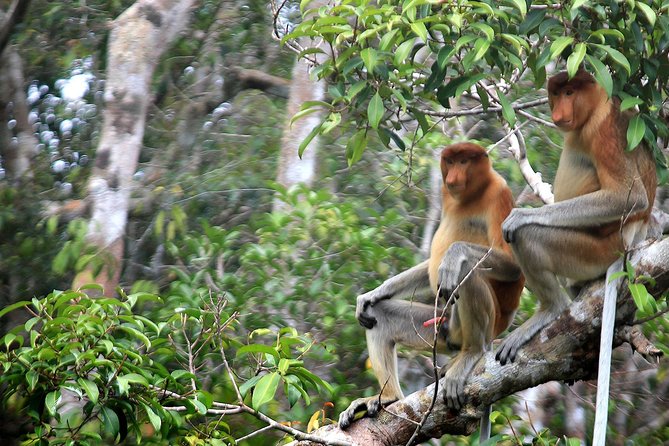
What you can expect at Camp Leakey is observation focused. You will watch orangutans and likely see other animals and birds in the broader area, but the experience stays respectful and quiet to protect the animals.
Day 3: Pondok Tanggui, 9am feeding, and an optional jungle walk
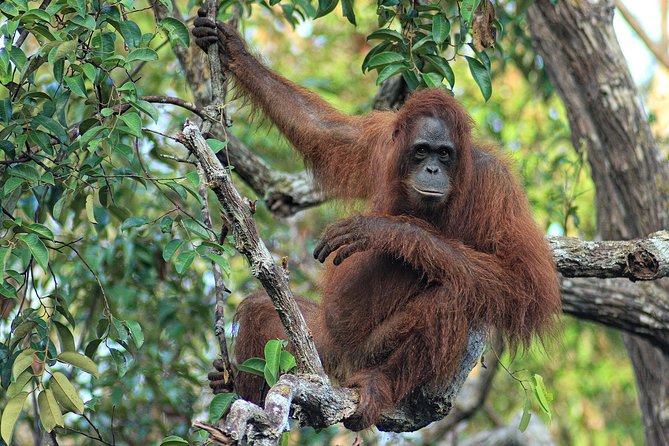
Day 3 is built around a standout time: orangutan feeding at 9am at Pondok Tanggui. If you like structured moments that you can plan around, this is your day.
The tour also offers an optional 2-hour jungle walk. I like having this choice because it lets you match the day to your energy level. If you want quiet time and deeper nature atmosphere, you can add it. If you would rather stay on the boat more often, you can skip it and still have plenty to see.
Even without the walk, the day is not only about one feeding point. The plan includes afternoon cruising, and it is during these slower transitions that you usually get variety, like other primates, birds, and general wildlife spotting from the boat.
Day 4: Wildlife spotting on the way back to Kumai
After breakfast, you get time for wildlife spotting while the boat cruises downstream toward Kumai, with about 2 hours mentioned for this portion. This is a smart way to end: you are not rushing straight to travel day, you are still in “watch mode.”
Then you leave the park area, departing Kumai in the morning and transferring back to Pangkalan Bun for hotel or the airport. The tour notes that you will be taken back before 12pm on your last day, and it says this is flexible, so build in a little buffer for travel.
On-board comfort: meals, crew service, and the small details
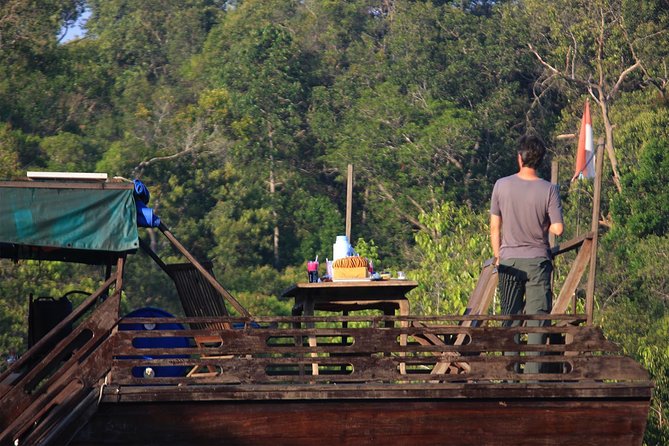
You sleep and live on a wooden houseboat, with an on-board chef providing meals. This is not just convenient. In the jungle, meals that arrive reliably and taste good are part of feeling safe and relaxed enough to actually focus on spotting animals.
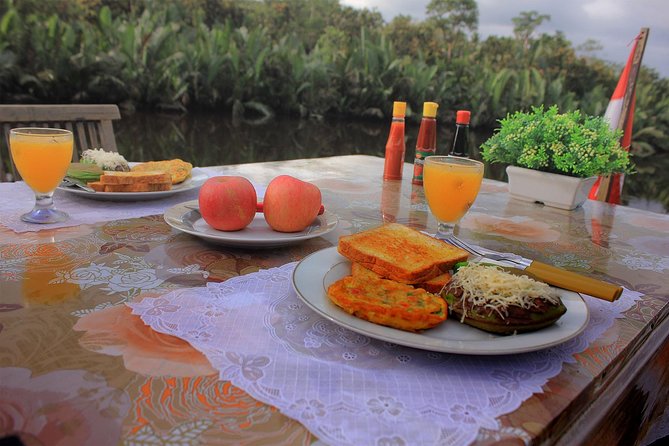
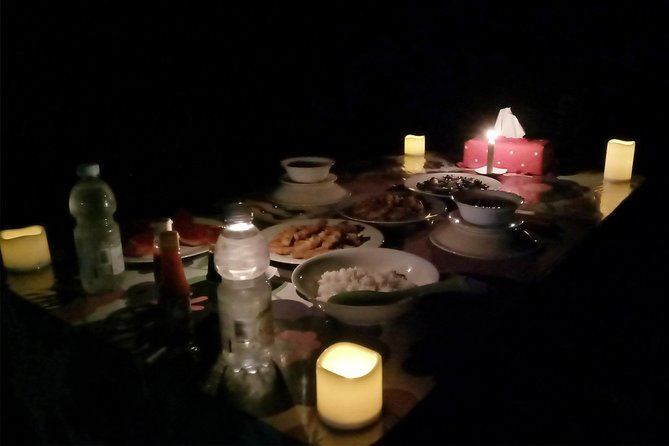
The inclusions are strong for a private tour: 3 breakfasts, 3 lunches, 3 dinners, plus snacks, coffee, and pops. Vegetarian meal options are available too, so if your dietary needs are clear, you should be able to stay comfortable.
Comfort details are where this type of trip can win or lose your mood. From experience-style feedback, I have seen emphasis on crew care, clean and comfortable boat conditions, and even small conveniences like the ability to charge camera batteries on board. If photography is a priority for you, those kinds of perks make a difference.
Tree planting in your name, and why it fits this kind of trip
One of the more meaningful inclusions here is the tree planting in your name. The description says the forest is planted to help enrich the orangutans’ diet.
I like this detail because it ties the experience to something beyond the viewing time. You still cannot control what happens in the wild, but you are supporting habitat efforts that matter for long-term survival and food availability.
It also gives the trip a human moment. You are not just watching, you are leaving a small footprint of support, and that can make the experience feel less like a one-time encounter.
Optional night trek: the nocturnal side of Borneo
This tour includes an optional night trek into the jungle to see nocturnal creatures. The word nocturnal is the key. The point is not “a scenic walk,” it is for creatures that are active after dark.
You should consider your comfort with darkness, uneven ground, and quiet walking. The listing does not spell out exact difficulty, so you will want to discuss expectations with your guide once you confirm.
If you do go, treat it like a listening experience. The more you stay calm and still, the more you can notice movement and sound.
Photography, drones, and how to avoid hassles
Camera time is part of the appeal, and the inclusions note tickets for traveler and camera. That means the viewing sites are set up for guests to watch and photograph without turning the day into a technical project.
If you want to use a drone, here is the catch: the SIMAKSI permit for filming of flying drone is not included. If drones are part of your planning, confirm permit details early so you do not end up stuck at the last moment.
Also, remember the centers have strict rules. No touching and no talking apply, and that means you should not use your voice to summon animals or direct them.
Guides and crew: what tends to make the difference
Private tours often rise or fall on the guide. In this region, you benefit most from a guide who can spot wildlife signals and help you understand what you are seeing.
Based on the names that come up repeatedly with this operator, you might work with guides like Ana, Maya, Alan (Alanconda), Vera, Nikita, or Pung, depending on the trip. Whatever the name, the common thread is focused wildlife spotting and a crew that keeps the boat moving at a pace that works for sightings.
That “pace” is important. Slower cruising helps, because animals do not always appear on your schedule. The boat crew typically works around the habitat, pausing when there is action worth seeing.
Who this tour is best for, and who should think twice
This tour is a great match if you want a private wildlife experience, you care about orangutans and primates, and you are willing to follow strict viewing rules at centers.
It also suits families with kids who can handle nature settings. The minimum age is 3, and children must be accompanied by an adult, so there is flexibility, but you still need patience and a calm attitude around wildlife.
You might think twice if you hate quiet rules or you want nonstop talking and guide narration all day. The tour’s style is built around restraint, and it works best when you embrace silence as part of the experience.
Should you book this 3ns private orangutan and bornean primates klotok tour?
I would book it if your goal is simple and specific: see orangutans and other wildlife in a river-based setting, with meals taken care of and a private boat setup that stays small. The combination of Camp Leakey, Pondok Tanggui at 9am, optional night trekking, and the tree planting gives you more than one kind of payoff.
I would hesitate if you need a lot of freedom to talk loudly, if you expect a fast-paced checklist itinerary with lots of structured stops, or if drone filming is central and you do not want to handle permits.
If you want a respectful, comfortable, real-wildlife Borneo experience, this one is built for that.
Newest reviews out of Pangkalan Bun
- Orangutan Tour Tanjung Puting 2Nights★ 5.0 · 97 reviews
- Orangutan Houseboat Kelotok Tanjung Puting 3 Days Share Cost★ 4.5 · 9 reviews
Orangutan Treks, compared.
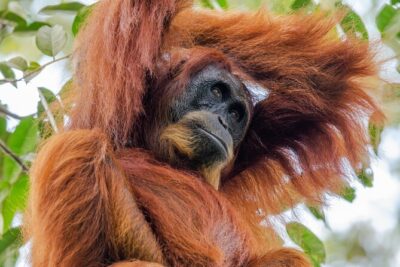
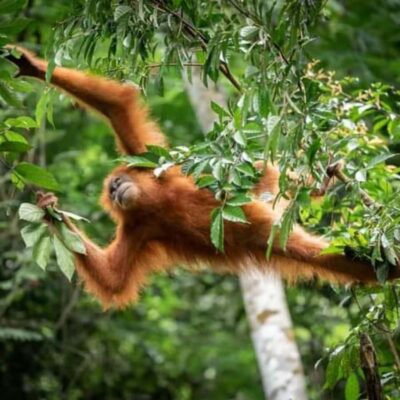
3-Day Ethical Orangutan Jungle Trek | Bukit Lawang, Sumatra
Read our review →
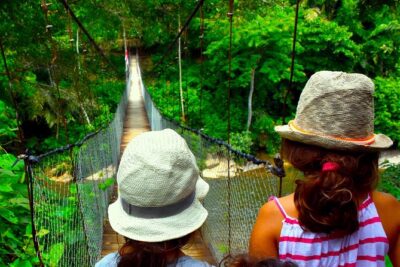
FAMILY JUNGLE TOUR: Orangutan Trek (4-hours hike) by EcoTravel Bukit Lawang
Read our review →
Orangutan Houseboat Kelotok Tanjung Puting 3 Days Share Cost
Read our review →Browse the lists this tour appears in