
Reviewed · ZOOS & WILDLIFE PARKS
Bali Zoo: Guided Ethical Elephant Care Experience
This is an interesting Bali Zoo day because it focuses on ethical elephant care and keeps the action elephant-led. You spend hours around Sumatran elephants with an English-speaking mahout, learning how daily routines, behavior, and welfare fit together.
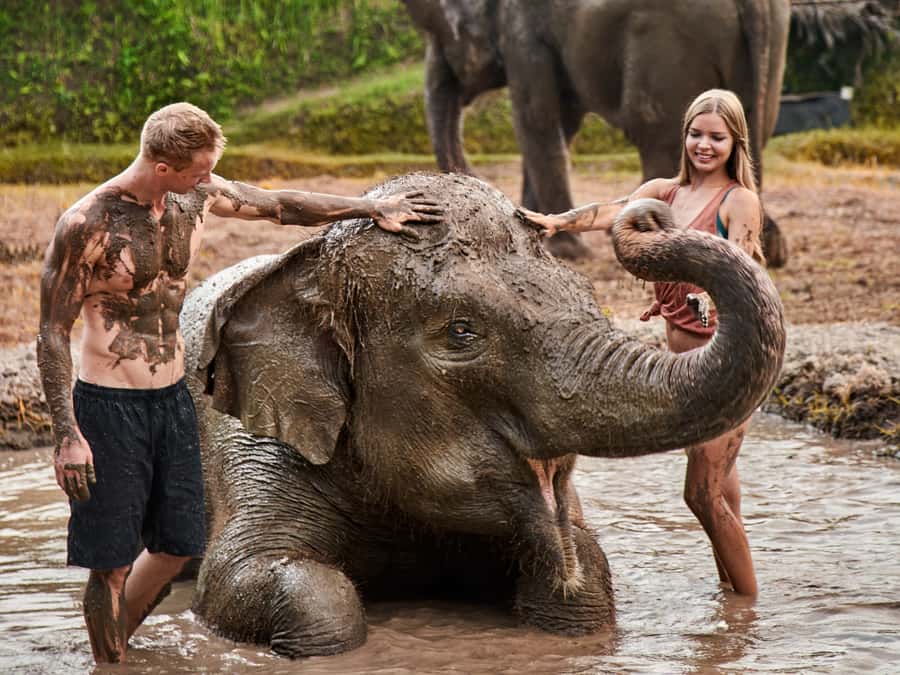
I especially like two things. First, the interaction rules are clear, you are not allowed to force, chase, or control the elephants. Second, the main event is not a stunt, it is the mud bath, river time, feeding, and gentle scrubbing that lets you see natural routines at a calm pace.
One consideration before you book: the experience has photos taken by staff, and the photo packages can be pricey. Also, lunch is included, but if you eat vegetarian only, it can be worth checking what is offered for your group.
Key highlights at Bali Zoo’s ethical elephant program
- Mahout-supervised Sumatran elephant care inside Kampung Sumatra
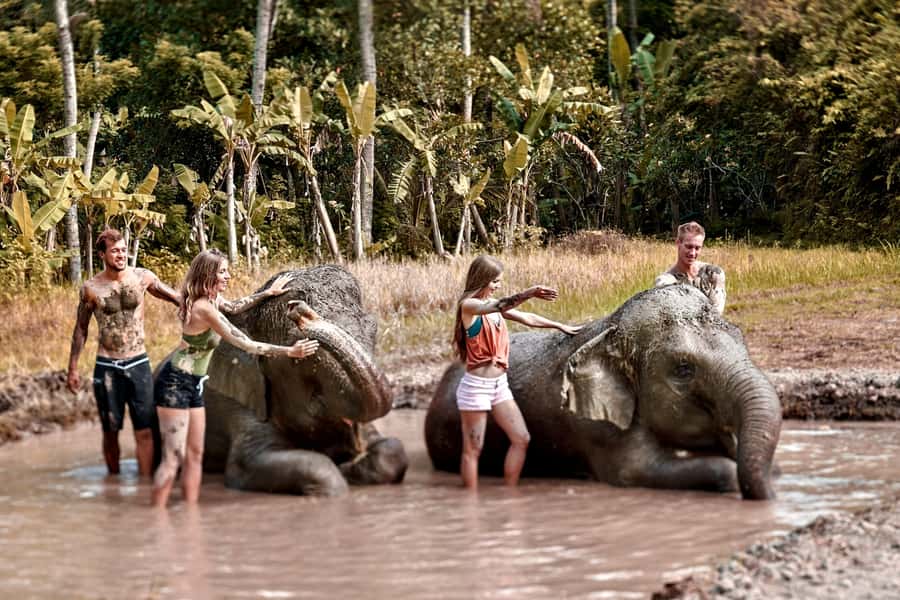
- Mud spa and river time that follow the elephants’ comfort level
- Elephant-led interactions, with limits on close contact and no forcing
- Feeding basics with guide explanations of elephant behavior and daily care
- Towel, lunch, and zoo access after the elephant session
- Optional guided breakfast with orangutans if you upgrade
A Responsible Elephant Day at Bali Zoo, Sumatran Mud Spa and Mahout-led Care
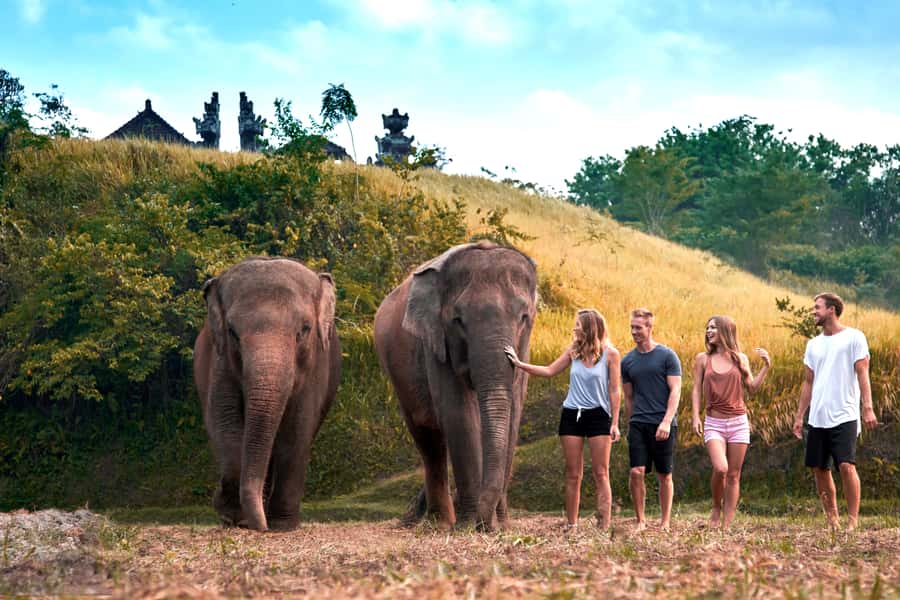
If your idea of a great animal day is one where you feel like a student instead of a performer, this hits the mark. At Bali Zoo, the elephant experience is built around education, conservation, and strict animal welfare guidelines. You meet your program team, then spend the day learning elephant behavior while the elephants decide how involved they want to be.
The big draw is that you are not chasing an elephant around for a selfie moment. You are watching how they move when they are ready, how mud bathing helps them, and how mahouts manage care with patience. One person in your group might have a more hands-on moment, while another might mostly observe, and both can still feel like the point of the day.
The day runs about 7 hours total, and it is designed to feel paced. That matters. Elephants are not props. A calm program is also better for you, because you can actually pay attention.
Other zoo and wildlife park tickets:
- Elephant Care Experience with Mud Bath at Bali Zoo
★ 4.6 · 1,392 reviews - Bali Zoo: Breakfast with the Orangutans
★ 4.5 · 725 reviews - Bali Zoo Entrance Ticket
★ 4.6 · 411 reviews
Getting There From Your Bali Hotel, and What the 7 Hours Feel Like
Pickup is optional, but it is usually the easiest way to make the day smooth. Transfers are offered from many common areas: Kuta, Seminyak, Canggu, Nusa Dua, Tanjung Benoa, Jimbaran, Sanur, and Ubud. The pickup times split by area, with most places starting at 06:30 AM, while Ubud and Sanur start at 07:00 AM.
For me, the practical advantage is timing. An early start means you can get into Kampung Sumatra, get briefed, and settle before the day gets too hot and too busy. And because the experience is timed as a full half day, the return transfer (when you choose it) helps you avoid the end-of-day scramble.
Once you arrive at the zoo, you will check in near the main entrance in Singapadu. From there, it is guided movement into the elephant area. Expect the day to include shower and refresh time after the elephant portion, plus a lunch break and time to explore the rest of Bali Zoo.
Kampung Sumatra Check-In, Welcome Drinks, and Mahout Ground Rules
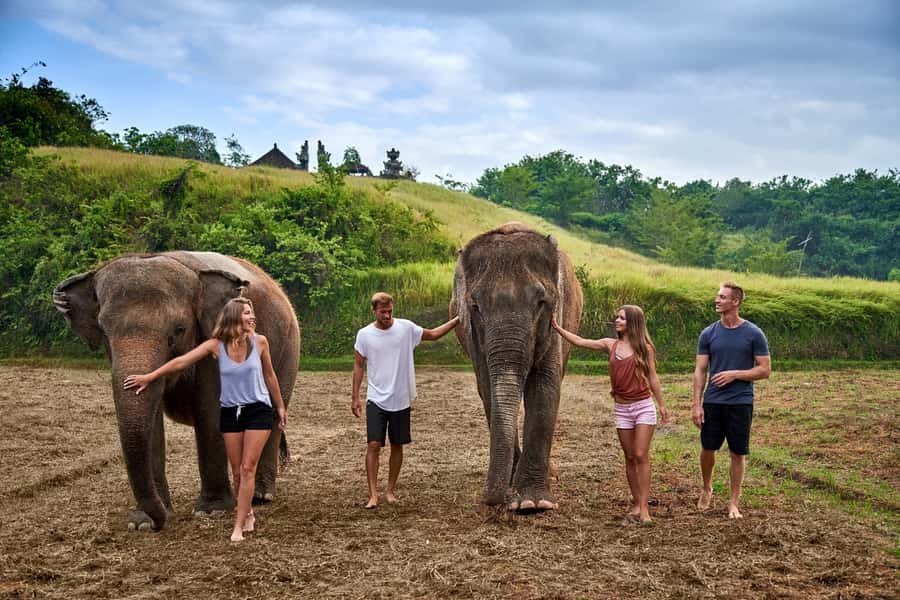
The program begins once you arrive at Kampung Sumatra inside Bali Zoo. You will get a light refreshment, and then your English-speaking mahout introduces the experience. This is not fluff. You get a real rundown of elephant behavior and the daily care routine, including the welfare rules that shape everything you do that day.
Here is what makes those rules important: they are not just safety talk. They explain why interactions stay limited and guided. Elephants can choose whether they engage. If an elephant is not interested in coming closer or joining a moment, the program adapts.
This is also where you learn why mud bathing is a big deal. You will hear that mud helps regulate body temperature and supports healthy skin, so the mud spa is not just for your photos. It is part of the elephant’s body care, guided by mahouts.
If you are hoping for a ride, you will want to know the elephant program is built on ethical, on-foot interaction rather than riding. One review detail specifically notes that Bali Zoo stopped elephant rides on ethical grounds and now focuses on on-foot experiences twice daily.
Elephant-led Mud Bath and River Time, How Close is Close
This is the heart of the experience. You observe the Sumatran elephants in their environment, moving through areas that include mud and river settings. The program is structured so the elephants can take the lead, at their own pace.
Mud bathing is often where people feel the day click. You can help apply mud during the supervised interaction, but you are not controlling anything. If an elephant wants to pause, pause. If it wants to move toward water, you follow the mahout instructions, not the crowd’s momentum.
Close-range viewing is allowed only with mahout approval. That keeps the program from turning into a stampede. You are also explicitly told you cannot force, chase, or control the elephants. In practice, that means you spend time watching behavior and learning, not trying to out-muscle the moment.
River time can be playful in a very elephant way. When elephants shift into water routines, you may get water splashes, including water sprayed from trunks. It is usually part of their natural behavior, and the staff keep it calm and supervised.
One more detail I appreciate: activities are adjusted based on the elephants’ comfort and condition. That is what makes the day feel more like care and less like entertainment.
Something different for the next Bali day:
- Bali: Sunrise Mount Batur Guided Hike with Breakfast
★ 4.8 · 9,660 reviews - Bali: Mount Batur Sunrise Guided Hike and Natural Hot Spring
★ 4.8 · 9,284 reviews - Bali: Full-Day Instagram Highlights Tour
★ 4.8 · 7,817 reviews - Bali/Nusa Penida: East & West Highlights Full-Day Tour
★ 4.7 · 6,263 reviews
Feeding, Trunk Water, and Scrubbing With Brushes
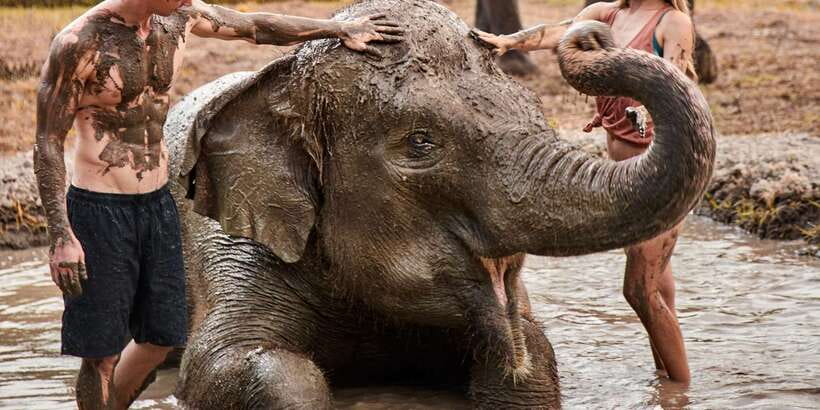
After mud time, the program usually moves into gentle, guided care moments. You may feed the elephants, and you will learn what they are offered and how feeding works within welfare guidelines. Feeding is not just a thrill activity, it is tied to learning elephant daily routines and social behaviors.
Then comes scrubbing and brushing. This is often described as surprisingly satisfying, because the elephant is essentially participating in its own grooming. You might help with brushing under supervision while mahouts manage the setup and timing. The goal is cleanliness and comfort, and you learn to read what the elephant is doing, including signs of relaxation or interest.
Trunk interactions can feel close, but they remain supervised and limited. You might offer hands-on contact during approved moments, and you will likely be reminded to keep movements slow. When an elephant decides to push a trunk closer, it can feel like the elephant is choosing connection, not being pressured.
This part is also a good test of whether the program matches your expectations. If you want hard, constant interaction, you might feel it is not aggressive enough. If you want respectful, guided interaction, this is the sweet spot.
Lunch, Showers, and Exploring the Rest of Bali Zoo
Once the elephant session ends, you refresh and enjoy lunch. Lunch is included, and a towel is provided, which is helpful because the day is water and mud friendly, not dry and tidy.
After that, you get access to explore Bali Zoo beyond the elephant area. The zoo includes a range of animals and conservation programs, so you are not stuck staring at only elephants all day. This is a good way to balance the day: elephant time is intense and emotional, and the rest of the zoo gives you a breather.
A practical note if you are vegetarian. One negative point that comes up is that vegetarian options at the buffet may be limited for some groups. It does not mean there is no choice, it just means you should not assume a full spread of vegetarian mains.
Also, the zoo setup includes showers and clean-up time, so wear your change of clothes plan seriously. If you skip swimwear, you will still get cleaned up, but you might feel uncomfortable during the transition.
Optional Upgrade: Guided Breakfast With Orangutan
If you add the optional upgrade, you can enjoy a guided breakfast with orangutans inside the zoo. The exact breakfast flow depends on the option you select, but the key point is that it is conducted under staff supervision and follows ethical wildlife viewing guidelines.
Why do people upgrade? Because it adds another animal encounter that is still guided. You get a different vibe than the elephant mud day: orangutan time tends to feel more observant and less splashy, and breakfast itself can break up the long half-day schedule nicely.
If you are on a strict budget, skip the upgrade and spend your money on the elephant session, which is the main event. But if you love primates and want more time in the zoo with guided staff, the breakfast is a logical add-on.
Value for $89, and What You Should Expect to Pay Extra
At around $89 per person for a 7-hour guided program, the value comes from the combination. You get zoo admission, an experienced English-speaking mahout, welcome drinks and snacks, food for feeding, lunch, a towel, insurance, and optional round-trip transfers depending on your selected option.
That is a lot included for one half-day experience, and the biggest value factor is the supervision model. When staff manage interaction rules and elephants are allowed to respond naturally, you are paying for structure and welfare controls, not just for being close to animals.
What is not included is your personal spending. The other real-world extra is photos. Multiple people call out that the photo packages from the staff are expensive. In one example, the photo cost mentioned is around 1.5 million IDR, roughly $60 to $70 depending on exchange rates. The zoo photographers can take photos during your elephant moments, and they are convenient, but you may want to plan ahead and take your own photos too.
If you are careful with photo spending, you will probably feel good about the overall price.
Who This Elephant Care Experience Suits Best, and Who Should Skip It
This experience fits best if you want an education-first elephant day with welfare rules. It is also a good pick if your group includes people who get nervous around animals, because close contact is structured and supervised, and the mahouts set behavior expectations early.
It is suitable for adults and children age 12 and up. There is also a minimum height requirement of 120 cm. If your child meets the height minimum, they are charged at the adult price.
It is not suitable for pregnant women, people with mobility impairments, or anyone under the height limit.
If you are expecting a fully accessible, stroller-friendly, low-movement experience, this is not the right fit. Mud, water, and guided movement are part of the day.
My Practical Tips Before You Go, So You Enjoy It More
You will have a better day if you plan for a wet, muddy half day.
Bring:
- Change of clothes
- Sandals
- Sunscreen
- Swimwear
Wear sandals you can commit to. Water and mud do not play by your fashion rules. Sunscreen matters because a lot of the day happens outdoors.
Also, be realistic about timing and signage. One review mentions confusion about where to go afterwards for bathing during the upgrade process. Even if your path is clear, it is smart to ask staff right after your elephant session where the refresh and bathing area is, so you do not lose time walking around.
One more smart move: take your own photos during the moment, then decide later if you want staff photos. When photo packages feel pricey, having your own keeps you in control.
Should You Book Bali Zoo’s Guided Ethical Elephant Care Experience?
I think you should book if you want a guided, mahout-supervised elephant day where the elephants lead and the program follows clear welfare rules. The mud bath, river time, feeding, and brushing moments are memorable because they are practical and calm, not forced tricks.
You might skip or choose a different style of animal experience if photos are a dealbreaker for you, because the staff photo packages can add a big extra cost. And if you are vegetarian only, ask what is offered for your group so you are not stuck with limited choices at lunch.
If your main goal is an ethical, structured elephant experience with real elephant behavior learning baked in, this is a strong value call at $89 and a solid use of your Bali time.
Newest reviews out of Bali
- Bali: Mount Batur Sunrise Hike Including Transfer & All Cost★ 4.8 · 39 reviews
- North Bali: Ulun Danu, Waterfalls, Swing and Monkey Forest★ 5.0 · 39 reviews
- Ubud: Traditional Balinese Painting Class★ 4.2 · 40 reviews
- Bali: Canyon Tubing Adventure★ 4.8 · 40 reviews
- Bali: Jatiluwih Rice Terraces 1 Hour Electric Bike Tour★ 4.7 · 41 reviews
- Bali: 3-Day Private Gili Islands Snorkel Tour with Hotel★ 4.2 · 44 reviews
- Bali: Penglipuran Village, Rice Terrace & Waterfall Tour★ 5.0 · 46 reviews
- Ubud: Kanto Lampo Waterfall, Art Market, Cretya & Tanah Lot★ 4.8 · 47 reviews
Also in Zoos & Wildlife Parks
- Elephant Care Experience with Mud Bath at Bali Zoo
- Bali Zoo: Guided Breakfast With Observing Orangutans
- Bali Zoo: Breakfast with the Orangutans
- Bali Zoo Entrance Ticket
- Riverside Spa Treatment near Bali Zoo
- Bali Bird Park Admission Ticket
- Bali Bird Park: 1-Day Admission Ticket
- Bali Bird Park Admission Ticket with Hotel Transfer