
Reviewed · ZOOS & WILDLIFE PARKS
Elephant Care Experience with Mud Bath at Bali Zoo
This experience is interesting because it mixes rescued Sumatran elephants with a full day of real interaction, including mud baths and a river splash, all guided by trained handlers. It is one of those Bali animal days where the focus is behavior, not just posing.
I love the hands-on elephant time (feeding, mud play, and bathing) and I especially like the way the day is explained by the English-speaking mahout. In the feedback I’ve read, guides like Niki and Boy, plus tour guide Madda, get called out for being friendly and clear.
One drawback to consider is the photo package can be expensive, so plan on using your own phone for most pictures.
Key highlights you should know before you go
- Rescued Sumatran elephants and a handler-led program focused on behavior and safety
- Mud, sand, and river bathing built into the flow, not just a quick photo stop
- River Wos splash time, followed by shower and change back at the zoo
- Lunch plus zoo admission so you still get a full animal day after the elephants
- Optional breakfast with orangutan, if you want to add one more animal encounter
Elephant Care Experience with Mud Bath at Bali Zoo, what the day really feels like
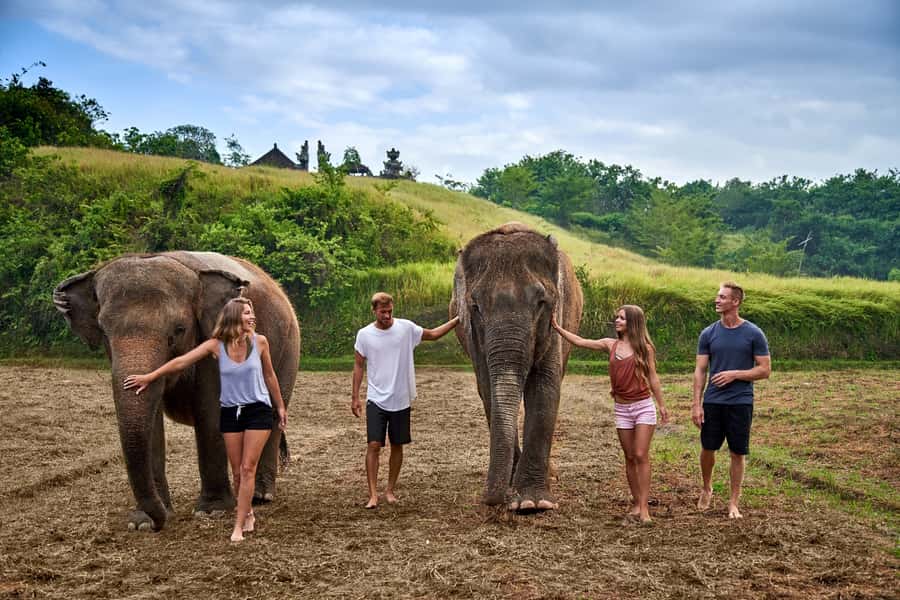
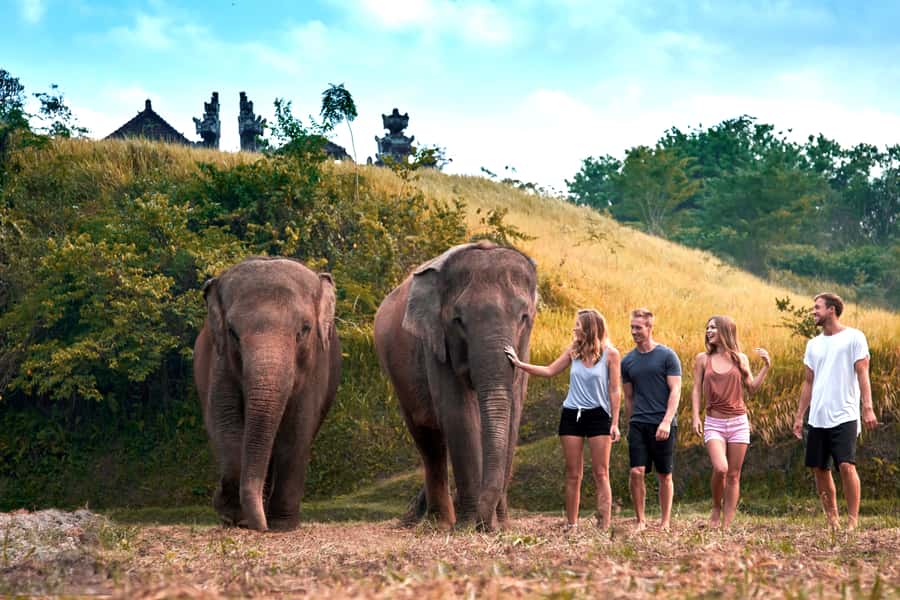
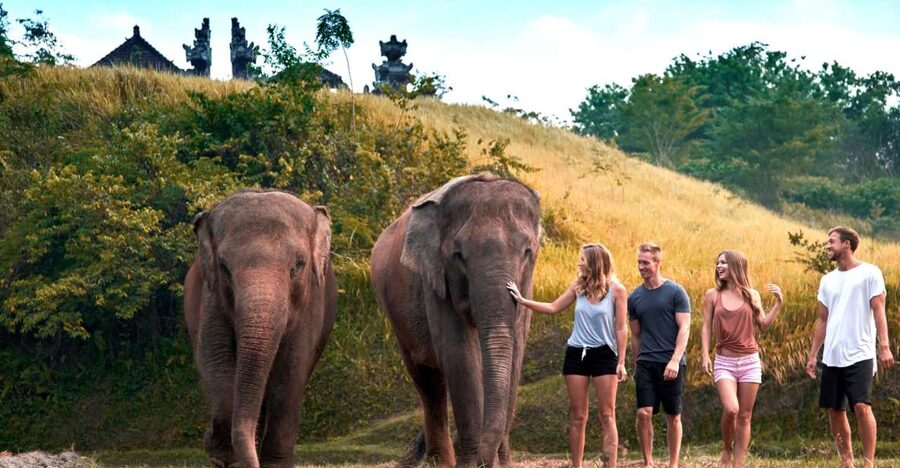
At Bali Zoo, the Elephant Care Experience with Mud Bath is built around a simple promise: you spend the day with rescued Sumatran elephants while an experienced mahout explains what you’re seeing. You are not watching from far away the whole time. You’re walking with the elephants, feeding them fruit, and joining their mud and water routines.
What makes it more than an animal tour is the emphasis on behavior. You learn why elephants enjoy mud in warmer months, and you get a chance to observe how they move, rest, and respond during the day. The goal is a respectful experience, not forcing anything.
The day also has a nice rhythm. It starts with a short welcome and briefing, then moves into hands-on elephant time, then a river splash and cleanup, and then lunch and free time around the rest of the zoo.
Other zoo and wildlife park tickets:
- Bali Zoo: Breakfast with the Orangutans
★ 4.5 · 725 reviews - Bali Zoo Entrance Ticket
★ 4.6 · 411 reviews - Bali Bird Park: 1-Day Admission Ticket
★ 4.6 · 82 reviews
The morning flow, pickup timing, check-in, and meeting your mahout
Most people do this as a morning-to-early-afternoon day. Hotel pickup is optional for several Bali areas, with pickup times of 06:30 AM for places like Kuta, Seminyak, Canggu, Nusa Dua, Tanjung, Benoa, Jimbaran, and 07:00 AM for Ubud and Sanur.
You’ll arrive at Bali Zoo at the main entrance on Jl. Raya Singapadu in Singapadu. Then you head into the elephant program area at Kampung Sumatra. There is a brief introduction to the activity, plus a complimentary snack and coffee or tea, before you meet your English-speaking mahout.
This is the part I’d treat as your warm-up. You’ll get the safety rules, an overview of the elephants’ behavior, and a chance to ask questions before you’re anywhere near mud. If your group wants to move fast once you start, this briefing is where that pacing gets set.
A small but important detail: the program is designed around the elephants’ preferences. The day’s activity order can still happen in the planned stages, but the elephants are not forced to do anything they don’t want to do.
Feeding rescued Sumatran elephants and learning what you’re looking at
After the welcome, you’ll be given fruit to feed the elephants. This is not just a gimmick moment. It’s your first real interaction cue: elephants approach differently depending on mood, body language, and the handler’s guidance.
Then you’ll move toward the river bank area where the elephants are free-roaming. This is where the day becomes active. You get chances to play, feed, and interact while the mahout keeps things calm and organized.
One reason this works well is that the handler is guiding what to pay attention to. You’re not left wondering whether your movements are too quick or too slow. You’ll learn how to behave around these large animals and why certain routines make sense.
And yes, you will likely get photos. It’s common to be included in pictures during the interaction, and the staff tends to help you get your shot without turning the whole experience into a frantic selfie contest.
The mud bath and sand spa, why elephants go for earth and water
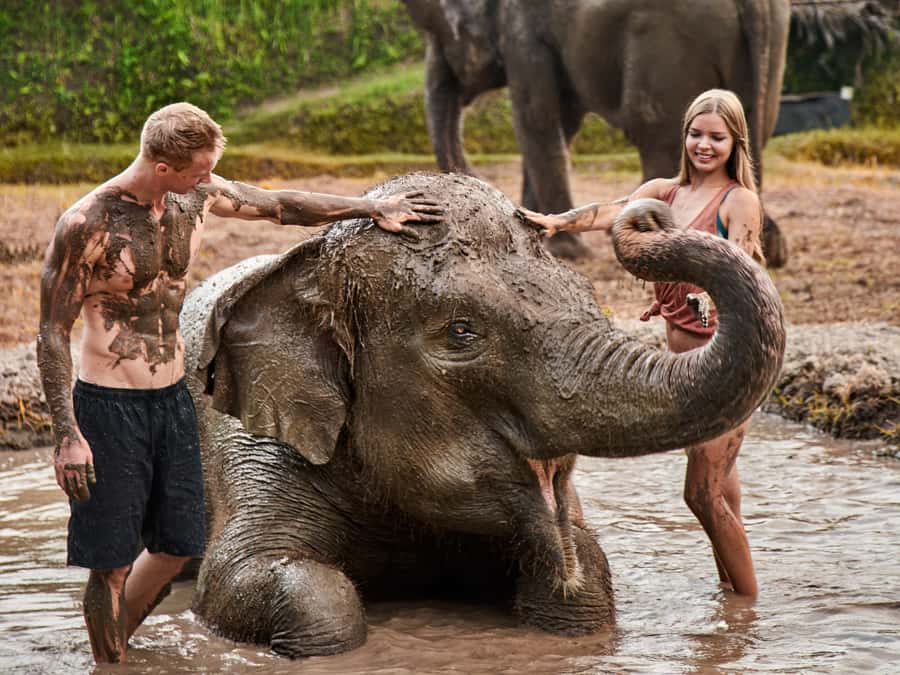
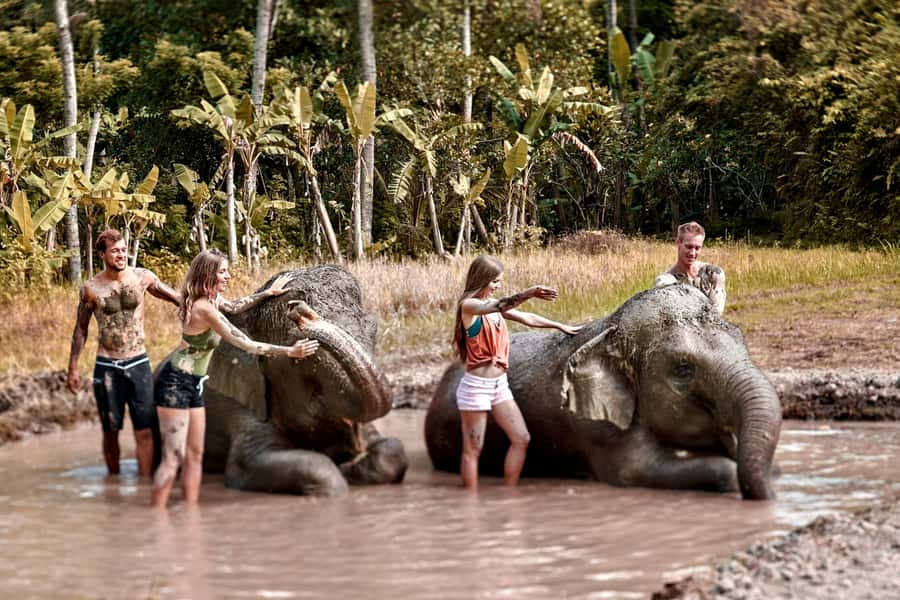
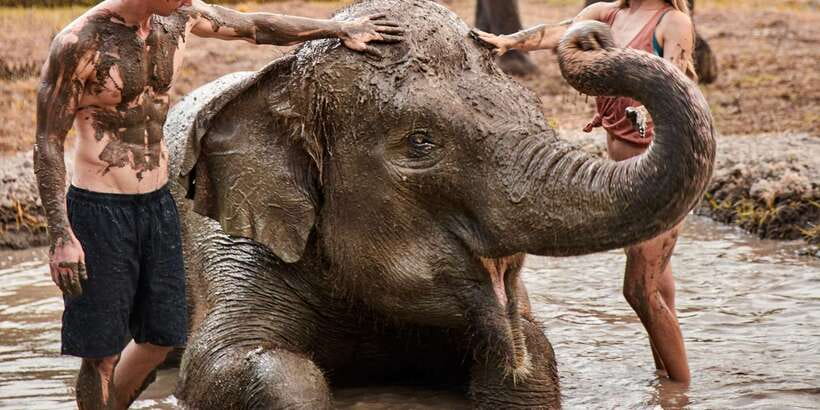
The mud and sand spa is the headline moment for most people. You and the elephants walk to the mud area and then it’s time to get dirty, watching and participating as the elephants enjoy the mix of earth and water.
Mud baths are more than fun in the sun. The day’s explanation covers why you see elephants basking in mud during summer months. Even if you don’t remember every scientific term, you’ll understand the practical point: elephants use mud in their own routines to deal with heat and comfort.
Here’s the best way to think about the mud time. It is not a single splash and done moment. You’re there long enough to notice how the elephants settle, how they move through the space, and how your handler manages space between you and the elephants.
Safety matters, and the program is explicit that the elephants are not forced. That means your experience depends on elephant comfort. If they’re in a playful mood, you’ll see more. If they’re calm and resting, you’ll still have great viewing time.
Something different for the next Bali day:
- Bali: Sunrise Mount Batur Guided Hike with Breakfast
★ 4.8 · 9,660 reviews - Bali: Mount Batur Sunrise Guided Hike and Natural Hot Spring
★ 4.8 · 9,284 reviews - Bali: Full-Day Instagram Highlights Tour
★ 4.8 · 7,817 reviews - Bali/Nusa Penida: East & West Highlights Full-Day Tour
★ 4.7 · 6,263 reviews
Walking to River Wos for the splash and scrub down
After the mud play, you’ll walk with the elephants to a nearby river area, River Wos, to join them for a splash. This is the part that turns the day from messy-cute into genuinely memorable.
You’ll bathe and scrub down as the elephants move through the water. It’s also where you realize that the day is designed as a full physical routine, not random activity segments. The mud leads into the rinse, then cleanup follows, and lunch waits after you’re dried off.
Back at the zoo, there is time for a shower and to change. In the feedback I’ve seen, lockers and showers are appreciated here because you don’t want to keep your wet clothes on while you explore the rest of the zoo.
If you’re planning what to wear, think like this: you want something that works in mud, handles water, and doesn’t punish you with discomfort for the rest of the afternoon. That’s why swimwear plus a change of clothes is the smartest combo.
Lunch and zoo time after the elephants, what you get beyond mud
The program includes lunch after your elephant time. It’s a relaxing break, and it helps you avoid the classic Bali problem of being exhausted, muddy, and starving with no plan.
If your booking is large, the lunch becomes a buffet style if the group exceeds 20 people. Otherwise, you still get an included lunch as part of the package.
Then you have free time to explore the rest of Bali Zoo. The zoo is home to over 300 rare and exotic animals, including Komodo Dragon, Sumatran Tiger, Orang Utan, and the Bali Starling. This matters because it keeps your day from feeling like “just one activity.”
Even if you focus mostly on the elephant area, the open exploration time is a big value add. It means you can slow down, see what catches your eye, and not feel rushed by a strict schedule.
Orangutan breakfast upgrade, what it adds to the day
There’s an optional upgrade called breakfast with orangutan. If you add it, you’ll enjoy breakfast with orangutans at their playground.
This upgrade is for people who want more than one animal highlight. It’s also useful if you’re traveling with kids or with a group where someone will not be satisfied unless they see more than elephants during the day.
In practical terms, the orangutan breakfast is not set up like a free-for-all cuddle session. You may see orangutans moving around nearby, and for photos you likely need to stay at a distance set by the experience rules. The key value here is the timing and the setting: you’re in the zoo before the rest of the day starts, seeing orangutans in their own space.
Price and value at $93, what you’re paying for
At about $93 per person, this elephant mud bath experience can feel like a lot or like a fair deal, depending on how you judge value. Here’s the honest breakdown of what you’re getting for that price:
You get zoo admission, skip the ticket line, welcome drinks and snack, an experienced English-speaking mahout, fruit for feeding the elephants, lunch, a towel, and insurance. Return transfers are included only if you choose the pickup option for your area.
So you’re not just paying for mud. You’re paying for a guided, structured day with:
- multiple interaction moments (feeding, mud play, river splash)
- included meals
- time to explore the zoo afterward
- included basic gear (towel) and insurance
Also, the overall satisfaction level is high. The experience shows a strong average rating of 4.6 with a large number of reviews.
One extra cost to plan for: professional photos. A number of people call out that the professional photo package can be pricey, sometimes around 90 euros, and one tip I’d follow is to shoot your own photos as you go. If you want the pro shots, decide before you get too emotionally attached to your final “best photo” moment.
What to pack for mud bath comfort, safety, and real convenience
This experience is hands-on and outdoors, so packing smart makes the difference between fun and misery.
Bring:
- a change of clothes
- swimwear
- sandals
- sunscreen
- insect repellent
- walking shoes or sandals
I also recommend you treat your phone like it’s going to get wet. Even with precautions, you’ll be in mud and water. Bring a waterproof phone case or a small waterproof pouch if you have one.
Footwear matters. Sandals work, but only if you’re comfortable walking on uneven, wet ground. If you’re unsure, choose footwear that stays secure when you’re moving.
And do not forget sunscreen. Bali sun plus mud equals skin that burns faster than you expect.
Who should book this elephant mud bath experience, and who should skip it
This is best for adults and older kids who:
- want a hands-on day with elephants
- don’t mind getting dirty
- like learning from handlers, not just watching animals
The experience is suitable for adults 12 years old and above. It also has a height limit for safety in the mud fun area: children under 120 cm are not allowed in the mud area, and 120 cm children are charged adult price.
It’s also not suitable for:
- pregnant women
- people with mobility impairments
If you’re in a group with mixed mobility or young kids, check the height rules early so you don’t end up with someone who can’t participate in the mud portion.
Should you book the Elephant Care Experience with Mud Bath at Bali Zoo?
If you want one Bali day that is truly interactive with rescued Sumatran elephants, this is a strong choice. The full routine, feeding plus mud plus River Wos splash plus shower, makes it feel like a complete experience rather than a quick stop.
I’d book it if you care about:
- respectful elephant interaction guided by a mahout
- a structured day that includes lunch and zoo exploration
- getting photos and memories, then moving on relaxed afterward
I’d think twice if:
- you hate muddy water activities
- you need perfect certainty that every moment will happen on your timeline, since elephant comfort can shape pacing
- you’d be upset by the likelihood of an upsell-style professional photo package
If you decide to go, go with the mindset of a muddy, outdoorsy animal day. That’s the point. The people who enjoy this most tend to relax, listen to the handler cues, and let the elephants set the mood.
FAQ
How long does the Bali Zoo elephant mud bath experience take?
It runs about 7 to 10 hours. Starting times depend on availability.
Is hotel pickup included, and what areas offer pickup?
Pickup is optional. It covers Kuta, Seminyak, Canggu, Nusa Dua, Tanjung, Benoa, Jimbaran, Sanur, and Ubud. Pickup times listed are 06:30 AM for many southern areas and 07:00 AM for Ubud and Sanur.
What should I bring for the mud and river activities?
Bring a change of clothes, sandals, sunscreen, insect repellent, swimwear, and walking shoes or sandals.
What are the age and height limits for kids?
The experience is suitable for adults 12 years old and above. Children must be at least 120 cm tall to enter the mud fun area. Children under 120 cm are not allowed in the mud area, and those at 120 cm are charged the adult price.
What is included with the ticket besides the elephant activities?
Included are zoo admission, welcome drinks and snacks, an experienced English-speaking mahout, fruit for feeding, lunch, a towel, and insurance. Return transfers depend on the pickup option you choose.
Is breakfast with orangutans included?
Breakfast with orangutans is optional and depends on the option you select.
Is the experience refundable if I need to cancel?
Yes. You can cancel up to 24 hours in advance for a full refund.
Newest reviews out of Bali
- Bali: Mount Batur Sunrise Hike Including Transfer & All Cost★ 4.8 · 39 reviews
- North Bali: Ulun Danu, Waterfalls, Swing and Monkey Forest★ 5.0 · 39 reviews
- Ubud: Traditional Balinese Painting Class★ 4.2 · 40 reviews
- Bali: Canyon Tubing Adventure★ 4.8 · 40 reviews
- Bali: Jatiluwih Rice Terraces 1 Hour Electric Bike Tour★ 4.7 · 41 reviews
- Bali: 3-Day Private Gili Islands Snorkel Tour with Hotel★ 4.2 · 44 reviews
- Bali: Penglipuran Village, Rice Terrace & Waterfall Tour★ 5.0 · 46 reviews
- Ubud: Kanto Lampo Waterfall, Art Market, Cretya & Tanah Lot★ 4.8 · 47 reviews
Also in Zoos & Wildlife Parks
- Bali Zoo: Guided Ethical Elephant Care Experience
- Bali Zoo: Guided Breakfast With Observing Orangutans
- Bali Zoo: Breakfast with the Orangutans
- Bali Zoo Entrance Ticket
- Riverside Spa Treatment near Bali Zoo
- Bali Bird Park Admission Ticket
- Bali Bird Park: 1-Day Admission Ticket
- Bali Bird Park Admission Ticket with Hotel Transfer