
Reviewed · COOKING CLASSES
Ubud: Cooking Class with Transfers and Optional Market Visit
Ubud has a special kind of energy, and this cooking class turns that energy into food you can taste. You start with local ingredients and end at the table, eating what you made. I especially like the hands-on format and the way the chefs connect each dish to daily Balinese life, not just the recipe.
Two other things I like a lot: the small group size (up to 10 people) and the chance to cook with real guidance from hosts like Eri and Made, who show you what matters in Balinese technique. One possible drawback is timing and area: if your pickup is outside central Ubud, there can be an added fee for the Sebali or Keliki area.
Key things to know before you go
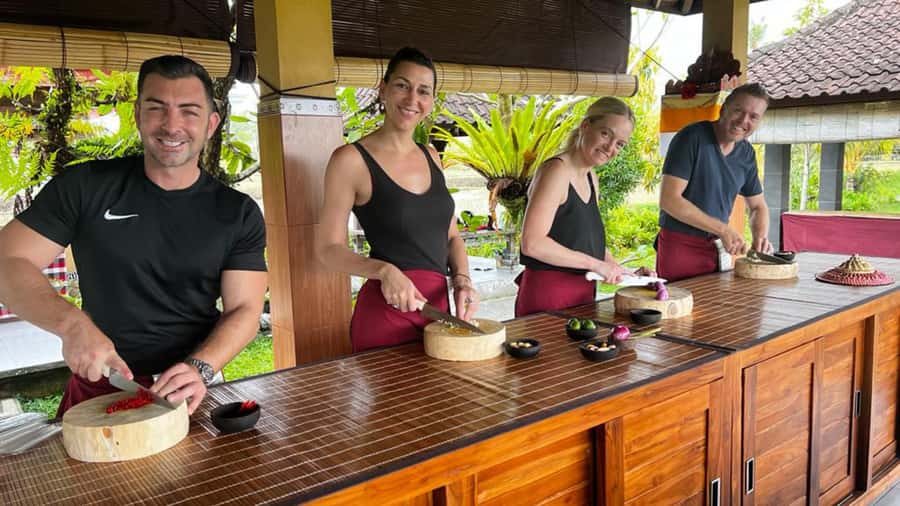
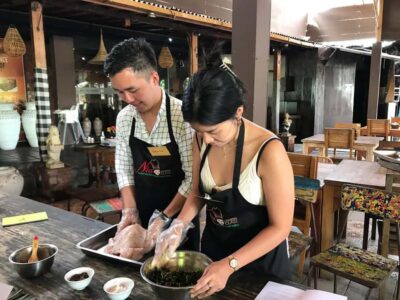
- Small group, lots of hands-on time so you actually do the chopping and stirring, not just watch.
- Optional Ubud market visit in the morning, focused on choosing fruit, veg, herbs, and spices.
- English live guide plus audio support, so you can follow the steps and the food stories.
- You cook and then eat your meal, with a satisfying feast at the end.
- Technique lessons, including grinding and cooking methods mentioned in class experiences.
- Extra travel notes for night tours, since night traffic affects where you meet.
Why this Ubud cooking class is more than a recipe lesson
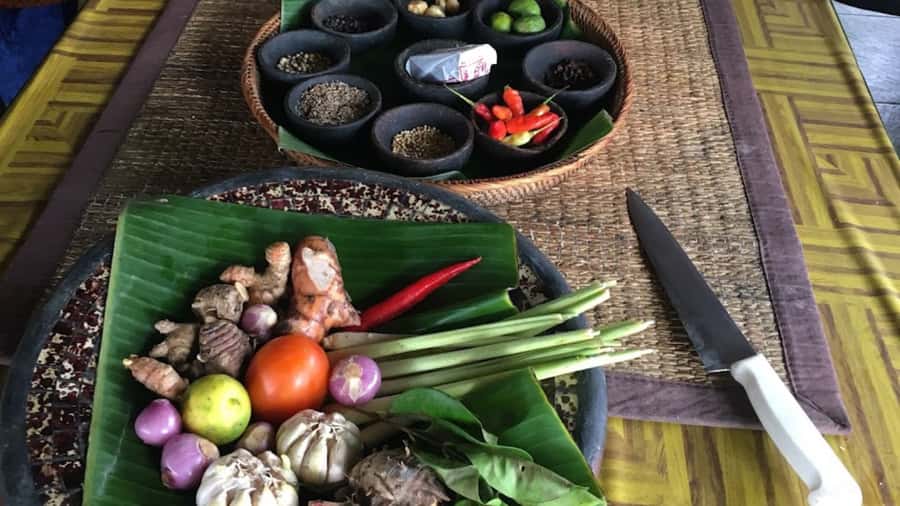
If you’re coming to Bali for food, Ubud is the obvious base. The best part of this class is that it treats cooking like culture you can hold in your hands. You shop for ingredients (on the morning option), then you cook traditional Balinese dishes with local chefs, and you sit down together when it’s time to eat.
I also like how the class stays practical. You get clear instruction while you’re doing the work. When people say they learned a lot, it usually means they left with specific skills, like how spices are blended, what you’re aiming for when something smells right, and how Balinese meals fit together as a set, not random recipes.
Also, it’s not all “look at the process.” You get to taste and adjust. And if you’re traveling with dietary needs, the class experiences I’ve seen mention accommodations, including vegetarian options and alternatives for people who cannot have fish.
More Cooking Classes in Ubud
- Ubud Cooking Class Bali with Balinese Chef
★ 5.0 · 1,609 reviews - PRIVATE Authentic Balinese Cooking Class in Ubud at Putu’s Home
★ 5.0 · 644 reviews - Balinese Ubud cooking school (9 Dish Cooking and Market Tour)
★ 5.0 · 540 reviews
Getting there smoothly: hotel pickup, Ubud Center, and meeting point reality
The transfers are part of the value here, especially if you do not want to figure out Ubud traffic twice. The class includes hotel pickup and drop-off at Ubud Center for the morning or afternoon option you select.
If you’re doing an evening class, plan around night traffic. The meeting point is in the Parking Field, because night is so traffic. If you have optional pickup, you’ll wait in the lobby of your hotel.
A quick piece of real-life advice: if you’re staying outside Ubud Center, double-check the exact pickup arrangement. There’s also an added charge if the class area is Sebali or Keliki, which is listed as 50,000 IDR per person.
Morning market visit: how it changes what you cook
The morning tour option often includes a market visit in Ubud. This is not just a quick photo stop. You walk through stalls with a guide and learn what ingredients mean and where they come from.
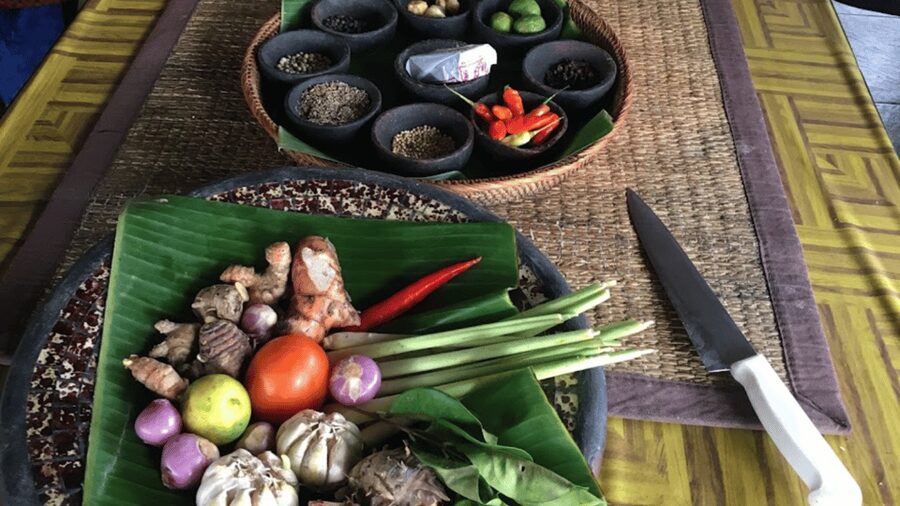
Expect a mix of produce and aromatics: exotic fruits, vegetables, herbs, and spices. You’ll interact with local vendors and learn about indigenous ingredients used in Balinese cooking. It’s the kind of stop that makes your later curry and sambal feel personal, because you chose the key items with your guide.
One practical payoff: the market visit helps you understand what to buy if you want to recreate these dishes at home. Instead of guessing, you’ll remember the ingredient names and why they mattered.
If you prefer not to shop, the afternoon or evening options remove that market segment. You still cook and eat, but you’ll miss the ingredient-learning part.
The cooking school setup: small group energy and a real team
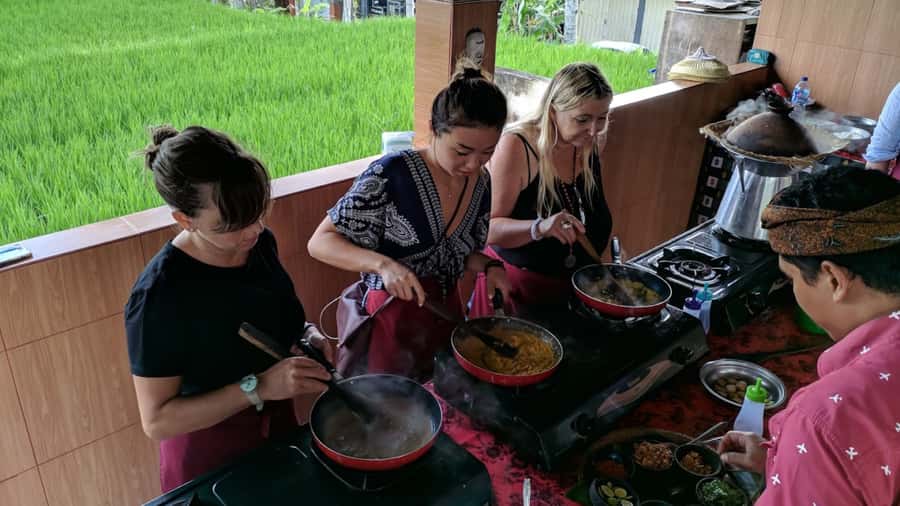
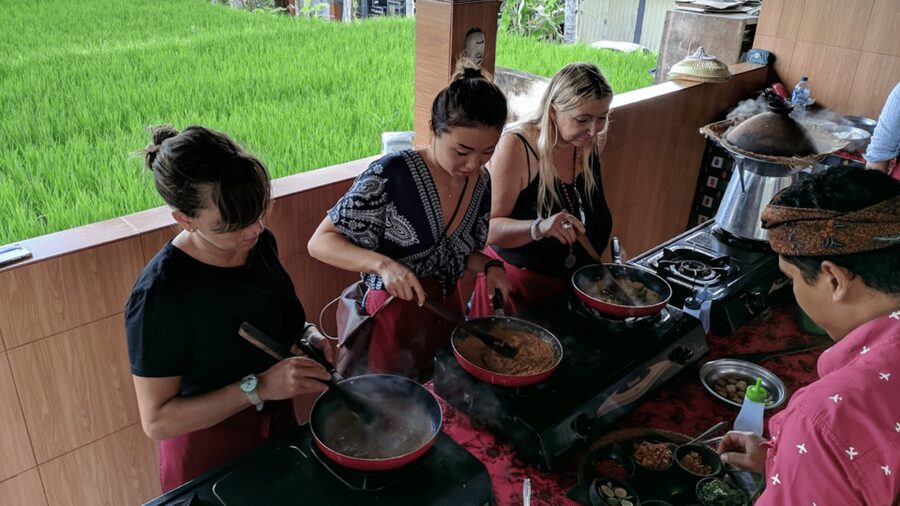
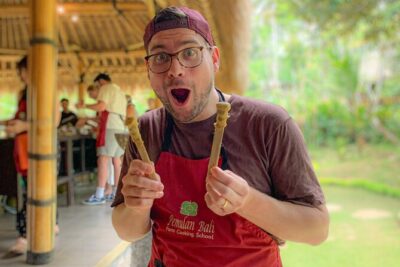
Once you’ve selected produce (morning option) you head to the cooking school. Many classes happen outdoors or in a lush setting, and the main point is simple: you’re not stuck in a cramped room. You’re working in a kitchen space that supports chopping, blending, and cooking as a group.
The class is limited to 10 participants, which is why the experience tends to feel organized. People get tasks. Helpers assist. You’re not waiting for long stretches because someone else is doing all the work.
Also, the teaching style matters here. Multiple experiences highlight calm, patient instructors who explain steps clearly and keep the class moving. You should expect an easy rhythm: instructions, action, tasting cues, and then the next step.
If you’re traveling with friends or family, this format is a good middle ground. You can cook together without losing the structure of a guided class.
More Shopping Tours in Ubud
- Ubud: Balinese Cooking Class and Market Tour
★ 4.8 · 531 reviews - Balinese Cooking class with traditional morning market visit
★ 5.0 · 161 reviews - PRIVATE Ubud Market Tour & Balinese Cooking Class with Putu
★ 5.0 · 125 reviews - Ubud Traditional Night Market Food Tour-All Inclusive
★ 4.4 · 95 reviews
What you’ll cook: Balinese dishes and the meaning behind them
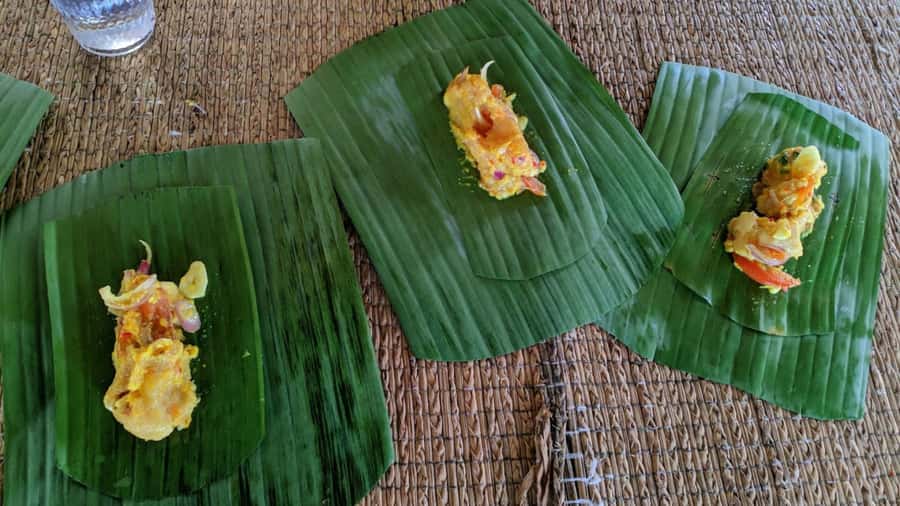
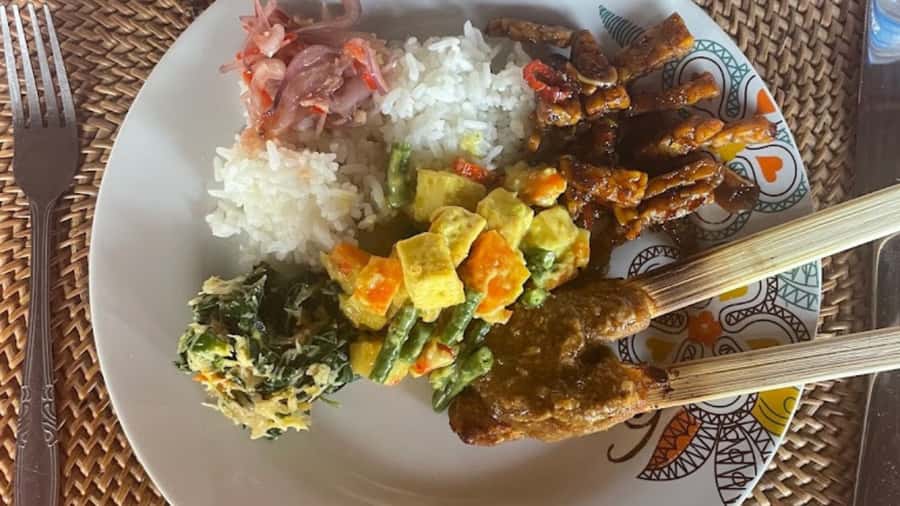
You’re not just making one dish. You’re learning a mini set of Balinese flavors. The core highlights listed include curries, satays, and desserts. In class experiences, the number of dishes is often around 10, and the meal at the end is described as buffet-style.
Here’s what this usually means in real cooking terms:
- Curries teach spice blending and balancing flavors, often hinging on how aromatics are treated and layered.
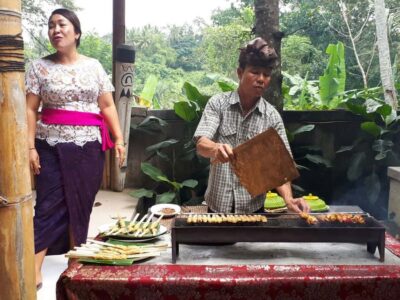
- Satays are about building flavor through marinade and cooking technique.
- Desserts show the sweet side of Balinese cooking, and they often feel like a reward after savory work.
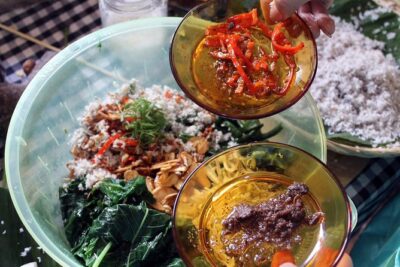
- Sambal and spice pastes show how heat and flavor get controlled, not just how spicy something is.
The cultural component is a major reason this class gets high marks. You’ll learn why dishes are served and how Balinese cuisine connects to tradition. In some class experiences, you may also make a Balinese offering, like a canang offering box, and learn the cultural significance behind it.
That cultural piece is not just trivia. When you understand that certain ingredients and dishes connect to rituals and family life, you cook with more attention. You taste differently because you’re not treating food as random flavors.
The meal at the end: eating what you made, together
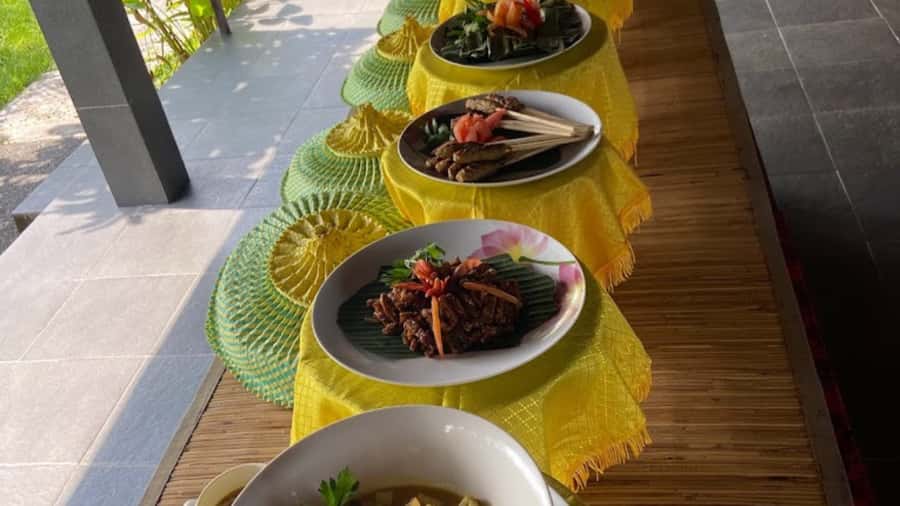
The best ending to any cooking class is obvious: you eat well. Here, after cooking, you gather around the table and feast on your creations.
The meal is included, and class experiences mention how the feast often becomes the highlight, with food that’s fresh and presented nicely. Since you cooked multiple dishes, you get variety on your plate. It’s not one small tasting. It’s a real dinner.
This is also where you get social time. Small group size makes it easy to talk with others while you eat. The class tends to feel relaxed, with laughter and stories as people compare what they made and which dish surprised them.
Taking it home: certificate and recipes you can actually use
A nice perk is the certificate of completion, which gives the experience a satisfying sense of closure.
You may also receive a recipe book or cook book at the end, and multiple class experiences mention taking recipes home so you can recreate the meal later. That matters more than people think. If you leave with recipes, you can cook again and remember the steps, especially the part that’s hard to copy from memory, like spice blending and cooking timing.
If you’re the type who likes to keep a travel notebook, this is one of the best moments to write down what you noticed. Why did your satay taste different from someone else’s? What adjusted your curry? Use the recipe pages as your anchor.
Price and value: how $21 stacks up for 2 to 3 hours
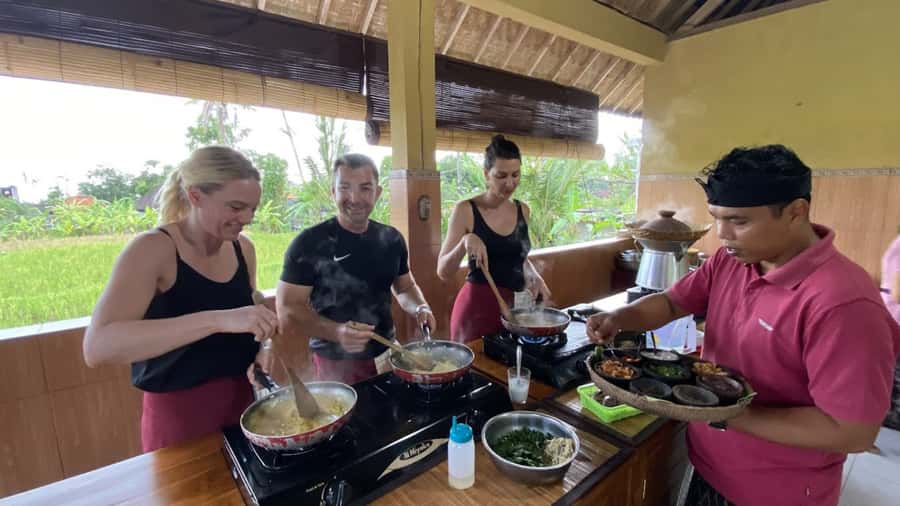
At $21 per person, this class can feel like a steal for what you get: hotel transfers in Ubud Center, a guide, cooking instruction, and a full meal. For a short 2 to 3 hour experience, it includes the hardest parts of planning for you: getting you to the kitchen, providing ingredients, and teaching the process.
The real value comes from “time on task.” With a small group, you’re not paying mainly for ingredients and a seat. You’re paying for guided cooking, cultural context, and the chance to eat what you made.
One caution on value: check whether your pickup area affects the price. The Sebali or Keliki area has an extra fee of 50,000 IDR per person. If you’re staying close to Ubud Center, it’s usually straightforward. If you’re farther out, it might be worth confirming the final total before you book.
Who should book this class, and who should skip it
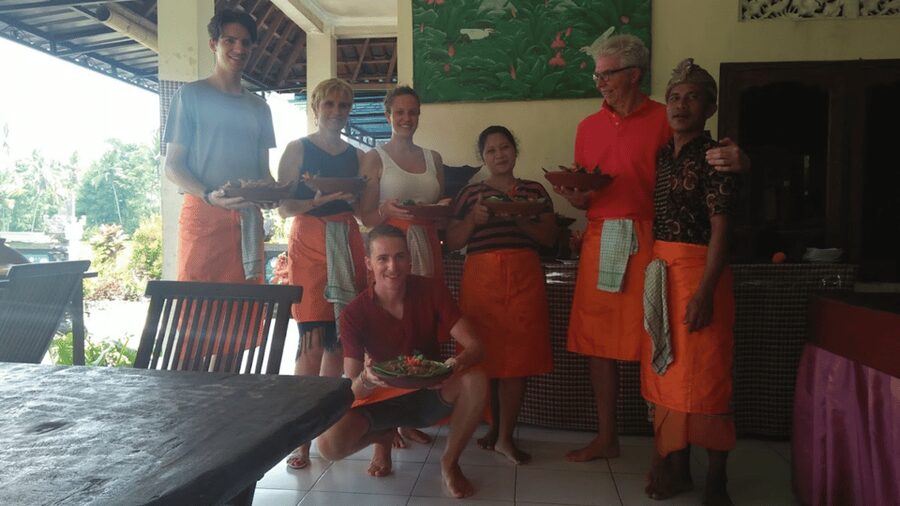
This is a strong pick if:
- You want hands-on Balinese cooking rather than a demo.
- You like learning the why behind food, not just the how.
- You’re visiting Ubud and want something more grounded than another sightseeing loop.
- You enjoy small-group activities where you can ask questions and participate.
It might be less ideal if:
- You only want a super short activity, because the class is 2 to 3 hours.
- You hate any kind of market walking. The market visit is only on the morning option, but if you dislike markets in general, choose the class time without it.
- You’re very sensitive to traffic timing, since the meeting point guidance differs for night tours.
Also, if you’re planning around mobility or fatigue, remember you’ll be cooking. That usually means standing and working at kitchen stations. Bring comfortable clothes and expect to get a little involved.
Should you book this Ubud cooking class with transfers and market option?
My call: yes, if you want a practical, fun way to understand Balinese cuisine. The mix of ingredient learning (morning option), focused small-group teaching, and an included meal makes it good value. The class also seems to manage dietary needs, which is a real plus.
Book it especially if you’re the kind of traveler who likes to leave with skills, not just photos. You’ll get curry, satay, desserts, and the spice logic behind them, then you’ll eat like you earned it.
If you’re short on time, pick the option that fits your schedule and skip the market if you do not want it. Just plan your pickup area and timing so the logistics are smooth. Do that, and you’ll likely end the session thinking, That was one of the best food experiences I had in Bali.
FAQ
How long is the Ubud cooking class?
The duration is listed as 2 to 3 hours.
Is a market visit included?
It’s included if you choose the morning option. The market visit is not part of the other time options.
Does the class include hotel pickup and drop-off?
Hotel pickup and drop-off at Ubud Center are included if you select the morning or afternoon option.
What if I’m doing an evening option?
The meeting point is in the Parking Field because night is so traffic. Pickup is optional, and if you have it, you wait in your hotel lobby.
How big is the group?
The group is small and limited to 10 participants.
Are the guides and materials in English?
Yes. The live tour guide is English and an audio guide is also included in English.
What does the price include?
The included items are: hotel pickup and drop-off at Ubud Center (for morning/afternoon options), market tour (morning only), the cooking class, a guide, and the meal.
Is there an extra fee for certain areas?
Yes. Sebali or Keliki area has an extra charge of 50,000 IDR per person.
What is the cancellation policy?
Free cancellation is available up to 24 hours in advance for a full refund.
Newest reviews out of Ubud
- Ubud Silver Class: Forge Your Personal Silver Keepsake★ 4.9 · 39 reviews
- Amazing Kuber ATV Quad Bike Experience in Bali and Tunnel★ 5.0 · 39 reviews
- Lempuyang Tour : Heaven gate, Tirta Gangga, Goa Raja waterfall★ 5.0 · 39 reviews
- Make Traditional Bali Coconut Oil with a Balinese Family★ 5.0 · 39 reviews
- Private Tour : Bromo Ijen Tour From Bali★ 5.0 · 39 reviews
- Bali Private Car Charter Tour with English Speaking Driver★ 5.0 · 39 reviews
- Ayung Rafting Ubud (Include Lunch & Return Transportation)★ 4.5 · 40 reviews
- Private Bali Tour: The Most Scenic Places★ 5.0 · 40 reviews
Cooking Classes, compared.
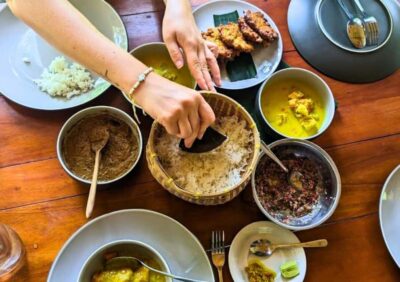
PRIVATE Authentic Balinese Cooking Class in Ubud at Putu’s Home
Read our review →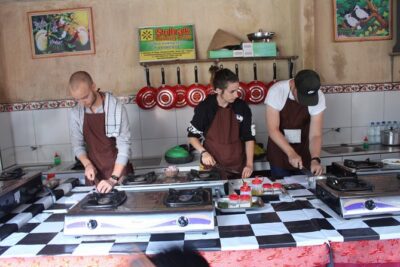
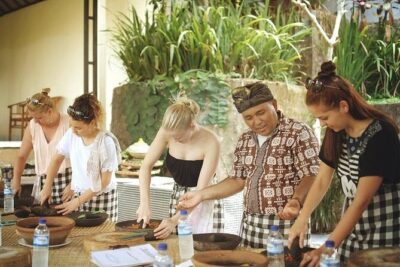
Balinese Ubud cooking school (9 Dish Cooking and Market Tour)
Read our review →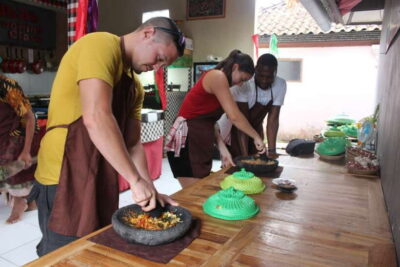
Browse the lists this tour appears in