
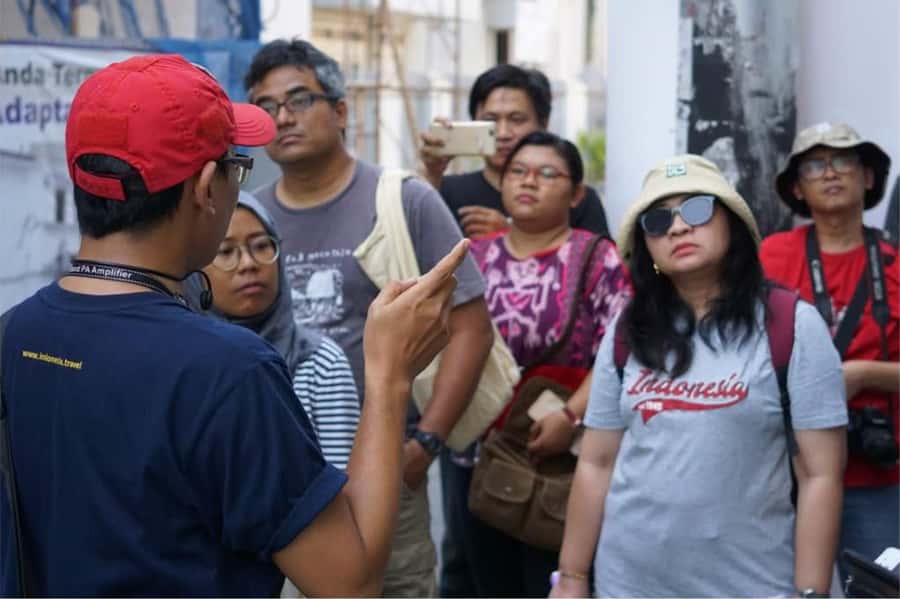
Reviewed · WALKING TOURS IN YOGYAKARTA
Yogyakarta: 2-Hour Crash Course City Intro on Walking Tour
This experience is interesting because it gives you a street-level orientation to Yogyakarta in just 2 hours, with real context behind what you see. I love how it turns Malioboro Street into more than a shopping strip, with stories that connect the colonial era, conflict, and everyday life. I also love the practical break at Bringharjo market, where you can hear what to eat and how to move through the chaos like a local.
The main drawback is simple: at 2 hours, it is a smart intro, not a full sightseeing day. You will leave with questions and cravings, because the best parts of the center deserve more time than a quick walk can give.
Key things I’d circle before you book

- Small group (max 8) means it is easier to ask questions and get personal tips.
- Straightforward walking route from Yogyakarta Train Station Monument to Kilometer Zero.
- History tied to daily scenes, including colonial-era life and the War’s impact on the city.
- Malioboro street stop for indie boutiques, cozy cafes, hip eateries, and places to stay.
- Bringharjo market break with music, street performers, and food ideas you can act on later.
- Local-life guidance on timing, where to stay, getting around, budgeting, and which apps to use.
A 2-hour on-foot shortcut to Yogyakarta’s personality
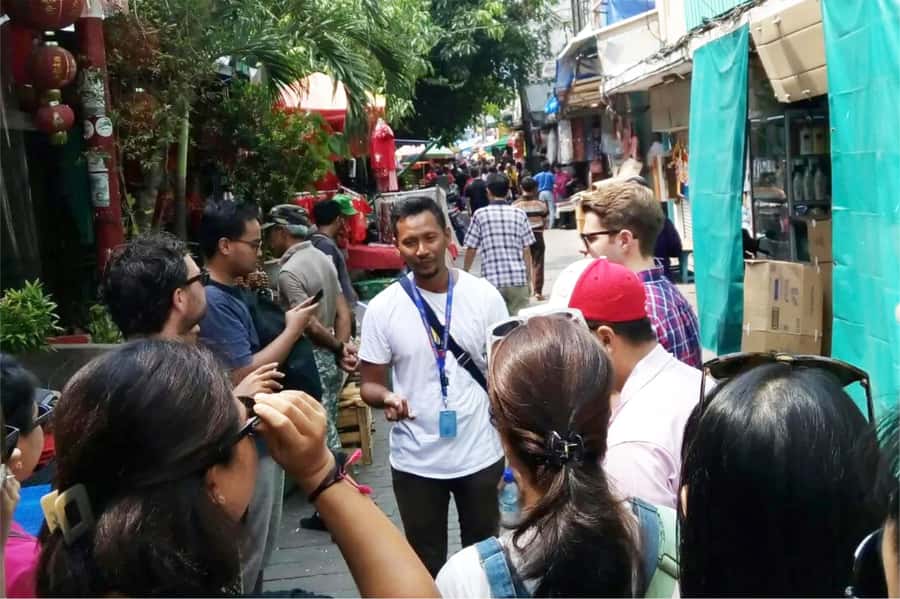
Yogyakarta is one of those cities where the past still hangs around the corners. You can see it in the architecture, the street rhythms, and how people talk about identity and community. This walking tour is built for that exact reality, because you are not just looking at sights. You’re getting the meaning behind them, in a walk that fits into a first-day schedule.
The format is ideal when your time is tight. You start near the station, head toward Malioboro, then work your way to the Bringharjo market area before ending at Kilometer Zero. It is compact, but it covers the kind of places you will want to revisit later. If you plan to do temple day trips, this is a strong way to get your bearings before you leave the city.
And the guide makes a big difference. I noticed a pattern in how guides show up in this experience: they are friendly, willing to chat, and comfortable answering follow-up questions. Some guides even shape the walk around your interests, like history, food, or how daily life works. Names you might encounter include Kin, Haidar, Imam, Ben, Yoyokk, Atok, and Yoni, and each comes with that same goal of helping you understand Jogja fast.
More Walking Tours in Yogyakarta
- Yogyakarta: Nighttime Walk and Food Tour
★ 5.0 · 401 reviews - Small-Group Walking and Food Tour by Night in Yogyakarta
★ 5.0 · 313 reviews - Yogyakarta: Guided City Walk and Food Tour
★ 4.9 · 278 reviews
From Monumen Stasiun KA Yogyakarta to Malioboro: your bearings in real life
Most “city intro” tours start in the middle of nowhere convenient. This one starts at the Yogyakarta Train Station Monument (Monument Stasiun KA Yogyakarta), which is a practical choice. If you’re arriving by train, or you want an easy plan the same day you check in, you are not spending hours figuring out where to meet.
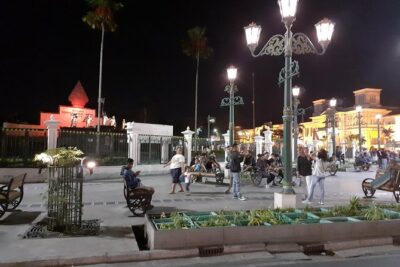
From there, the walk flows along Malioboro Street, the big, recognizable spine of the city. What makes it worth your attention is that the street is not only for photos. It is where you quickly learn what Yogyakarta feels like on a normal day: where people shop, where they eat, where they hang out, and where visitors end up booking a bed.
Here is what you can expect to notice along Malioboro:
- Indie boutiques and smaller shops that feel more local than chain-heavy.
- Cozy cafes and casual places to stop, reset, and cool down.
- Hip eateries where you can spot what is popular now.
- A wide range of accommodations, so the area becomes your reference point for your stay.
A key value here is that the guide helps you interpret what you’re seeing. You get practical guidance for the rest of your trip, like where it makes sense to base yourself and how to avoid common tourist frustrations.
A quick reality check: Malioboro is a busy corridor. Wear comfortable shoes, because you are walking a lot of “city distance” in a short time. If rain shows up, you may spend more of the walk under umbrellas and through covered storefronts, but you still keep moving. The pacing stays manageable as long as you are ready for the street.
Malioboro stories: colonial-era life, war memories, and why Jogja feels different
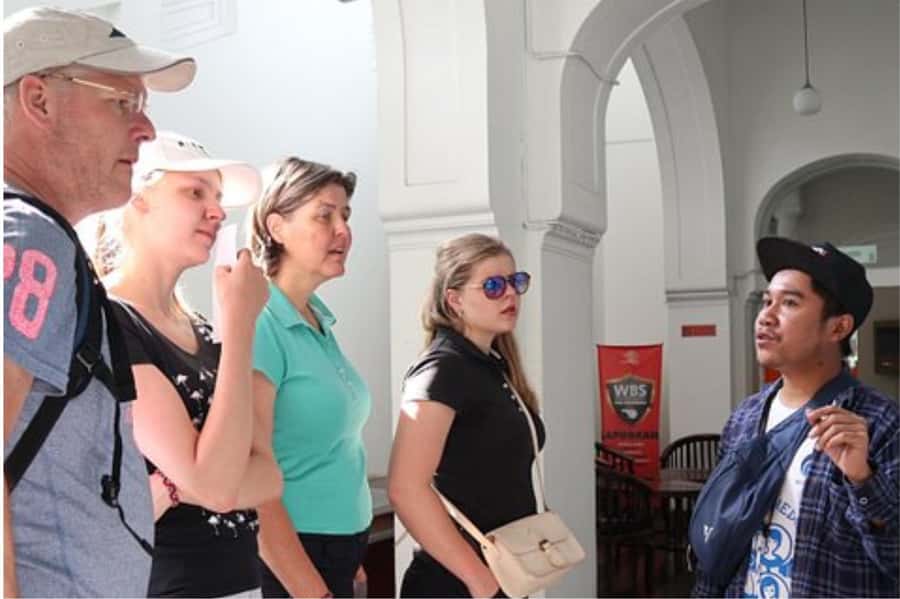
What I like most about this tour is how it links street scenes to the deeper layers of the city. You are not hearing history as a lecture. You’re hearing it as a reason why certain neighborhoods and community patterns exist.
As you walk, the guide shares stories about how merchants and salesmen lived during the colonial era, how the poor lived, and how the War changed daily life. That matters because it gives you a lens for everything you see afterward, including how people talk about identity and how public spaces function.
You also learn why Yogyakarta is described as special in Indonesia. The tour frames it as more than a “nice tourist city.” You get context for its cultural and regional importance, so you understand why local life has its own rhythm.
And because this is not only old stories, you also get the present-day angle. You hear what it feels like to live in a tolerant, multicultural city today. That theme comes up again at later stops, but you start hearing it early, as you watch people move through the street and the market environment.
If you enjoy history but hate wasting time, this is a sweet spot. The guide’s job is to keep you moving, while still giving enough background that you don’t feel like you’re just collecting landmarks.
Passing the Chinese-Indonesian community gate: identity you can see
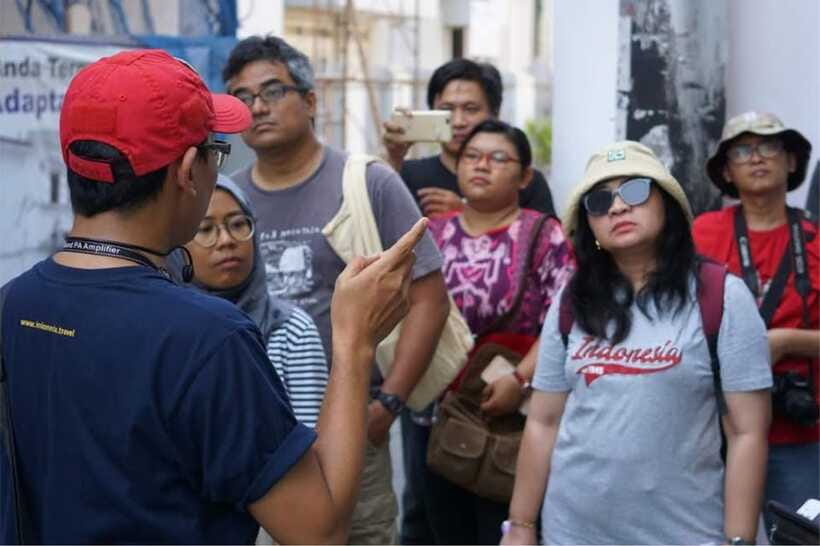
As the walk moves deeper, you pass a Gate of Chinese-Indonesian Community. It’s a visible symbol of multicultural heritage, and it’s exactly the kind of detail that helps you read the city.
Here’s why that stop matters: Yogyakarta isn’t just about one culture dominating the street. It is about how communities overlap, cooperate, and show their identity through visible markers. Even if you do not know the history ahead of time, this kind of landmark gives you something solid to connect to the stories you heard earlier.
So instead of ending the tour with random facts, you finish the walk with a clearer idea of how different communities are represented in public space. That makes the city feel more intelligible, and less like a maze of streets you just walked through.
Something different for the next Yogyakarta day:
- Yogyakarta: Borobudur sunrise(guarantee climb up)& Prambanan
★ 4.9 · 1,545 reviews - Borobudur Sunrise from setumbu Hill , Merapi Volcano & Prambanan Full Day Tour
★ 5.0 · 1,030 reviews - Yogyakarta: Jomblang Cave and Pindul Cave all inclusive Trip
★ 4.9 · 854 reviews - Yogyakarta: Borobudur and Prambanan Temples Guided Tour
★ 4.9 · 828 reviews
Bringharjo market break: where to eat and what to do without getting lost
Bringharjo market is a high-energy stop, and it gives you a different side of Yogyakarta than Malioboro. You get the buzz of music and street performers around the market, plus the real “hands-on” feeling of food shopping and everyday bargaining.
This is where the tour becomes useful for your next meals. The guide points out foods you must try, and you learn what sights you can discover independently after the walk ends. That independence is important. A city tour is only half the job. The other half is helping you feel confident to keep exploring on your own.
You might also get small extras depending on timing and the guide. For example, some guides add a stop at a wet market where you can buy things like coffee. Others may connect the walk to crafts and creative local life, including batik technique. These additions tend to be short, but they make the intro feel more personal.
Practical tip: markets can be overwhelming, even when they are fun. If you tend to freeze when you see too many choices, this is the reason you want a guide here. You’ll learn what to look for, how to ask questions, and what not to stress about.
Bringharjo also helps you understand how to plan the rest of your day. By the time you leave, you have a better sense of where the action is for food and snacks, and which areas are worth repeating.
Local travel help: apps, timing, where to stay, and getting around
The “crash course” part is not only sightseeing. It is also how the guide helps you think like a local for the rest of your trip.
You learn:
- how to use useful apps like a local does
- timing advice, meaning when to go and when to avoid the worst crowds
- best areas to stay based on what you want to do
- how to get around without burning time
- budgeting tips and finding deals
That may sound like generic travel advice, but the value is in how it gets grounded in Yogyakarta. When you hear timing advice while you are standing in the middle of Malioboro, it sticks. Same with getting-around tips. You understand what makes a street easy or annoying after you’ve felt the pedestrian flow and traffic situation.
Crossing busy roads also comes up as a practical challenge, and you get help with how to handle it in the real street conditions. That kind of guidance is gold on day one, because it lowers your stress right away.
A small group helps here. With a maximum of 8 participants, your guide can actually respond to questions instead of rushing everyone through a script. In some cases, the group may be so small it feels like a private tour, which makes it easier to ask things like restaurant plans, neighborhood choices, or how a planned itinerary should change based on your interests.
Ending at Kilometer Zero: the city’s center point you’ll reuse
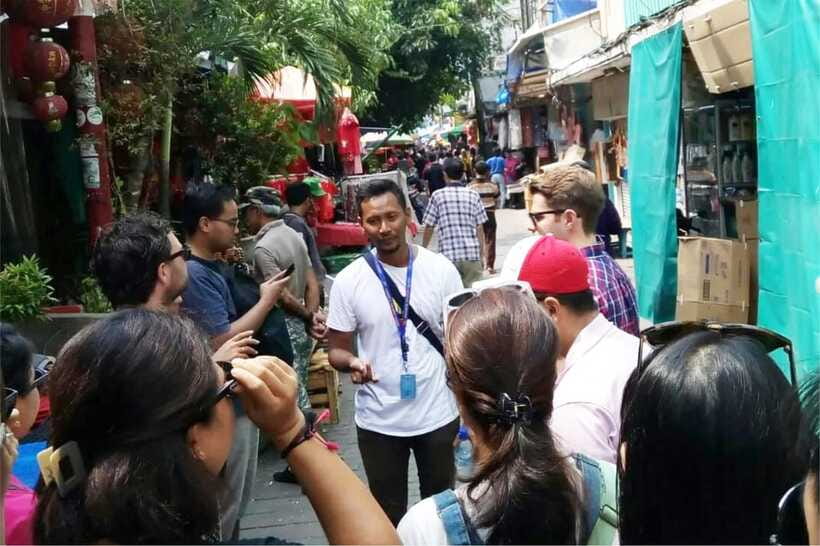
Finishing at Kilometer Zero gives you a strong “anchor” in your mind. You reach the most well known roundabouts and a busy street with a lively feel. Even if you do not know the exact history of the marker, it becomes a reference point for your navigation and your decisions about where to go next.
This is also a smart psychological ending. You start at the station, you walk into the commercial and cultural center, you hit the market, and you end at a place that feels like a hub. After that, planning feels easier because you know where your starting axis is.
If you’re the kind of person who hates asking strangers for directions, this ending helps. You can compare your map with real-life street landmarks and stay oriented.
Price and value: why $15 can feel like a bargain
At $15 per person for a 2-hour English-guided walking tour in a small group (max 8), the value is strong if you want both context and practical help.
You’re paying for three things that are hard to replicate on your own:
- A route that hits the city core fast, starting at the station and ending at Kilometer Zero.
- Context that turns sights into meaning, including colonial-era life, war impacts, and modern multicultural life.
- Real logistics support, like timing, where to stay, budgeting tips, and which apps to use.
If your plan is to do museums and temples later, this tour works like the wiring behind your itinerary. It doesn’t replace bigger sights, but it improves how you experience them by giving you a sense of the city’s background and layout.
Who should book this, and who should skip it
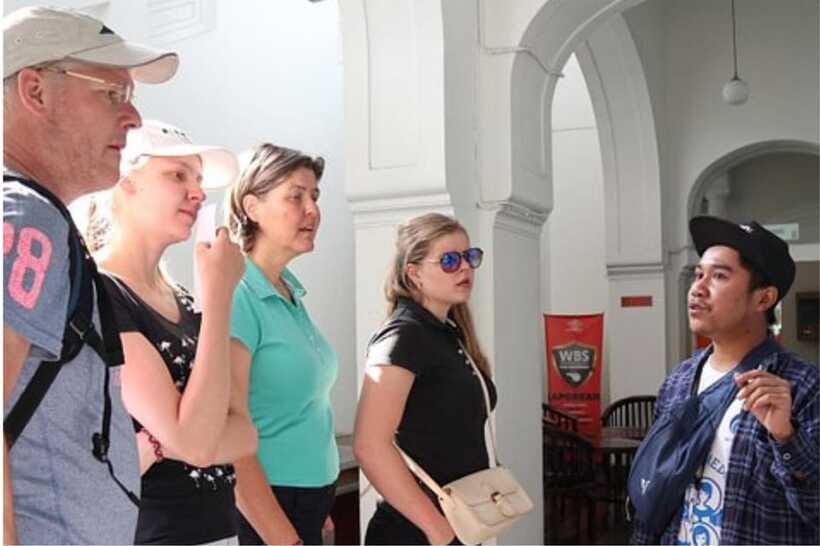
Book this tour if:
- You are in Yogyakarta for a short time and want a fast start.
- You like learning how history connects to everyday street life.
- You want a guide to point out what to eat and where to go next, especially around Malioboro and Bringharjo.
- You enjoy asking questions and want answers in English.
Skip it if:
- You want a full-day schedule packed with major out-of-town monuments. This is a city intro, and the whole point is short and focused.
- You hate walking in busy areas. The route goes through lively streets and market energy, so you’ll need comfortable shoes and patience.
Should you book this walking intro? My practical call
If you’re arriving in Yogyakarta and want to understand the city quickly without guessing, I think you should book it. It is short, easy to fit into your first day, and designed to give you both context and next-step guidance.
The biggest “yes” sign is the guide experience. You’ll likely meet a friendly, English-speaking guide like Kin or Haidar, and you can expect patient answers and a conversational style that helps the walk feel human, not robotic. If you want to hit Malioboro, see Bringharjo market, and leave with a plan for what to do next, this is one of the most efficient ways to start.
FAQ
FAQ
How long is the Yogyakarta walking tour?
The tour lasts 2 hours.
How much does it cost?
It costs $15 per person.
Where do I meet the guide?
Meet at the Yogyakarta Train Station Monument (Monument Stasiun KA Yogyakarta).
What language is the guide?
The guide speaks English.
Is it a small group tour?
Yes, it is limited to 8 participants.
What should I bring or wear?
Wear comfortable walking shoes and bring a camera.
Can I pay later?
Yes, you can reserve now and pay later.
Is there free cancellation?
Yes, you can cancel up to 24 hours in advance for a full refund.
Newest reviews out of Yogyakarta
- Ramayana Ballet Performance In Prambanan Temple With Dinner★ 5.0 · 41 reviews
- Yogyakarta: Ramayana Ballet Performance with Optional Dinner★ 4.4 · 42 reviews
- Yogyakarta: Batik Making Class with Expert★ 4.7 · 45 reviews
- From Yogyakarta: Borobudur and Prambanan Temples in 1 Day★ 5.0 · 45 reviews
- Yogyakarta: Borobudur Sunset Climb Up Shared Guided Tour★ 4.7 · 46 reviews
- Prambanan Temple Afternoon Tour★ 4.9 · 48 reviews
- Jomblang Cave, Pindul Cave and Oyo River Tour★ 5.0 · 50 reviews
- Yogyakarta: The Jomblang Cave adventure all inclusive tour★ 4.9 · 50 reviews
Walking Tours in Yogyakarta, compared.
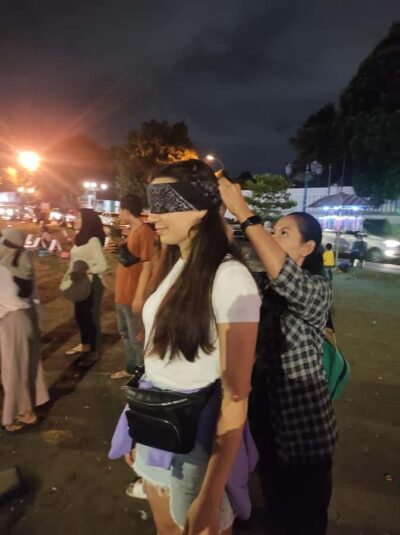

Small-Group Walking and Food Tour by Night in Yogyakarta
Read our review →
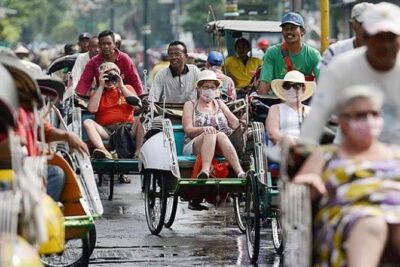
Night Walking Tour-Malioboro street food with guide at Yogyakarta
Read our review →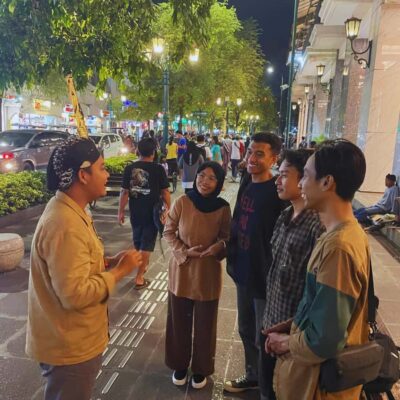
Browse the lists this tour appears in