
Reviewed · SIDEMEN VALLEY
Sidemen Trekking: A Walk from a Different Perspective
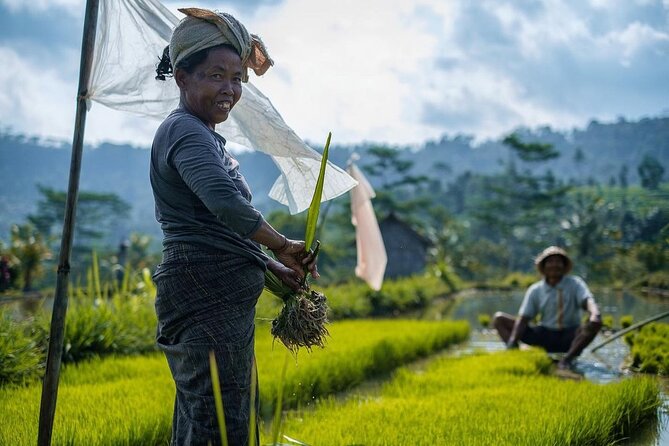
Sidemen Trekking is interesting because it lets you see Bali the way farmers and families experience it every day, on foot, not from a bus window. I love how the Sidemen rice terraces open into real valley views, including sight lines toward Mount Agung.
You also get a simple but meaningful flow: market, village lanes, working fields, then back out to a proper end point. One possible drawback is that the route is one way, and the paths can be narrow and slick, so you need solid shoes and a calm walking pace.
Key things I would not skip
- Small group size up to 10 people so the walk feels personal, not rushed
- English live guide who explains how rice growing and village life connect
- Subak irrigation of Ogang gives you a clear reason for what you see in the fields
- Jembatan Kuning Tukad Yeh Unda is a wooden bridge you cross on the trek
- Real working rice fields and viewpoints that feel less touristy than Bali’s more famous areas
- Finish at Warung Ume Anyar so you have an easy place to refuel after the walk
Starting in Pasar Sidemen, Finding Upa Boga
Your trek starts at Pasar Sidemen, on the main road. Come looking for the shop sign that says Upa Boga. The meeting spot is easy to recognize, and once you are there, your guide will find you and you will link up fast.
If you have time and you booked a morning session, you can also take advantage of the market hours. Pasar Sidemen runs from 5:00 AM to 10:00 AM, and the option here is simple: you can see the market before the walk, then meet the group and head out.
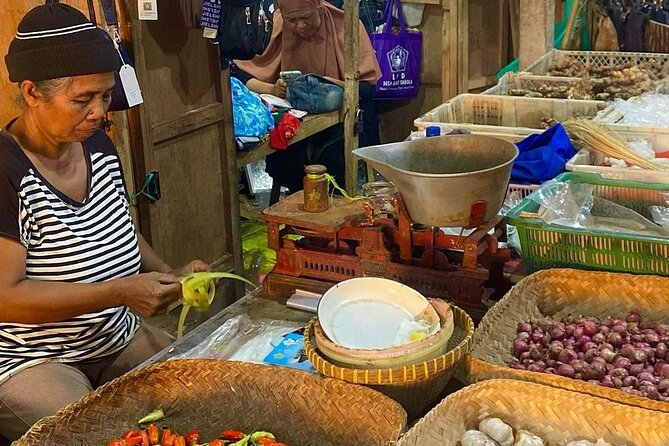
I like starting at a local market because it changes your whole mental setting. You go into the countryside with context. You notice people buying, selling, preparing food, and you understand that the trek is not just a nature walk, it is a look at community routines.
Practical tip: wear something you can walk in right away. You are not just “arriving,” you are starting the experience immediately.
More of the Sidemen valley:
- Sidemen Trekking: A Walk from Different Perspective
★ 4.9 · 91 reviews - Sidemen rice terraces trek and local village walk
★ 5.0 · 41 reviews - Bali: Sidemen Jewelry Silver Class with 7 Gram of Silver
★ 4.9 · 194 reviews
How the Walk Works, One Way Through Rice Country
This is a two hour trek designed as a one way route. That matters because you are not retracing your steps. Instead, you move through a variety of plantations and scenery, then exit at a different point.
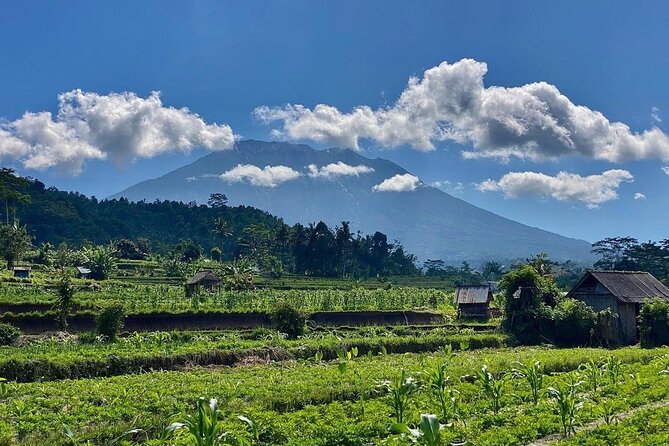
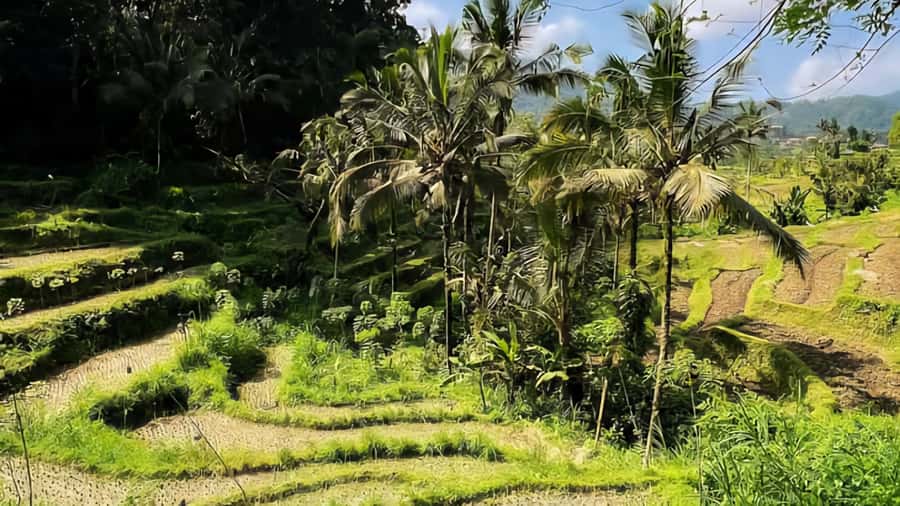
The basic direction while you walk is toward Mount Agung. You are not climbing the mountain, but the route gives you repeated chances to see how the valley sits below the slopes. In Sidemen, those views can look surprisingly clean and quiet compared with the more crowded rice terrace areas.
Along the way, you will go up and down. That is part of the charm, and it is also why the footwear rules exist. A lot of the path sits on narrow edges between planted plots, and when it is wet, it gets slippery. This is not a hard hike, but it is not a flat stroll either.
The other “how it works” detail I appreciate is pacing. The guides tend to slow down for photos and explanations, so you are not doing the whole thing like a race.
Rice Terraces, Village Lanes, and Those Mount Agung Viewpoints
Early in the walk, you transition from the village edge into the farming side. You will pass viewpoints where you can admire the rice terraces from afar. These are the spots where you can pause, catch the geometry of the terraces, and really see why Sidemen farmers build irrigation and cultivation the way they do.
What I like most is that you also pass through lived in areas, not only scenic overlooks. You move past home lanes and temple areas used for local praying. That small shift in scenery tells you the same story from two angles: the fields provide the livelihood, and the community keeps daily spiritual rhythms close by.
On some walks, guides highlight how the terraces compare to what people often see elsewhere in Bali. The Sidemen area can feel far less touristed, and that matters for your photos and your mood.
If you like photos, plan on stopping often. A few guides in the group are especially good at taking pictures for every participant, not only whoever has the camera.
Jembatan Kuning Tukad Yeh Unda, The Wooden Bridge Crossing
One of the most memorable moments is the wooden bridge stop at Jembatan Kuning Tukad Yeh Unda, the Yellow Bridge. You do not just see it. You cross it, and it is built to be used by both humans and motorbikes, so it feels solid rather than fragile.
Bridge crossings are usually a travel moment, but here it also helps you understand the terrain. The bridge connects sections of plantation land and irrigation paths. You feel how the water management and field layout shape what is walkable.
Some people find the bridge a little shaky, depending on weather and water levels. That is normal for wooden bridges. If you get nervous on heights or wobble, take your time. Walk deliberately and hold your focus on each step.
More Hiking & Trekking in East Bali:
- Bali: Mount Agung Sunrise Trekking Experience
★ 4.8 · 91 reviews - Bali: Sunrise Mount Batur Guided Hike with Breakfast
★ 4.8 · 9,660 reviews - Bali: Mount Batur Sunrise Guided Hike and Natural Hot Spring
★ 4.8 · 9,284 reviews - Bali: Mount Batur Sunrise Trek With Guide and Breakfast
★ 4.8 · 3,461 reviews
Dukuh Village, Temple Stops, and Everyday Movement
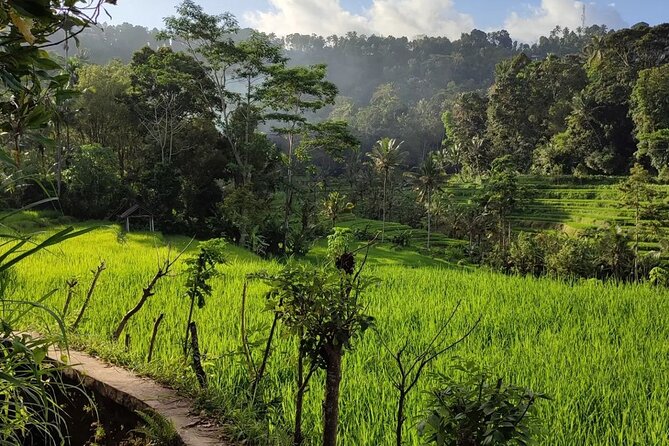
As you continue, you reach Dukuh village. This is where the trek stops being only agricultural and starts feeling fully local and human. You will see village lanes, pass by spots used for prayer, and watch daily activity unfold at field edges.
One reason this section works so well is that it breaks up the “rice view, rice view, rice view” pattern. Yes, the terraces are the headline, but the village walk explains the context.
In the village areas, you also notice how people move through routines while tourists are mostly passing by in vehicles. You will often see the same kind of casual flow: someone works, someone walks, someone pauses. It makes the farming you see later feel real, not staged.
If you want a quieter experience, stick with the pace your guide sets. Going too fast often means missing the small moments where culture shows itself in ordinary ways.
Subak of Ogang, Irrigation That Makes the Whole System Click
This trek has a standout education piece: the irrigation system, called Subak, and specifically the Subak of Ogang as you pass. Subak is the traditional water management system that helps farmers time irrigation and keep the whole system working across fields.
I find this is where the trek goes from scenic to meaningful. Once you understand water flow and timing, the terrace layout makes more sense. You start noticing irrigation ways and water routes as you walk, instead of just seeing green steps on a hillside.
This is also where guides tend to share the most practical explanations. Some guides come from local rice farming backgrounds or know the system from family experience. You can hear it in how they explain what you are looking at, not just in how long they speak.
You might even get small cultural details along the way, like native plants and how they fit into daily life. The guide discussions can be a big reason this activity earns such strong ratings.
Watching Work in the Fields, Plow to Harvest
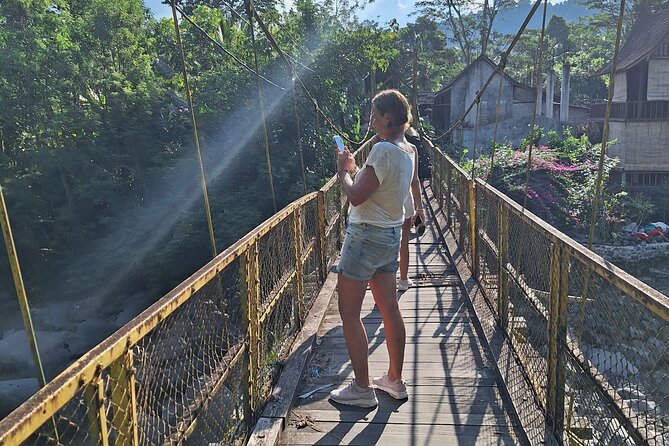
A key promise here is daily life in rice farming. You will see people working in their fields, and you will pass different stages of the growing process. Depending on timing and what is happening that day, you may witness work that looks like plowing, cultivating, planting seeds, or heading toward harvest.
Even if you do not see every stage in one walk, the whole route helps you understand that rice farming is not one event. It is a repeating cycle, and terrace farming is a steady commitment.
This is also where you see the mix of plantation types, not only rice. Some sections highlight different crops and cultivation methods in the broader farming landscape around Sidemen.
If you love agriculture, pay attention to water routes and field boundaries. The details are small, but your guide can translate them into something you can actually picture back home.
What You Need to Wear on Narrow, Slick Paths
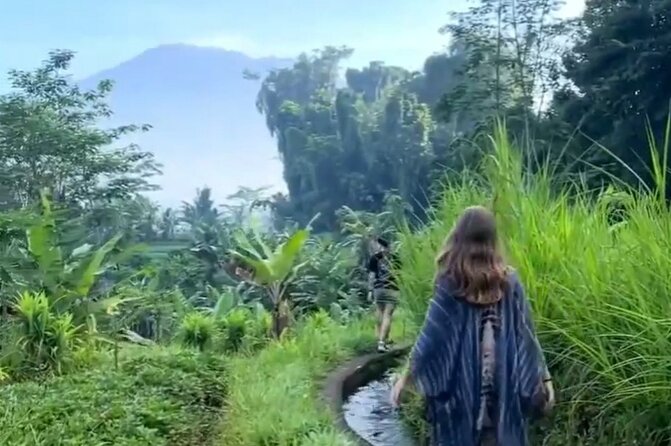
Bring sunscreen, sunglasses, and a hat. You are walking outdoors for around two hours, and the sun in Bali can be intense even when you feel comfortable in the morning.
Wear hiking shoes or sports shoes with grip. Sandals and flip flops are not allowed. I understand why. Parts of the trail run along narrow walls between plots, and when it is damp, the ground becomes slick.
You may also run into insects in tall grass. A few walkers reported red ants biting when they wore shorts. If you want to reduce that risk, wear long pants, and do not rely on flip flop style protection.
If it has rained recently or rain shows up while you are out, the paths can get muddy. Plan for slick moments even if the weather looks fine at the start.
The good news is the pace is usually relaxed. Guides also keep an eye on where everyone is stepping, especially when the trail narrows.
English Guides Who Turn Stops Into Stories
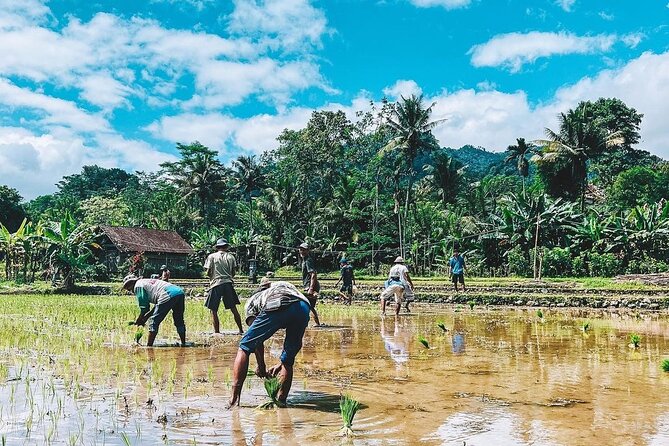
This trek runs with a live guide in English, and the guide quality is a big part of the experience. Across different days and guides, you tend to see the same strengths: clear explanations, a comfortable pace, and frequent photo stops.
I noticed a pattern in guide behavior: they do not just point at views, they connect the views to daily work. For example, guides like Wayan and Komang have been praised for walking people through rice farming details and local history in a way that feels personal. Adidas is repeatedly mentioned for taking people into the working areas and sharing cultural context with humor.
Some guides are also very proactive about photos. A number of people mention that the guide offered to take pictures for each participant at the best spots, not only for a single person holding the camera.
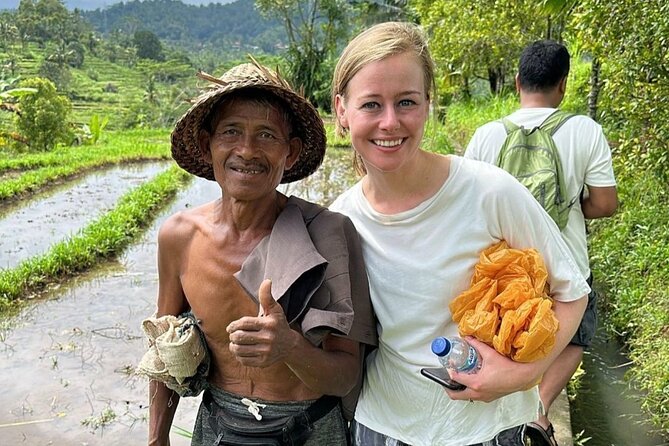
Bonus: you may hear small cultural surprises. One person shared that a local farmer offered fresh papaya during the walk. That kind of moment is not something you can schedule, but it shows how connected these routes can be when you walk respectfully through working villages.
Included with the tour is bottled water, which is a simple but helpful touch for a two hour trek in the sun.
Price and Value at About 13 USD for a Two Hour Walk
At around 13 USD per person for two hours, this is good value if your goal is learning and local access. You are paying for more than “green scenery.” You are paying for an English guide, a small group format (up to 10 people), and access to the one way route that takes you through markets, villages, and working fields without you needing to guess where you can walk.
What makes it feel fair is that the operator includes bottled water and a guide who sets pace, stops, and explanations. Also, the experience is not a full day production. It fits into a Bali schedule without eating your entire morning.
The main cost consideration is what is not included: hotel pickup and drop off. You will need to arrange transport to the start point, and that is often the difference between a smooth plan and a stressful one.
So the real value question is: are you staying close enough to Sidemen that you can get to the meeting point without drama? If yes, the price feels like a bargain. If no, factor in the time and transport planning.
Ending at Warung Ume Anyar, Then Getting Home
The trek finishes at Warung Ume Anyar Restaurant in Ogang Village. That is useful because you end with a clear location, not a vague roadside drop.
If you have a driver, plan to pick you up about 2 to 2.5 hours after the trek starts. That timing gives you buffer for the full walk, photo stops, and a relaxed finish.
If you need flexibility, there is also an optional walk back along the main road. It is about 3 km and could take 30 to 40 minutes, depending on your pace and how warm it is.
What I like about finishing at a restaurant is that you can recharge immediately. You can have a snack or drink, then handle the rest of your day with less rushing.
Who This Trek Suits Best, and Who Should Skip It
This is best for adults and active travelers who want a quiet, rural look at Bali. You do not need to be an athlete, but you do need enough mobility for uphill and downhill walking and careful steps on narrow paths.
It is not suitable for children under 5, pregnant women, people with heart problems, people over 60, or anyone with low fitness. If any of these apply, choose a gentler option and keep the trip enjoyable.
If you are staying in Sidemen or nearby, this is also one of the smartest short activities you can do. It gives you a real sense of place without a long day.
Should you book the Sidemen Trekking walk?
Book it if you want a two hour walk that mixes rice terraces, village life, and practical irrigation explanations from a local English guide. The one way route, the Subak of Ogang education, and the Jembatan Kuning bridge crossing are the highlights that make it feel worth your time.
Skip it if you cannot handle narrow, sometimes slick paths or if you need hotel pickup and a guaranteed easy return. With the right shoes, a steady pace, and transport arranged to reach Pasar Sidemen, this trek is one of those Bali experiences that makes the island feel real again.
FAQ
Where do I meet the guide?
Meet at Pasar Sidemen, located on the main street. Look for the shop with the sign Upa Boga, and your guide will come meet you there.
How long is the trekking experience?
The duration is two hours.
Is hotel pickup and drop off included?
No. Hotel pickup and drop off are not included, so you need to arrange transport to the start point yourself.
What group size should I expect?
The group is limited to 10 participants.
Where does the trek end?
The trek ends at Warung Ume Anyar Restaurant, located in Ogang Village.
Can I walk back to the start point if I need to?
Yes, it is optional. The walk back is about 3 km and takes around 30 to 40 minutes along the main road.
What should I wear or bring?
Bring sunglasses, a hat, hiking shoes or sports shoes, and sunscreen. Sandals or flip flops are not allowed.
Is the tour in English?
Yes, the live tour guide speaks English.
Is the trek suitable for everyone?
It is not suitable for children under 5, pregnant women, people with heart problems, people over 60, or people with low level of fitness.
Newest reviews out of East Bali
- Sidemen rice terraces trek and local village walk★ 5.0 · 41 reviews
- Bali/Amed: Transparent Kayak Experience★ 4.9 · 49 reviews
- East Bali Spear Or Line Fishing Tour At Virgin Beach★ 4.5 · 57 reviews
- 7 Fun Dives in Tulamben (for certified divers) – Premium Value Package★ 5.0 · 69 reviews
- Sidemen Trekking: A Walk from Different Perspective★ 4.9 · 91 reviews
- Amed: Tirta Gangga, Jemeluk Bay, & Virgin Beach Day Trip★ 4.8 · 120 reviews
- Advanced Open Water Course – Advanced Certification in Tulamben★ 5.0 · 127 reviews
- Bali/Amed: Underwater Temple Snorkeling Experience★ 4.8 · 134 reviews
Sidemen Valley, compared.

Sidemen Jewelry Silver Class with 7 Gram of Silver
Read our review →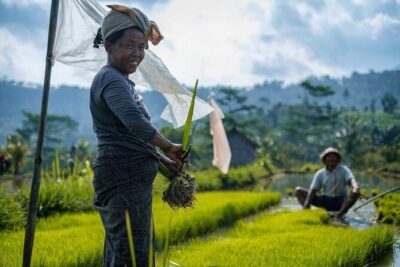
Sidemen Trekking: A Walk from a Different Perspective
Read our review →
Sidemen Trekking: A Walk from Different Perspective
Read our review →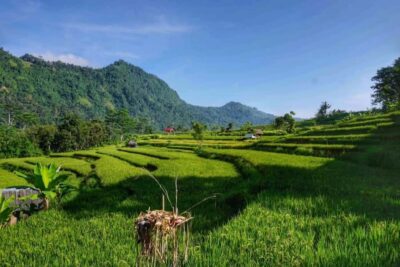
Ujung Water Palace, Candidasa and Sidemen Village Tour
Read our review →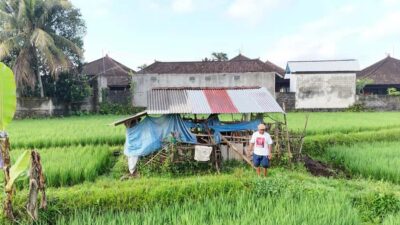
Sidemen rice terraces trek and local village walk
Read our review →
Bali Sidemen Silver Class Making with 7 Gram of Silver
Read our review →Browse the lists this tour appears in