
Reviewed · COOKING CLASSES
Balinese Cooking Class with Traditional Market Tour
This is one of the most practical ways to experience everyday Balinese life, because you start at a traditional market and then cook what you bought and learned. I like that the class stays small and hands-on, and I also like how the teaching centers on real techniques, especially spice pastes made with a stone mortar. One thing to consider is the early start: the market begins right around 7:30 am, and the whole day from pickup to drop-off runs much longer than the cooking portion.
In the morning, your guide will show you how people shop and talk about ingredients, not just how they cook them. In one example, Ron walked guests through different fruits and vegetables and Balinese traditions, and Nyoman handled the market escort with a steady, friendly pace. If you prefer a relaxed late-morning schedule, this may feel intense, but if you want momentum and a full payoff at the table, it fits beautifully.
Key Things to Know Before You Go
- 7:30 am market start: you get the cooler outdoor shopping time and a clear view of daily local routines
- Small group attention: typically four to 12 people, so you are not lost in a crowd
- Stone mortar spice work: you learn both chopped and mortar-ground preparation before cooking
- Organic garden ingredient lesson: herbs and spices are introduced before you cook with them
- A full 5-course lunch you make: plus one dessert, so you leave satisfied, not just informed
- Door-to-door transfers: pickup and drop-off reduce logistics stress in Ubud
Ubud’s 7:30 am Market Start, Why It’s the Best Part
I love how this experience treats cooking as a chain, not a standalone event. You do not just sit down with a recipe card and hope for the best. You begin by seeing how food choices happen first, at a traditional market, then you translate those ingredients into Balinese dishes step-by-step.
The timing matters. The market visit lines up with morning conditions that are cooler and easier to walk through. That means you can focus on conversations and food inspection rather than feeling wiped out before class even begins. If you have only a short window in Ubud, this is also efficient because the day is built around learning, cooking, and eating in one continuous flow.
Price-wise, at $58.16 per person, this is not the cheapest thing you can book. But you are paying for more than cooking instruction. You get the market visit, an herb and spice orientation in an organic garden, coffee and cake during the ingredient stage, pickup and drop-off, and a lunch that includes multiple courses plus dessert. For Bali, that combination tends to be what makes the value feel real.
More Cooking Classes in Ubud
- Ubud Cooking Class Bali with Balinese Chef
★ 5.0 · 1,609 reviews - Ubud: Cooking Class with Transfers and Optional Market Visit
★ 4.9 · 824 reviews - PRIVATE Authentic Balinese Cooking Class in Ubud at Putu’s Home
★ 5.0 · 644 reviews
Pickup, Driver, and Getting to the Market Smoothly
You start with hotel pickup, and the logistics are kept simple. Door-to-door round-trip transfers mean you do not need to organize transport or worry about finding the kitchen location on your own.
In practice, mornings like this run on punctual energy. One guest highlighted that the driver, Yoga, picked them up exactly on time and spoke good English. That kind of smooth start matters because it helps you settle in and arrive ready, not rushed.
Once you are underway, the day flows in a very straightforward order: pickup, market, then garden and cooking. If you like a plan you can trust, this schedule feels comfortable. If you hate early starts, plan to go to bed earlier than you think you need to.
Traditional Market Walk: Seeing Ingredients Before Cooking Them
The market visit is more than a quick look. It is built for understanding, so you can buy your cooking needs while also learning how Balinese people shop and spend time outdoors before heading to kitchens.
You should expect a guided walkthrough where ingredients are explained in plain, useful ways. In one example, Ron described different produce and how people think about foods and traditions. This helps you connect the flavors you are about to cook with the reality of where they come from.
Practical advice: wear shoes you can walk in comfortably. Markets involve uneven surfaces and lots of stops. Also, bring your best curiosity. You will get more out of this if you ask what looks similar, what tastes different, and why certain herbs and vegetables are important.
A possible drawback is that market walking can be a lot if you are traveling with limited mobility or you hate crowds. The tour is capped to a maximum of 12 travelers, and the group is small, so it should not feel like a bus load, but it still follows the rhythm of a real market.
Organic Garden Herb and Spice Prep: Coffee and Cake While You Learn
After the market, you head into the ingredient stage. This part is often where cooking classes either become confusing or become memorable, and here it works because you meet the herbs and spices before you start cooking.
You will be introduced to well-grown herbs and spices in an organic garden, then move from observation to learning. This is also where you get a welcome moment with coffee and cake while the instructor explains what matters for flavor and technique.
For me, this is a key value point. Instead of memorizing a list of seasonings, you understand what each ingredient does and how it behaves in Balinese dishes. That makes your final meal feel more intentional, not just tasty.
More Shopping Tours in Ubud
- Balinese Ubud cooking school (9 Dish Cooking and Market Tour)
★ 5.0 · 540 reviews - Ubud: Balinese Cooking Class and Market Tour
★ 4.8 · 531 reviews - Balinese Cooking class with traditional morning market visit
★ 5.0 · 161 reviews - PRIVATE Ubud Market Tour & Balinese Cooking Class with Putu
★ 5.0 · 125 reviews
The Stone Mortar Lesson: Paste-Making Is the Skill
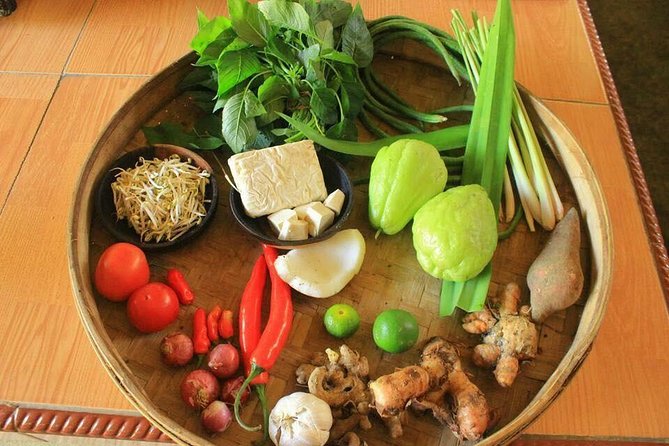
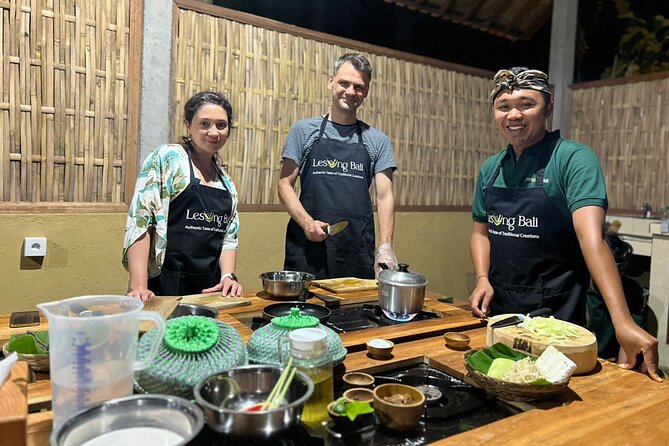
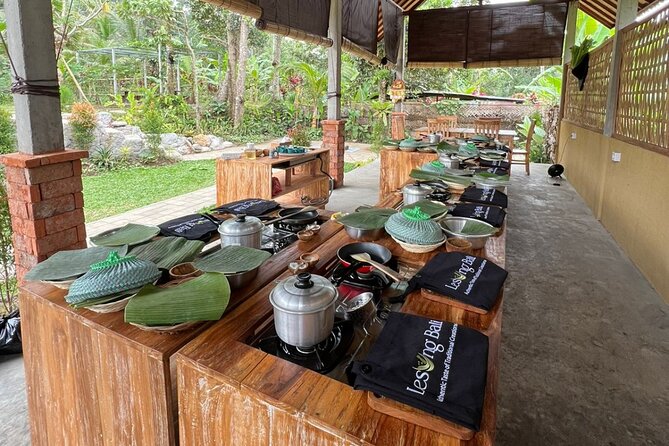
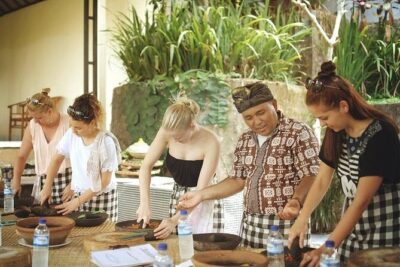
Now comes the hands-on part. You cook with traditional utensils and techniques in a typical compound home kitchen. The star skill is spice paste preparation, and it is taught clearly.
You will work with two methods:
- chopping spices on a wooden chopping block
- grinding spices in a stone mortar
Both approaches lead to different textures, and those textures affect how things smell and how the flavors develop once heat hits. You will do the prep work yourself. The paste and sauce preparation is not a background task. It is the core of the lesson, and it is where you feel like you are actually learning Balinese cooking, not just watching someone else cook.
If you are short on patience, you might think this will be slow. It is not slow in a painful way. It is hands-on, purposeful, and fast enough to keep moving toward the meal. If you are the type who likes using your hands and paying attention to smell and texture, this will be your favorite part.
Cooking in a Balinese Open Kitchen: Your Hands Make the Meals
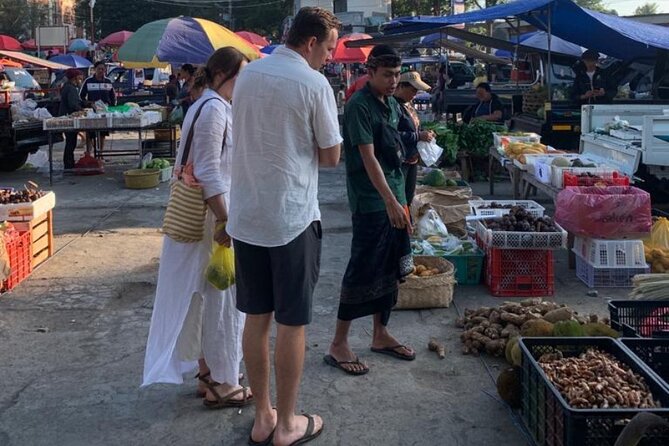
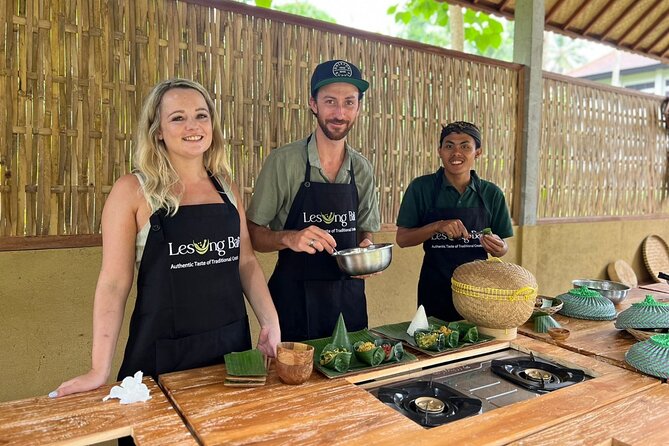
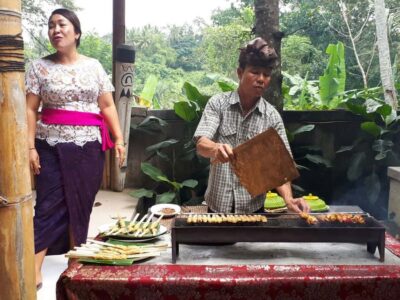
Once the prep is underway, you move into cooking techniques and finish dishes in a traditional open kitchen setup. The class is designed so all prep work and cooking are performed by you, with the instructor guiding you.
That matters because you are not collecting photos for later. You are training your instincts. How to adjust consistency. When paste is ready. How flavors change as ingredients meet heat.
Also, this is not a solo experience. Your group stays small, typically four to 12 people, so you get personalized attention when you need it. One guest mentioned the teacher was helpful, kind, and knowledgeable, which lines up with the overall vibe: supportive instruction without turning it into a lecture.
If you get overwhelmed easily, tell the instructor you want extra pace. In classes like this, the best learning comes when the teacher can see what your hands are doing.
The Five-Course Lunch Plus Dessert: Come Hungry
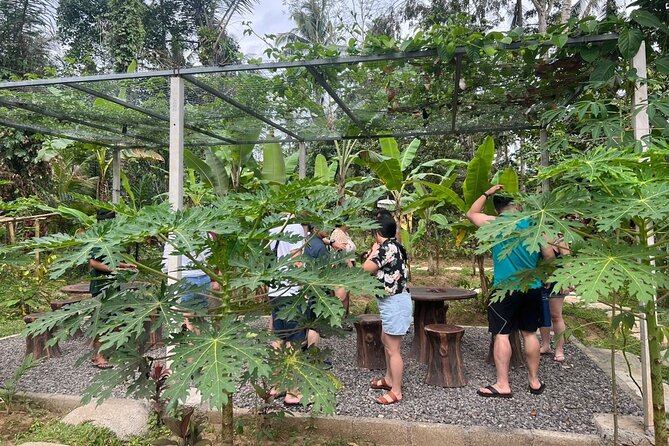
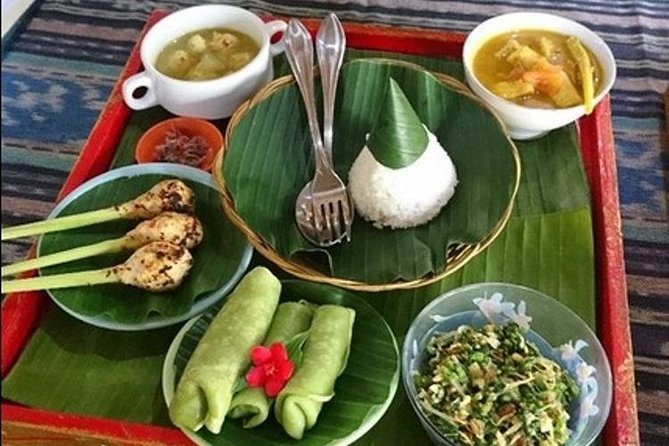
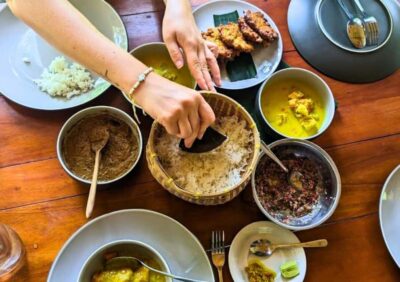
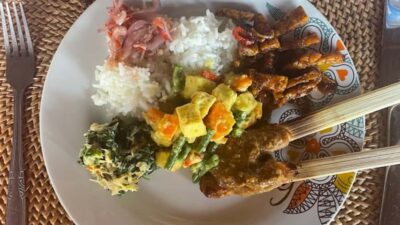
The payoff is the lunch, and it is built to be a real meal, not a token tasting. You will enjoy a 5-course lunch made from the dishes you prepared, followed by one dessert.
The structure is big enough that you should plan to genuinely eat. One guest explicitly said to come hungry because the lunch was hard to finish. That is what you want from a value meal in Bali. You leave full and proud, not slightly hungry with a stomach full of photos.
Why it feels so satisfying is simple: you built the flavor base yourself, then cooked the dishes through. When you sit down, you are not tasting someone else’s labor. You are tasting your decisions.
You also get a certificate of the cooking class, which is a nice small keepsake if you like having something to show for learning.
Transfers, Group Size, and How Long the Day Really Takes
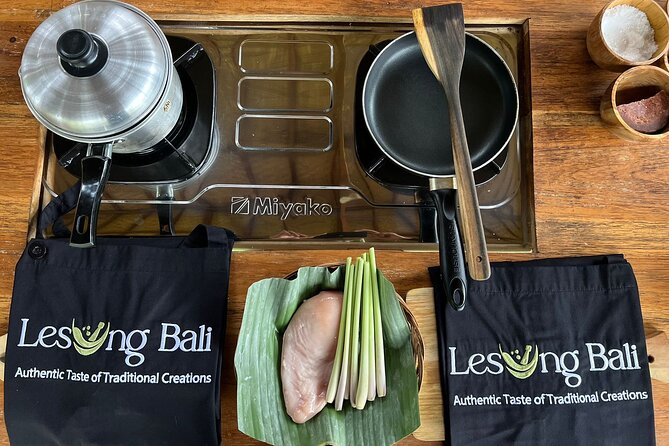
Even though the class portion is listed at around 2 hours 30 minutes, the whole experience is about 6 hours from pickup to drop-off. That includes travel time between hotel, market, garden, kitchen, and back again.
This matters for planning. If you have something booked in Ubud late morning or early afternoon, you will want to leave a buffer. The day is designed as a single block, not something to sandwich between other activities.
Group size stays small. The maximum number of travelers is capped at 12, and there is also mention of a maximum of 6 people per booking with the class accommodating up to 12 participants. Either way, your experience should feel personal and not like a factory line.
You’ll also receive a mobile ticket and bottled water, which helps with simple comfort on a morning that starts early.
What You’ll Actually Learn You Can Use Again
I like when a cooking class teaches something you can reproduce at home. This one focuses on technique, especially spice paste work. If you take nothing else away, take away how paste texture changes what you smell and taste later.
You also learn Balinese cooking as process:
- choosing ingredients at the market
- understanding herbs and spices before cooking
- preparing pastes with both chopping and stone-mortar grinding
- cooking in a traditional open kitchen style
- eating a full multi-course meal made by you
That flow is what makes the experience feel authentic and not like a show. You can bring those habits home, even if your ingredients vary.
Is This Worth $58.16 for Your Ubud Trip?
For me, this is worth booking if you want a morning cultural experience that turns into a satisfying meal. You get a market visit, an organic garden herb lesson, and the main event, cooking multiple Balinese dishes in a real kitchen using traditional tools.
It is also a strong choice if you like structured learning but still want hands-on freedom. You are not just watching, and you are not just standing around.
Consider skipping it if you dislike early mornings or if you want a lighter, purely observational experience. The class is full-on hands-on cooking, and the market is part of the deal.
Should You Book This Balinese Cooking Class in Ubud?
If your Ubud trip needs one activity that connects culture to food, I would book this. The best part is the logic of it, market first, then herbs and spices, then cooking with techniques like stone mortar paste making, then a full lunch you made yourself.
Book it if you:
- want real Balinese everyday ingredients, not just a restaurant meal
- like learning technique you can remember
- can handle a 7:30 am start
- want pickup and drop-off so your day stays simple
Skip it if you need a slow morning or you want a class that is more demo-style than hands-on.
If that sounds like you, this is a solid, high-value way to spend your time in Ubud.
FAQ
What time does the experience start in Ubud?
It starts at 7:30 am. The market visit begins between 7:30 am and 8:00 am.
How long is the experience from pickup to drop-off?
The cooking class is about 2 hours 30 minutes, and the overall experience is approximately 6 hours from pickup to drop-off.
How big are the groups?
The class offers personalized attention in a group of four to 12 people. The maximum number of travelers for the activity is 12.
What’s included in the price?
Included are hotel pickup and drop-off, a traditional market visit, welcome drink and snack, the cooking instructor, lunch of the dishes you make, bottled water, a certificate of cooking class, and 5 dishes plus 1 dessert.
Do I need to bring ingredients or equipment?
You do the cooking and prep work during the class, including spice paste preparation. The experience includes the program elements like market shopping and the cooking setup.
Is transportation provided?
Yes. The experience offers door-to-door round-trip transfers, including pickup from your accommodation and drop-off after the class.
Can I cancel and get a refund?
Yes. You can cancel for a full refund if you cancel up to 24 hours in advance of the experience start time. If you cancel less than 24 hours before, the amount you paid is not refunded.
Newest reviews out of Ubud
- Ubud Silver Class: Forge Your Personal Silver Keepsake★ 4.9 · 39 reviews
- Amazing Kuber ATV Quad Bike Experience in Bali and Tunnel★ 5.0 · 39 reviews
- Lempuyang Tour : Heaven gate, Tirta Gangga, Goa Raja waterfall★ 5.0 · 39 reviews
- Make Traditional Bali Coconut Oil with a Balinese Family★ 5.0 · 39 reviews
- Private Tour : Bromo Ijen Tour From Bali★ 5.0 · 39 reviews
- Bali Private Car Charter Tour with English Speaking Driver★ 5.0 · 39 reviews
- Ayung Rafting Ubud (Include Lunch & Return Transportation)★ 4.5 · 40 reviews
- Private Bali Tour: The Most Scenic Places★ 5.0 · 40 reviews
Cooking Classes, compared.
Cooking Class with Transfers and Optional Market Visit
Read our review →
PRIVATE Authentic Balinese Cooking Class in Ubud at Putu’s Home
Read our review →
Balinese Ubud cooking school (9 Dish Cooking and Market Tour)
Read our review →
Browse the lists this tour appears in