Reviewed · RICE TERRACE TOURS
Ubud: Balinese Cooking Class, Rice Field & Market Tour
What makes this day in Ubud special is that you do not just cook, you also learn where the ingredients and traditions come from. I like the hands-on cooking side, and I love that the morning includes real culture building blocks like market spices, rice farming, and a Balinese home visit. With a guide like Ari, Ery, or Padma (depending on your group), the day stays personal even at a small-group size.
One thing to plan for: it is a 5-hour stretch with walking, heat, and time outdoors at the market and rice fields. Wear comfortable shoes, bring water and sun protection, and know that in the afternoon option you will not do the market because it closes earlier.
Key moments that make this tour worth your time
- Traditional market stop to learn how locals shop, plus tasting fruits, sweets, vegetables, spices, and more
- Subak rice irrigation system so you understand how Balinese water management supports farming
- Balinese home and family life including architectural ideas and daily life rules
- Canang Sari offerings made by you, with the meaning behind the daily thank-you to the gods
- Balinese cooking class with Base Gede/Base Rajang a core sauce used as a base for many dishes
- Small group setup capped at 6, which makes it easier to ask questions and get hands-on attention
A Ubud day that connects food to family and farming
This is one of those Ubud experiences that makes the whole island make more sense. You start in a traditional Balinese market, then you move to a rice field where water and farming are tied together through the Subak system. After that, you visit a Balinese family home to learn how the built environment connects to family routines and belief. Then you end where many people expect the story to stop, the cooking class, but here you get the missing context first.
The value is not only that you leave with a meal. You leave with a mental map of how Balinese life works: where ingredients come from, why offerings matter, and why certain flavors show up again and again in local dishes. It is also great that the class is led in English and kept to a small group, so you are not stuck watching from the back like a spectator.
More Cooking Classes in Ubud
- Ubud Cooking Class Bali with Balinese Chef
★ 5.0 · 1,609 reviews - Ubud: Cooking Class with Transfers and Optional Market Visit
★ 4.9 · 824 reviews - PRIVATE Authentic Balinese Cooking Class in Ubud at Putu’s Home
★ 5.0 · 644 reviews
Traditional market in Ubud, where you learn ingredients by using them
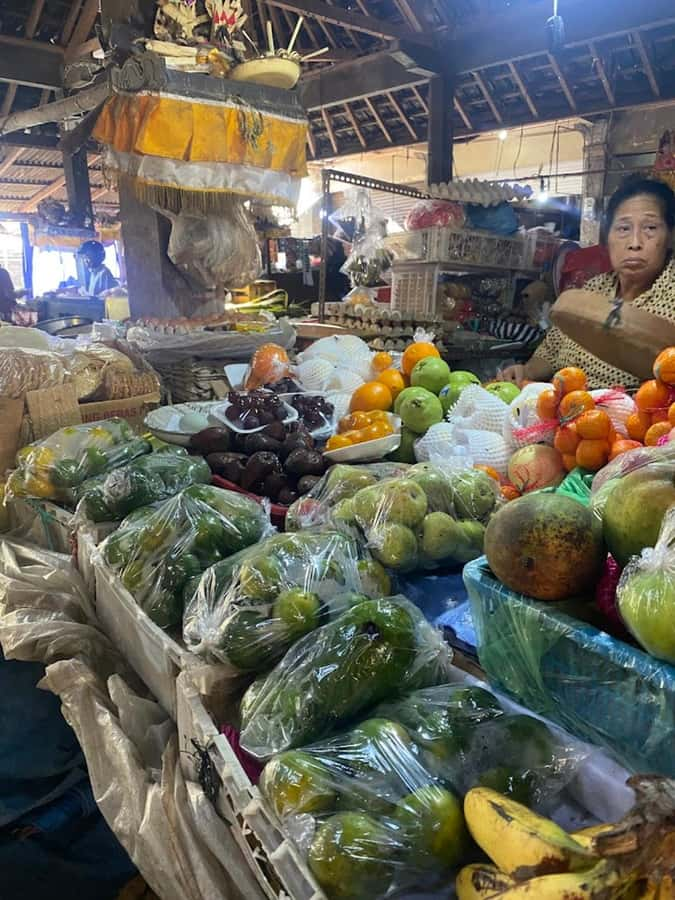
The first stop is a traditional Balinese market. This is where you get practical context fast. You see what people buy daily, and you hear what the ingredients are used for in real cooking, not just what they sound like on a menu.
You will learn about staples such as rice, local spices, fruits, vegetables, fish, and meat. Markets can feel overwhelming anywhere, but the guide frames it in a way that helps you connect ingredients to flavors. In the morning sessions, you should expect tasting opportunities too, like fruit and local sweets, which is a fun way to train your palate before the kitchen part.
A small but important detail: in the afternoon class, there is no market visit because the market is already closed. If you want that market ingredient education, choose the morning option.
What I would do to get the most out of the market: keep an eye on the spice sellers and ask how specific items smell and taste. Even if your cooking style is basic at home, understanding the ingredient roles makes your recipes easier to repeat later.
Rice fields and the Subak system: why water control matters in Bali
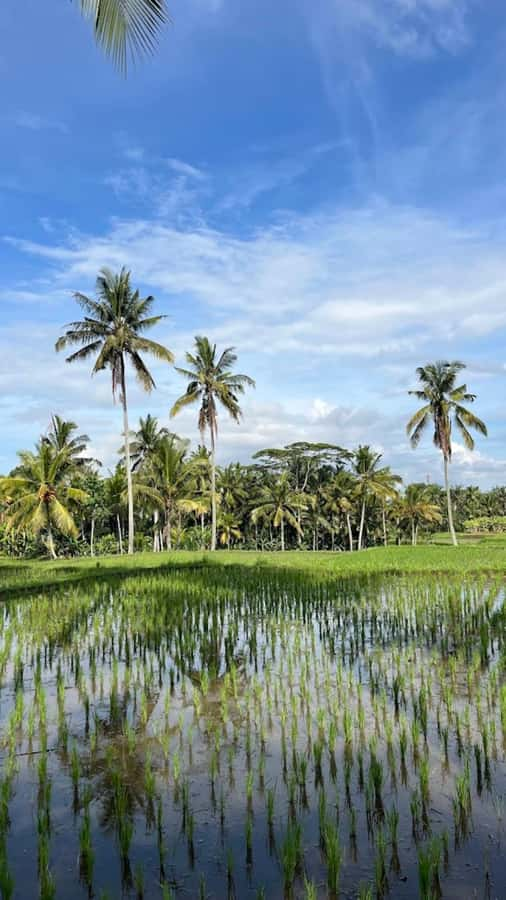
Next comes the rice field visit. This is not a generic nature walk. The point is understanding the traditional Balinese Subak water system, and how it shapes farming, planting, and harvesting.
Rice farming in Bali is tightly connected to water, and Subak is the key idea. You learn how irrigation is organized and why it matters for crops and community life. Even if you are not the type who loves agriculture facts, this is one of those topics that makes the island feel less like a postcard and more like a working system.
One benefit of having this stop before you start cooking is that you naturally connect the dots. When the cooking class uses ingredients that come from rice-growing regions or depend on agriculture cycles, you already understand the bigger picture.
Also, expect uneven ground and some walking. Bring comfortable shoes and plan for sun. If you are the type who runs hot, a hat and sunscreen are not optional.
A Balinese family home visit: architecture, life rules, and daily routines
After the rice field, you head to a Balinese home. This part is often the most memorable for people who enjoy culture more than cooking alone, because you get to see how beliefs and daily life show up in the way homes are arranged and used.
You will learn about Balinese building concepts and the idea of life rules within a traditional family. The architecture is not just aesthetics. It reflects values, routines, and how family members live together. Guides in past groups, including Ari and Ery, have been praised for explaining this clearly in English, with enough detail that it is not just a quick stop.
If you are wondering whether this feels respectful or staged, the format is centered on learning rather than posing for photos. You also get the meaning behind offerings later, so the home visit is more than a photo opportunity.
Quick practical tip: treat this like you are visiting someone’s day-to-day home space. Move calmly, listen closely, and ask questions only when it makes sense.
More Rice Terrace Tours in Ubud
- Ubud: Monkey Forest, Jungle Swing, Rice Terrace, and Water Temple
★ 5.0 · 7,160 reviews - Ubud: Waterfalls, Water Temple & Rice Terraces Private Tour
★ 5.0 · 5,484 reviews - Ubud: Full-Day Rice Terrace, Monkey Forest & Waterfall
★ 5.0 · 2,634 reviews - Full-Day Tour to Water Temples and UNESCO Rice Terraces in Bali
★ 5.0 · 2,539 reviews
Canang Sari offerings: making one, then understanding the thank-you
One of the most “only in Bali” moments is learning about and making Canang Sari offerings. These daily offerings are a symbol of thankfulness to the gods, and you get both the cultural meaning and the physical practice of putting one together.
The tour explains the philosophy behind the offering, not just the steps. That matters because it changes the way you view offerings you might see on street corners later. Instead of thinking, nice decoration, you start understanding it as a daily relationship with gratitude and belief.
This is also a fun activity. It gives you something to do with your hands after the walking and learning. And because you make the offering yourself, you are more likely to remember what it means when you see them around town.
Cooking class with Base Gede/Base Rajang: the sauce that ties dishes together
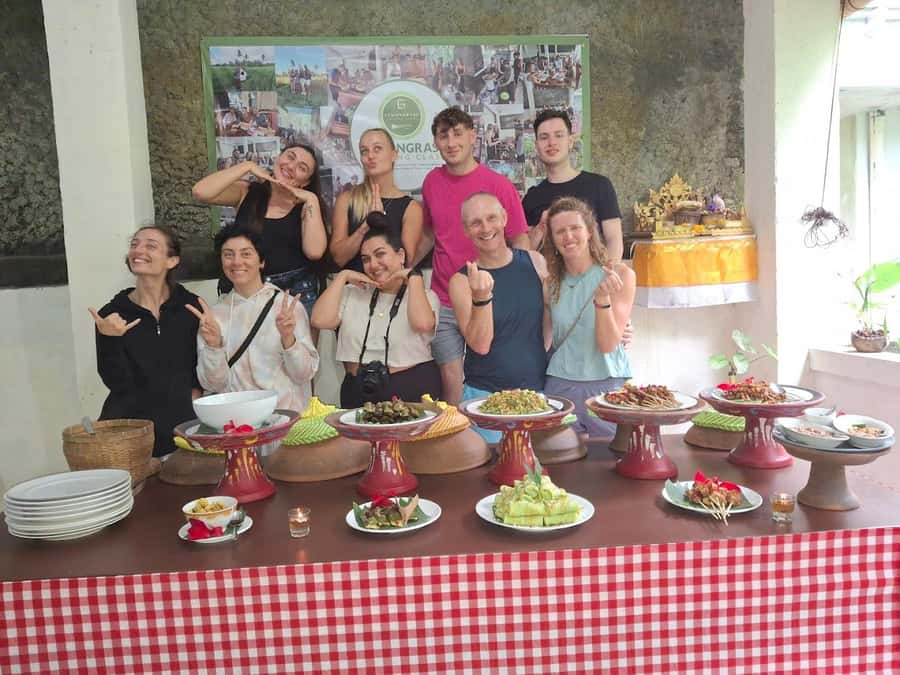
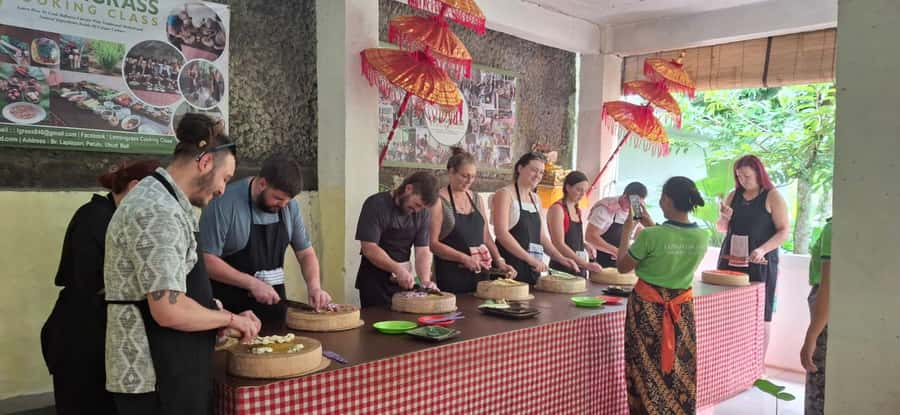
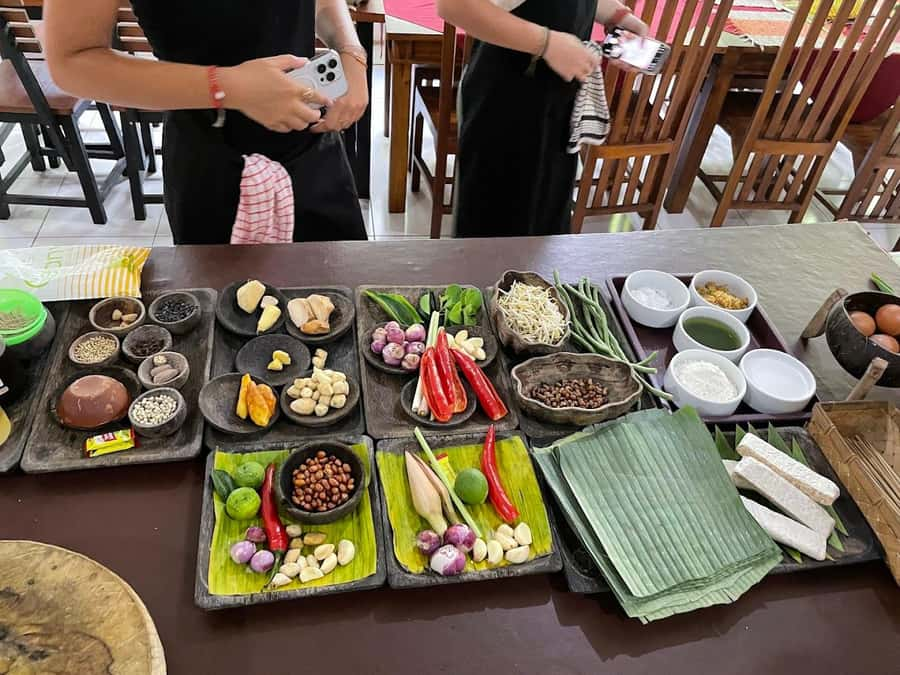
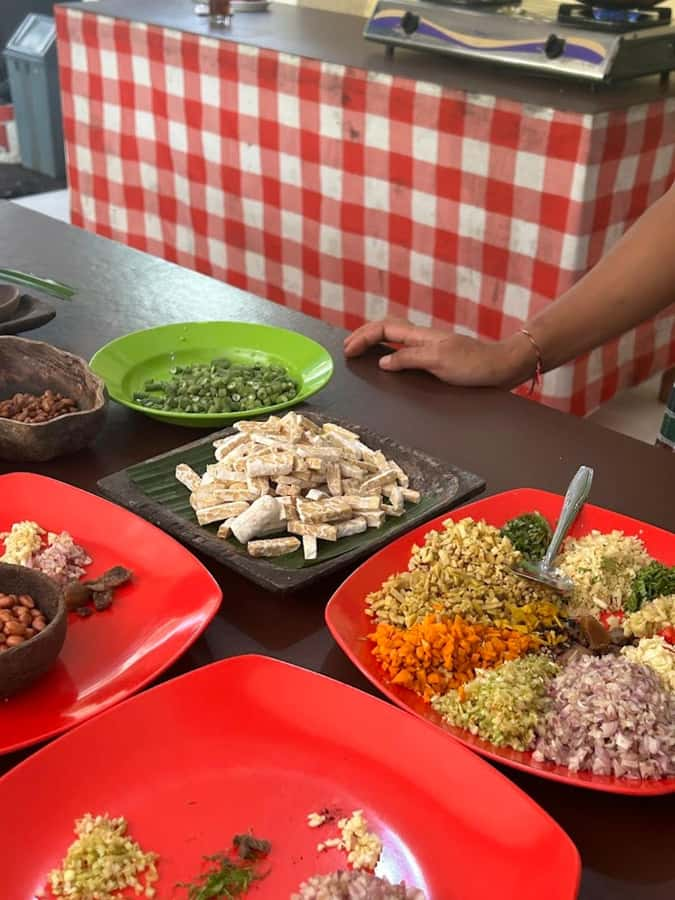
Then you get to the part most people sign up for: cooking. The class is hands-on, guided in English, and designed around clear ingredient explanation. You learn how to prepare traditional Balinese dishes from scratch, and you get a detailed breakdown of what goes into them.
A standout ingredient lesson is the traditional sauce called Base Gede/Base Rajang. Multiple guests have highlighted this as a key “base” that many dishes build on, often described in the class as a kind of Bali magic sauce. Understanding a base sauce changes how you cook back home because it gives you structure. Instead of a pile of unrelated recipes, you get a core flavor system.
You should expect to spend time prepping ingredients, learning techniques, and cooking. In at least one group, people cooked a 10-dish menu, which is a big workload for a half-day and shows how substantial the class can be. You also may get take-home support, and one guest specifically mentioned receiving a recipe book for what they made.
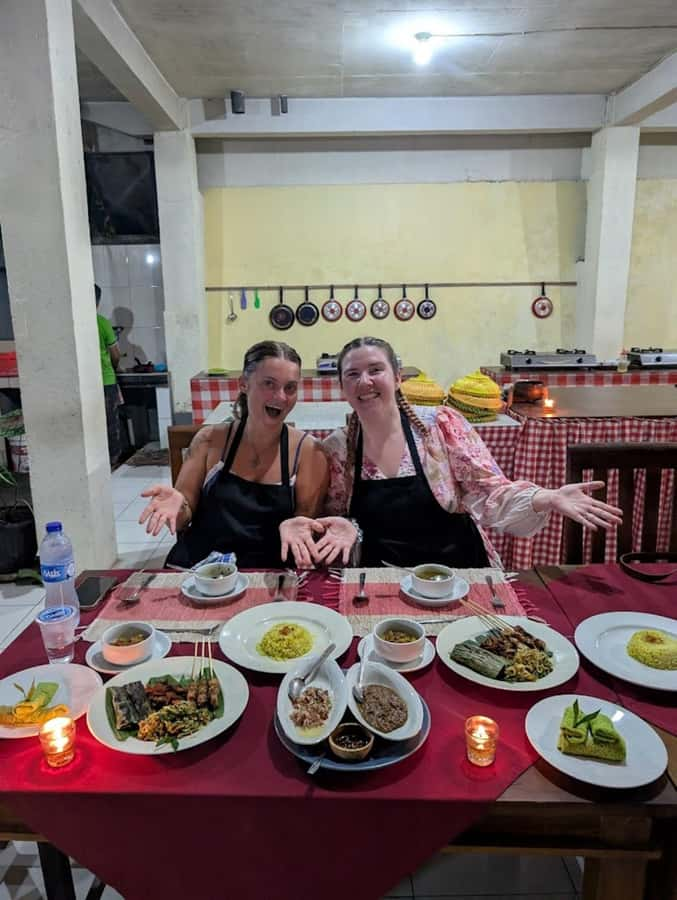
The meal itself is included, so you will eat what you cook. That turns the cooking class into a full experience, not just a demo plus tasting.
Logistics in Ubud: pickup, group size, and timing that affects what you see
This tour is built around a 5-hour day. Hotel transfer is included, but it is only for pickups within the Ubud area. If you are staying in places like Sanur, Kuta, or Nusa Dua, you will need to arrange your own transportation to the designated meeting point in Ubud.
The upside of the transfer is convenience. Guests have described pickup as smooth, and in one case, scooter transport was used to reach the main road when the hotel area could not be accessed by car. That is exactly the kind of practical problem solving that makes a tour feel well-run.
Group size is limited to 6 participants. That is not huge, and it matters. It means more chances to ask questions during market explanations and kitchen steps. It also helps with pacing, especially for offering-making and sauce prep.
Timing note: the market stop only happens in the morning class options. If you choose the afternoon slot, the market is skipped because it is already closed.
What to bring is simple and real-world:
- Comfortable shoes
- Hat
- Camera
- Sunscreen
- Water
Is it good value at $23 per person?
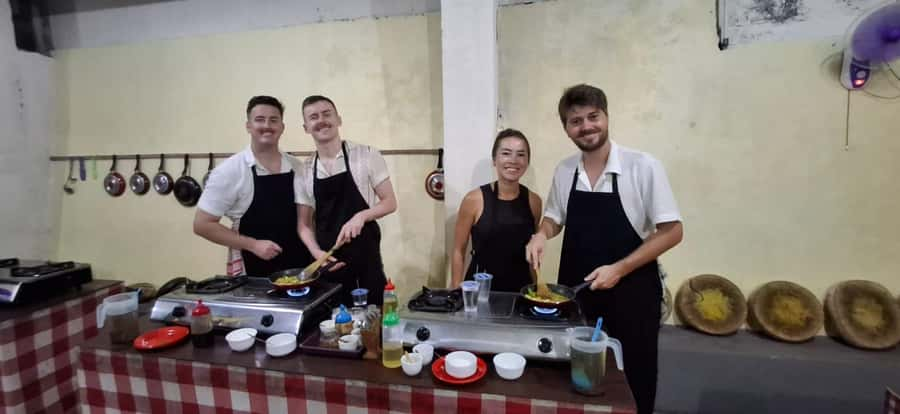
At $23 per person, you are paying for more than cooking instruction. You are paying for transportation within Ubud, entry to a home setting, guided learning across three different cultural touchpoints, and a full hands-on cooking session with included food.
The reason it feels like value is the balance of stops. Many cooking classes in Bali are mostly kitchen-focused. This one adds market context and rice farming basics, plus the Canang Sari offering. That combination helps you understand flavors, ingredients, and meaning in a way that a single cooking lesson cannot.
You also get a small group. In pricing terms, that is the difference between a personal experience and a crowded, rushed workshop.
The one “cost” you should budget mentally is time and walking. If you hate stepping outside and moving around, it may feel like too much. But if you like structured learning and hands-on food, it is a strong deal.
Who this tour fits best, and who might skip it
This tour fits best if you:
- Want a Balinese cooking class with strong cultural context
- Like markets, ingredients, and food explanations you can actually use
- Enjoy learning about rice farming and water systems like Subak
- Are curious about offerings and what daily religious practice looks like in real life
- Prefer small groups (up to 6), so questions are welcomed and answers land
It may not fit if you:
- Need fully sedentary activities
- Have very young kids. The tour is not suitable for children under 10
- Are staying far from central Ubud and do not want to handle meeting point logistics yourself
Also consider your timing choice. If the market experience is a priority, go for the morning class.
Should you book this Ubud Balinese cooking class and market tour?
Book it if you want a half-day in Ubud that feels like it connects the dots. The market stop, the Subak rice field lesson, the home visit, and the Canang Sari offering-making give the cooking class real grounding. Then the class delivers what you came for with hands-on cooking and a focus on Base Gede/Base Rajang as a key sauce base.
Skip it if you are only after a quick cooking session and you do not care about market ingredients or cultural meaning. Also, if you do not handle heat and walking well, plan accordingly with shoes, water, and sun protection.
If you pick the morning option, you also get the full story, including the market before it closes. That is the version that most people seem to remember long after the last plate is finished.
FAQ
How long is the Ubud cooking class, market, and rice field experience?
It runs for about 5 hours.
How much does it cost per person?
The price is listed as $23 per person.
Is pickup included, and where does it work?
Hotel transfer is included within the Ubud area. If you are staying outside Ubud, like Sanur, Kuta, or Nusa Dua, you are suggested to arrange your own transportation to reach the meeting point in Ubud.
What language is the instructor?
The instructor provides the experience in English.
Is it a small group?
Yes. The tour is limited to a small group of up to 6 participants.
Do I visit the market every time?
No. There is no market visit in the afternoon class because the market already closes.
What does the cooking class include?
You will make traditional Balinese dishes with detailed ingredient explanations, including making a traditional sauce called Base Gede or Base Rajang. Your meal is included.
What should I bring?
Bring comfortable shoes, a hat, a camera, sunscreen, and water.
Is this tour suitable for children?
The tour is not suitable for children under 10 years old.
What is the cancellation and booking flexibility like?
Free cancellation is available up to 24 hours in advance for a full refund. You can also reserve and pay later, so you can book without paying right away.
More Shopping Tours in Ubud
- Balinese Ubud cooking school (9 Dish Cooking and Market Tour)
★ 5.0 · 540 reviews - Ubud: Balinese Cooking Class and Market Tour
★ 4.8 · 531 reviews - Balinese Cooking class with traditional morning market visit
★ 5.0 · 161 reviews - PRIVATE Ubud Market Tour & Balinese Cooking Class with Putu
★ 5.0 · 125 reviews
Newest reviews out of Ubud
- Bali: ATV Rafting Zipline Swing &Sky Bike in Ubud Rice Field★ 4.7 · 12 reviews
- Ubud VW Safari Bali Tour★ 4.6 · 12 reviews
- Royal Family Temple, Monkey Forest, and Tanah Lot Sunset Tour★ 5.0 · 12 reviews
- Ubud rice terrace, waterfall, and temple guided trip Bali★ 5.0 · 12 reviews
- The Popular Of Ubud Private Day Tour★ 5.0 · 12 reviews
- Best Of Ubud Highlights Private Tour★ 5.0 · 12 reviews
- Bali Quad bike ATV passing through Waterfall, Cave & Rice fields★ 5.0 · 12 reviews
- Best of Ubud – Kintamani Volcano View – Private Tour★ 5.0 · 12 reviews
Rice Terrace Tours, compared.

Monkey Forest, Jungle Swing, Rice Terrace, and Water Temple
Read our review →
Waterfalls, Water Temple & Rice Terraces Private Tour
Read our review →
Waterfall, Rice Terraces & Monkey Forest Private Tour
Read our review →
Waterfall, Rice Terraces & Monkey Forest Tour
Read our review →
Full-Day Rice Terrace, Monkey Forest & Waterfall
Read our review →
Full-Day Tour to Water Temples and UNESCO Rice Terraces in Bali
Read our review →
Monkey Forest, Ceking Rice Terraces and More – Full Day
Read our review →