
Reviewed · COOKING CLASSES
From Ubud: Authentic Cooking Class in a Local Village
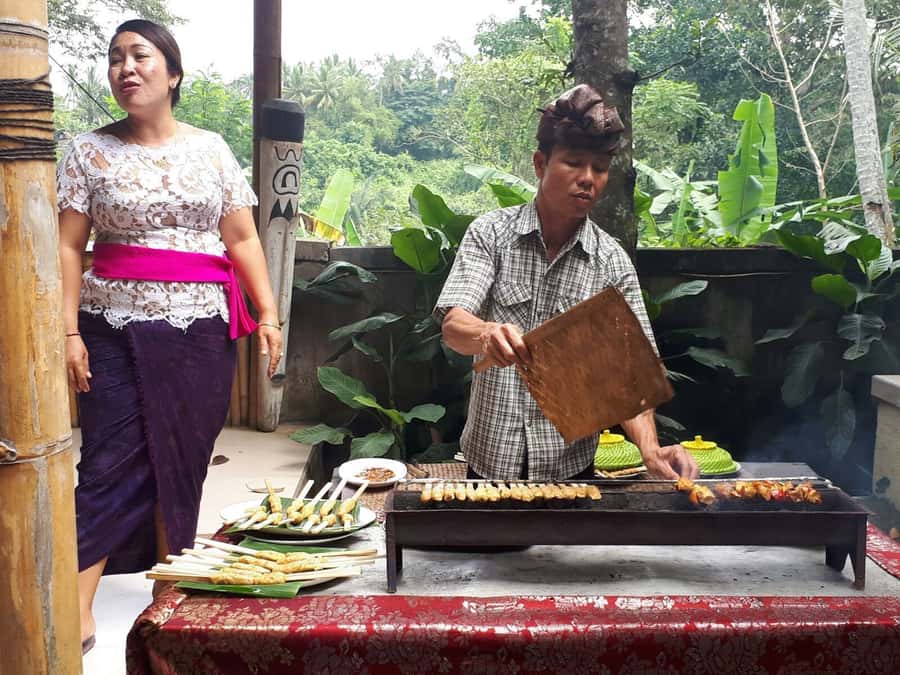
Balinese food gets real fast when you shop for ingredients and cook them in a traditional village kitchen. I love the market tour angle because you choose what goes into your dishes and learn what each ingredient is for. I also love the hands-on format, where Mama Puspa and her team guide you through chopping, pounding, mixing, and cooking, not just watching. One thing to keep in mind: your day depends on transport timing, so if you are farther outside the Ubud area, plan a bit more travel time and be ready for pickup communication.
Pick the morning class if you want the extra market step. Go afternoon if you want a shorter, cooking-focused session. Either way, you end with lunch based on what you made, plus recipes you can take home.
Key things that make this class worth your time
- Market-to-kitchen setup: you learn ingredients first, then cook them right away
- Laplapan village experience: warm welcome and everyday village life beyond Ubud
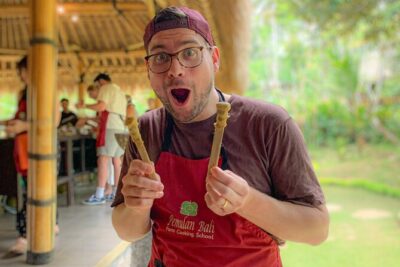
- Hands-on instruction: you actively cook starters, mains, and dessert at your station
- Small group size: limited to 15 participants, so you actually get attention
- Family temple visit: you get to see a family space and take photos
- Meat or vegetarian choice: you can tailor dishes without losing the experience
A Real Village Kitchen in Laplapan, Not a Stuffy Cooking Demo
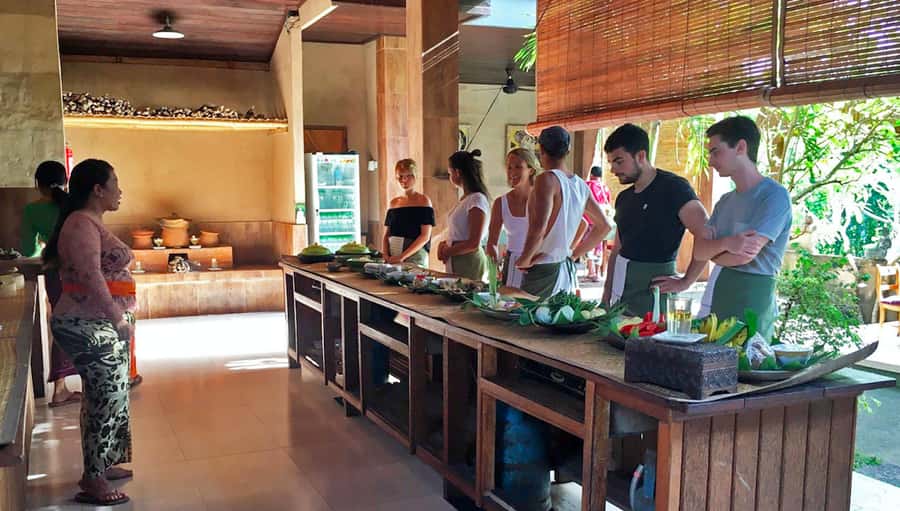
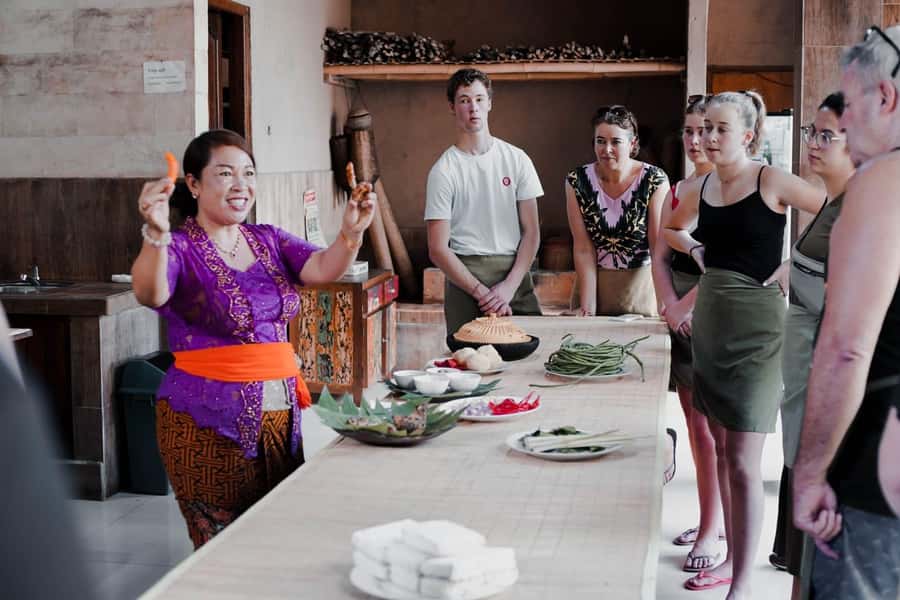
This experience works because it is designed around people, not props. You start in the wider food world, then move into a traditional Balinese home setting in Laplapan, where cooking feels like part of daily life. The kitchen area and dining setup are part of the charm, and many people love that it does not feel like a scripted show.
The vibe is also social in the best way. You spend the morning or afternoon cooking alongside your group, and the meal at the end makes it feel shared, not transactional. Mama Puspa, the owner, is often mentioned as the kind of host who makes you feel like you belong there, and that matters because it turns nerves into motion. You’ll be doing real tasks too, like chopping and pounding, and that is where the learning sticks.
More Cooking Classes in Bali:
- Ubud: Balinese Cooking Class at an Organic Farm
★ 5.0 · 1,786 reviews - Seminyak: Balinese Cooking Class & Market Tour
★ 4.9 · 458 reviews - Bali: Private Balinese Cooking Class in a Family Home
★ 4.8 · 87 reviews
From Ubud Pickup to the Market: How You Shop for Flavor First
Your day starts with hotel pickup in the Ubud area, and the logistics are a big part of the comfort here. A small group keeps the transport smoother, and the class is timed so you can settle in before the cooking starts. The guide handles English interpretation during the tour, which is helpful when you are trying to understand not only what an ingredient is, but how it behaves in a recipe.
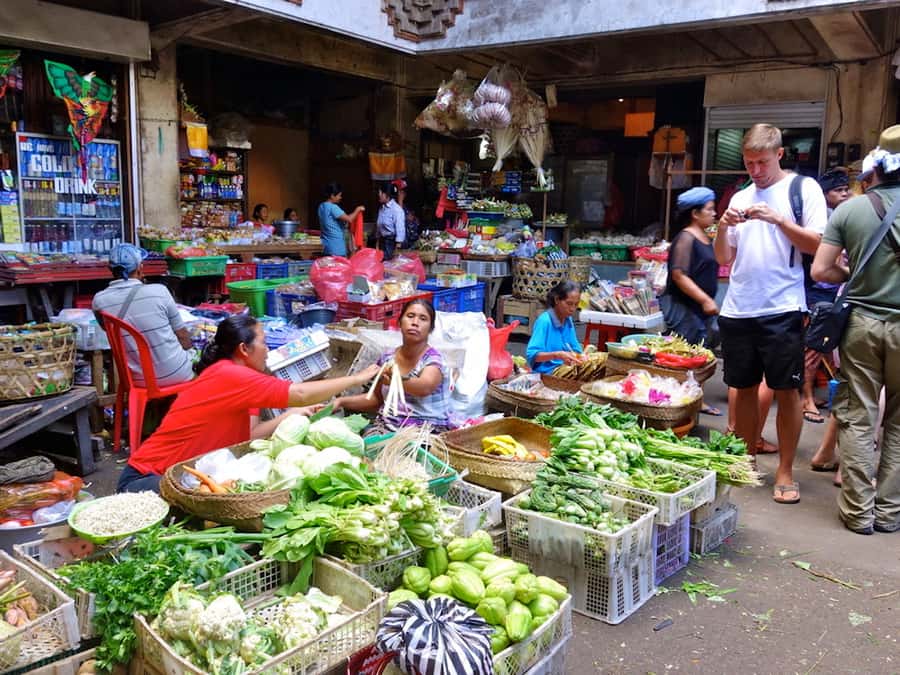
If you take the morning class, you also get the fresh food market tour. This is not just browsing. You choose from what’s available in the market display, learning how vegetables, herbs, spices, and proteins fit into Balinese cooking. Many guests also note that fruit tasting is part of the fun, so you can start learning about flavors beyond what goes into your dishes.
Practical tip: go with an open mind on ingredients. Balinese cuisine can use combinations that sound unfamiliar at home, so treat the market like a guided lesson in how locals build flavor. When you later cook, you’ll recognize the ingredients because you handled them earlier in the day.
Rice Plantation Stop: The Staple Crop Lesson You Can Taste
After the market, the program includes a stop at a rice plantation. You learn how rice, the staple crop, is cultivated and prepared. It’s an important context piece because it reminds you that Balinese food starts with agriculture and timing, not just spice mixes.
You also get scenic views during this segment. Even if you are not a hardcore plant nerd, it is a good mental break between the market shopping and the more active cooking time. It also helps the day feel like a half-day “experience,” not just a single building visit.
One realistic consideration: this part of the day adds outdoor time. If it’s hot or rainy during your visit, wear something breathable and be ready for humidity. The payoff is that your cooking afterward feels grounded in where the food comes from.
Welcome at Laplapan: Tea, Photos, and the Village Context
Next you arrive at the traditional village of Laplapan and get a warm welcome. This is where the class stops being about cooking alone and becomes cultural. You’ll see the compound and get time to take photos around a family temple area, which is a detail that many people highlight as memorable.
You’re also greeted with Balinese tea and coffee, so you can reset before the hands-on work starts. This small touch matters on a practical level because it signals the pace: you are not rushing, you are settling in.
The kitchen environment is also frequently praised. People talk about how the space feels clean and well run, and that reduces the “I’m worried I will mess this up” feeling. When the space is comfortable and the staff are organized, you focus on technique.
Something different for the next Bali day:
- Bali: Sunrise Mount Batur Guided Hike with Breakfast
★ 4.8 · 9,660 reviews - Bali: Mount Batur Sunrise Guided Hike and Natural Hot Spring
★ 4.8 · 9,284 reviews - Bali: Full-Day Instagram Highlights Tour
★ 4.8 · 7,817 reviews - Bali/Nusa Penida: East & West Highlights Full-Day Tour
★ 4.7 · 6,263 reviews
The Cooking Class Itself: Starters, Mains, and Dessert, Actually Made by You
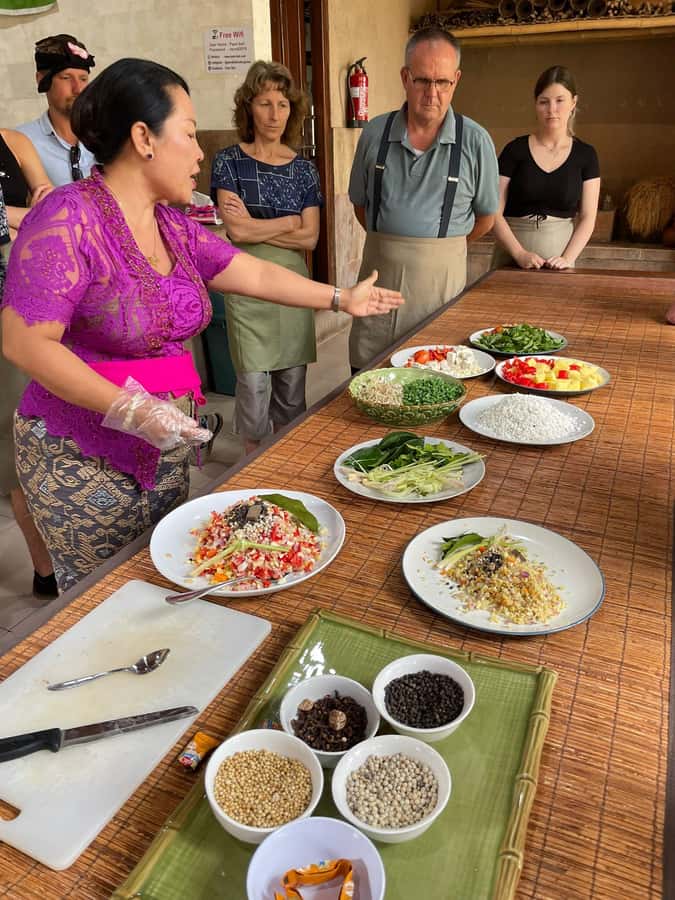
The cooking lesson is the centerpiece. You’ll attend a half-day morning or afternoon class with expert chefs guiding you at the stations. The structure is active, and you should expect to handle multiple dishes yourself as the team walks you through each step.
What you cook is built around a full spread: 3 starters, 4 main courses, and 1 authentic dessert. Many guests also mention that the class ends with a big feast, which is exactly what you want from a cooking class. The goal is not just to taste good food, it’s to understand how Balinese flavors are built step by step.
You’ll learn practical technique, such as:
- chopping and prepping ingredients so they cook correctly
- mixing seasonings so flavors distribute evenly
- cooking with timing so textures stay right
- using pestle and pounding methods that change how aromatics release
The staff often keep things moving by having you work in turns. One review-style detail that came up a lot is that pairing up and alternating tasks helps everyone participate in each dish cycle. That matters if you worry about feeling stuck waiting your turn.
Meat or vegetarian? Yes, you’ll have a choice. If you prefer vegetarian cooking, you can opt for that route and still get the full structure of starters, mains, and dessert. This is one of the more practical reasons the class works for mixed groups.
Dietary Needs: Meat vs Vegetarian, Plus Real Adaptations
This is a big reason people keep coming back. Even beyond the included meat or vegetarian option, the team has shown they will adapt when a guest has dietary restrictions.
In past sessions, guests report accommodations for capsicum allergy, garlic and onion allergies, and gluten free needs. Some even describe separate handling to reduce cross contamination risk, which is reassuring if you travel with real restrictions rather than preferences. The safe move is to tell them clearly at booking or right when you arrive, so the chefs can plan the right substitutions and handling.
If you are thinking about allergies, do not assume standard “no garlic” rules are enough. Ask how they handle onions too, and confirm what will be avoided. Then you can relax and enjoy the cooking rather than worrying the whole time.
Lunch and Take-Home Recipes: Turning One Day Into Skills at Home
After cooking, you sit down together and eat what you made. This is where the experience becomes more than a workshop. You taste your own Balinese dishes in a relaxed setting, and it’s easier to connect techniques to results once you are chewing and sharing.
You also get recipes and notes you can keep, and many people mention receiving a take-home recipe book. That turns the class into a future tool, not just a meal you forget in a week.
If you want to make it stick at home, focus on technique over brand names. You might not find the exact herbs, but you can recreate the method: how aromatics are pounded, how sauces are balanced, and how different textures stay distinct. The recipe book helps, but your real win is recognizing what you did during the process.
Price and Value: Is $35 Actually Fair for This Much Food and Time?
At $35 per person for roughly 210 minutes to 4 hours, the value is strong because several things are bundled in. You get:
- hotel pickup and drop-off in the Ubud area
- a live English guide
- market tour in the morning class only
- rice plantation stop
- Balinese tea and coffee
- the cooking lesson with ingredients provided
- lunch (the meal you cook)
- a certificate
When you price similar half-day activities, transportation and guidance alone can cost a lot. Here, you’re also getting the ingredient base, instruction, and a full meal outcome. The small group cap of 15 participants also matters. If a class has 30 people, your chances to get hands-on shrink. A smaller group makes the $35 feel less like a “tour ticket” and more like paying for real coaching.
The only price caution is location. Pickup outside Ubud is possible as an add-on, so check whether your hotel is in the included pickup zone before you assume it is included.
Morning vs Afternoon: Pick the Class That Matches Your Travel Mood
The morning session includes the market tour, and that extra step adds depth. If you like food shopping, enjoy seeing ingredients before you cook, or want the added cultural context, the morning is the better choice.
The afternoon class is shorter, since it skips the market tour. That makes it a good fit if you already did a lot of activities in Ubud earlier and you want a compact, hands-on session with less walking time.
Either way, the core cooking experience remains. You still cook the starters, mains, and dessert, and you still eat together.
Who Should Book Paon Bali Cooking Class (and Who Might Not)
I’d point you here if you want a real food day with technique, not a lecture. It also suits solo travelers who enjoy meeting people at the stations, because the structure naturally gets you working side by side. The small-group size helps with that.
Families often like it too, based on what people highlight about the hands-on, organized setup. If you’re traveling with kids, this is the kind of activity where they can feel involved, not just sitting and watching.
You might skip it if you dislike group pacing or you are short on time and want something extremely minimal. This is a half-day experience with transport, market or plantation time, and active cooking. It is not a quick snack course.
The Practical Stuff: How to Get the Best Day Out of It
A few simple moves can make a noticeable difference:
- Wear breathable clothes you don’t mind getting a little dusty from chopping prep.
- Bring a light layer if you get cold in shaded areas.
- If you have allergies or restrictions, speak up clearly so substitutions can be planned.
- Plan to enjoy the process, because the best parts are the moments you pound, chop, and stir with the team watching.
Also, pay attention to pickup communication. One detailed caution that came up is that a driver can arrive early and contact you before the exact pickup time if you are in a different activity window. If your schedule is tight, confirm the pickup window the day before and stay reachable.
Should You Book This Class?
If you care about learning how Balinese dishes are built, not just eating them, this is a strong yes. The blend of market ingredients, a rice plantation context stop, and a true village kitchen cooking lesson makes it feel like a day where you gain skills, not only memories.
Book it if you want a hands-on class with a small group, a real host like Mama Puspa, and a meal you helped create. Consider it carefully if you are outside the Ubud pickup zone or your schedule is very rigid, but for most people in Ubud, the flow is exactly what you hope a food class will be.
FAQ
Is there a market tour, and when does it happen?
The fresh market tour is included with the morning class only. The afternoon class is shorter and does not include the market tour.
How long is the cooking class?
The total duration is about 210 minutes, or roughly 4 hours. The afternoon class is shorter because it skips the market stop.
Do I get picked up and dropped off in Ubud?
Yes. Pickup and drop-off at hotels in the Ubud area are included. Pickup from outside Ubud is possible as an add-on if requested.
Is the class small?
Yes. It is a small group limited to 15 participants.
Can I choose vegetarian options?
Yes. You will have a choice of meat or vegetarian dishes.
What does the class include?
You get the cooking lesson, all ingredients, tea and coffee, lunch, and you receive recipes and notes you can take home, plus a certificate.
Can they accommodate dietary allergies or special diets?
In past classes, the team has accommodated allergies, including capsicum allergy, garlic and onion allergies, and gluten free needs. Tell them your needs in advance so they can plan accordingly.
What if my plans change?
Free cancellation is available up to 24 hours in advance for a full refund.
Newest reviews out of Bali
- Bali: Mount Batur Sunrise Hike Including Transfer & All Cost★ 4.8 · 39 reviews
- North Bali: Ulun Danu, Waterfalls, Swing and Monkey Forest★ 5.0 · 39 reviews
- Ubud: Traditional Balinese Painting Class★ 4.2 · 40 reviews
- Bali: Canyon Tubing Adventure★ 4.8 · 40 reviews
- Bali: Jatiluwih Rice Terraces 1 Hour Electric Bike Tour★ 4.7 · 41 reviews
- Bali: 3-Day Private Gili Islands Snorkel Tour with Hotel★ 4.2 · 44 reviews
- Bali: Penglipuran Village, Rice Terrace & Waterfall Tour★ 5.0 · 46 reviews
- Ubud: Kanto Lampo Waterfall, Art Market, Cretya & Tanah Lot★ 4.8 · 47 reviews
Cooking Classes, compared.
Cooking Class with Transfers and Optional Market Visit
Read our review →
PRIVATE Authentic Balinese Cooking Class in Ubud at Putu’s Home
Read our review →
Balinese Ubud cooking school (9 Dish Cooking and Market Tour)
Read our review →
Browse the lists this tour appears in