
Reviewed · COOKING CLASSES
PRIVATE Authentic Balinese Cooking Class in Ubud at Putu’s Home
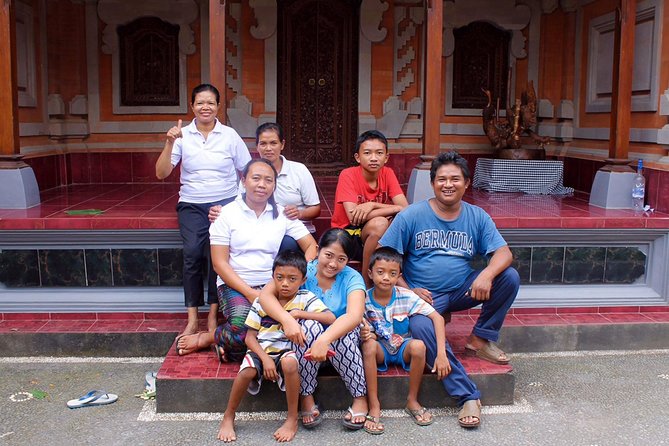
A private cooking class in Ubud inside a real family home is interesting for one simple reason, you do not just watch. You cook with Putu and her multigenerational family, learn the spices and traditions behind the food, then sit down to eat everything you make as a group. I especially love the farm-to-kitchen ingredients and the door-to-door private transfers that keep the day stress-free. A possible drawback to consider is that the cooking area can be simple and outdoors, so it is not the polished, showroom-style kitchen you might picture.
You’ll choose lunch or dinner, and you cook about five dishes in roughly 1.5 hours of hands-on time, then the meal stretches the rest of the experience. Most groups finish with a takeaway of recipes, and the food often includes traditional methods like grinding spices by hand and cooking rice the old way. If you are doing this on a tight schedule back in Ubud, plan for a little extra travel time, because Putu’s home setup is not right in the center of town.
Key things that make this class worth your time
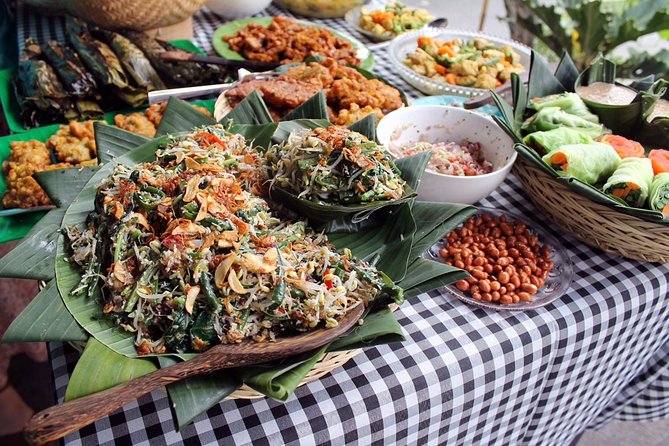
- A multigenerational host: Putu cooks with family members and includes their grandparents’ knowledge of farming and rice.
- You cook about 5 dishes: Expect a full-feeling session, not a quick demo.
- Local ingredients you can see and taste: Fresh produce, rice, and fruits tie directly to the meals you make.
- Culture and religion, not just recipes: You’ll learn about Balinese Hindu practices in a family compound setting.
- Private, not a classroom: It’s only your group, so you can ask questions and adjust as needed.
- Food with a little local alcohol: A small amount is included, plus non-alcoholic drinks.
Why Putu’s home cooking lesson feels different in Ubud
This class works because it treats cooking as part of everyday life, not an isolated activity. You’re invited into Putu’s ancestral village setting, with gardens and farm life as the backdrop, and you learn why certain ingredients matter and how the family thinks about food. That context changes how you cook. You start asking better questions, like why a spice blend is built a certain way or how ceremonies and daily rhythms shape meals.
I also like the tone of the experience. Putu is described as warm, funny, and patient, and the family vibe makes the lessons feel human. If you’re nervous about cooking, you’ll still feel pulled in, because you are guided step by step while the family keeps the flow moving.
The other smart piece is that you are not stuck trying to coordinate rides, routes, and time windows on your own. The class includes round-trip transport from Ubud hotels, so you can focus on what matters, learning and eating.
More Cooking Classes in Ubud
- Ubud Cooking Class Bali with Balinese Chef
★ 5.0 · 1,609 reviews - Ubud: Cooking Class with Transfers and Optional Market Visit
★ 4.9 · 824 reviews - Balinese Ubud cooking school (9 Dish Cooking and Market Tour)
★ 5.0 · 540 reviews
Price and value, what $75 really covers
At $75 per person, this is priced like a premium experience in Ubud, but it is not just “a cooking class.” Your price includes:
- A private hands-on lesson with Putu and family
- A homecooked meal of everything you prepare
- Local alcohol (typically 1 to 2 glasses) plus non-alcoholic beverages
- Round-trip private transport from Ubud hotels
- Taxes and fees, and gratuities
That last part matters more than most people expect. In Ubud, transportation often quietly becomes your hidden cost, especially if you want something private. Here, the transport is part of the package as long as you’re staying in Ubud. It is an apples-to-apples way to compare the real cost, not just the headline price.
One more value point, you are doing multiple dishes and learning techniques. Many cooking tours only let you do one component. This one has you chopping, grinding, grilling, and assembling, then eating a full feast.
Getting picked up and settling into a family compound
Your day starts with pickup from your Ubud hotel, then you’re driven to Putu’s home. The experience is described as door-to-door round-trip private transfers, so you don’t have to find a meeting spot and hope your ride shows up.
One practical detail: the property is farther than some Ubud activities. If you have a dinner reservation right after, build in buffer time. Several people note that the cooking location can be around 40 minutes from Ubud center, so the timing is real.
When you arrive, Putu welcomes you and walks you through the layout and meaning of different parts of a traditional Balinese household compound. You’re not just shown rooms. You get explanations tied to Balinese Hindu practice and family life. That matters because you start understanding why certain foods show up in certain moments, and why daily rituals look the way they do.
What the cooking lesson looks like, hands-on from start to finish
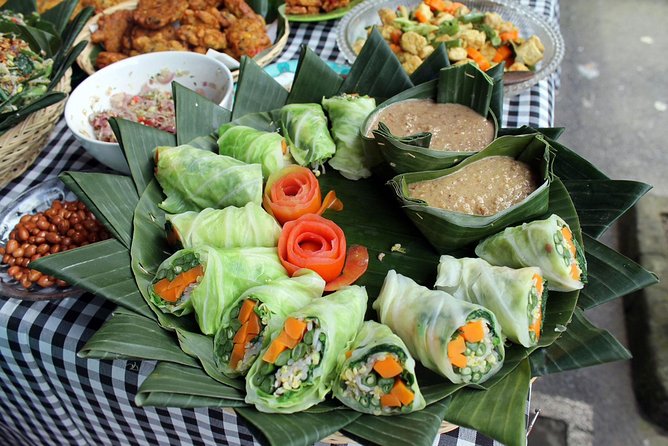
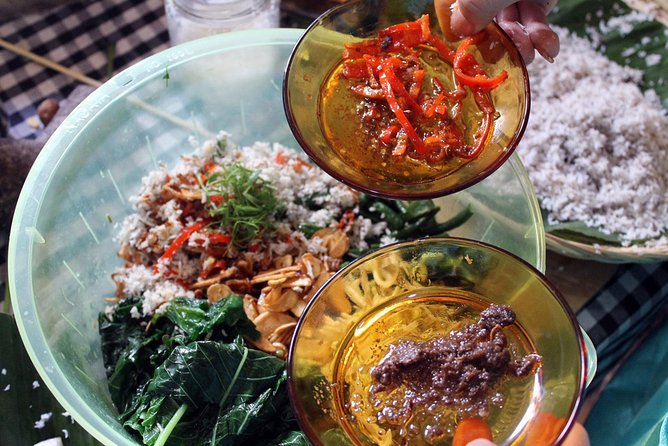
The heart of the class is preparing about five authentic Balinese dishes together. You’ll be working in Putu’s kitchen with fresh ingredients. Some of these ingredients come from her own farm, including things like rice and fruits, and the menu can shift with the season.
Your teacher guides you through the steps with real patience. You are doing the work, but you’re not thrown in. And if you want to dial spice up or down, you may be able to adjust. That flexibility is huge if your group has different heat tolerance.
Something different for the next Ubud day:
- All-Inclusive Ubud Private Tour
★ 5.0 · 14,344 reviews - Best of Ubud Full-Day Tour with Jungle Swing
★ 5.0 · 8,571 reviews - Ubud: Monkey Forest, Jungle Swing, Rice Terrace, and Water Temple
★ 5.0 · 7,160 reviews - Ubud: Waterfalls, Water Temple & Rice Terraces Private Tour
★ 5.0 · 5,484 reviews
Techniques you might use
Based on past experiences with this class, you may see or use traditional methods such as:
- Grinding spices by hand
- Cooking rice using traditional steaming methods
- Using simple chopping techniques with practical tools
- Wrapping or packaging ingredients, like in banana leaf style parcels
Even if your final dish looks different than what you’d make at home, the techniques teach you the logic of the flavor.
The five dishes you’ll make, plus what you learn with each one
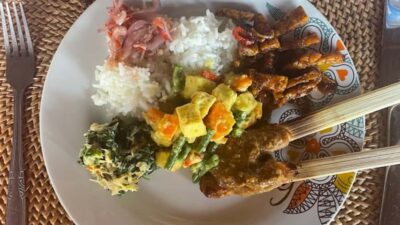
The exact menu can vary, but the class is built around core Balinese flavors and signature preparations. You should be prepared for a mix of grilled, spiced, sauced, and wrapped dishes. Examples mentioned include grilled fish, banana leaf parcels, and curry.
Here’s how to think about the dishes, and what you’ll likely learn while making them.
1) Grilled fish or another grilled main
Grilled items teach you to balance salt, aromatics, and spice so the fish tastes like it belongs to the sauce and not like it was seasoned separately. You also get a feel for how Balinese seasoning is built, layer by layer.
2) Banana leaf style parcels
This is where aroma meets technique. Banana leaf cooking tends to create a specific fragrance and helps keep ingredients tender. If you’ve only had banana leaf dishes from restaurants, you’ll notice the difference in freshness and texture when you assemble and cook them yourself.
3) Curry or spiced sauce dish
A curry-based dish is usually the center of gravity for the meal. You’ll learn how aromatics and spice paste come together, how heat changes the sauce, and how to season so it feels balanced rather than one-note.
4) A rice component that connects to farm life
Rice is not an afterthought here. You get homegrown rice from Putu’s grandparents’ farming background, and you’ll learn how rice fits into daily life and meal rhythm. Even small rice details show you why Bali food feels “complete,” not just spicy.
5) A final dish, often fruit-forward or snack-like
Depending on the season, you might also make something that highlights tropical ingredients, or a side that rounds out the meal. This is where the menu variation becomes fun, because you’re seeing what the family actually cooks with right now.
The farm, spices, and traditional medicines you hear about while cooking
This class does not treat spices like a magic trick. Putu explains the spices she uses and why they matter. The herbs and aromatics have a role in flavor, but you’ll also hear about traditional Balinese medicines made from local ingredients.
That is one of the strongest “why this is worth paying for” parts. Cooking classes are common. A class that ties your food to the family farm and everyday tradition is rarer, and it changes how you remember the taste afterward.
You’ll also see how the family raises produce and cares for animals. In many cases, ingredients are grown on-site, then used within the same day’s menu. That makes the lesson feel grounded, like you are learning from an actual cook’s supply chain, not a staged set.
Lunch or dinner, and how the meal with local alcohol fits in
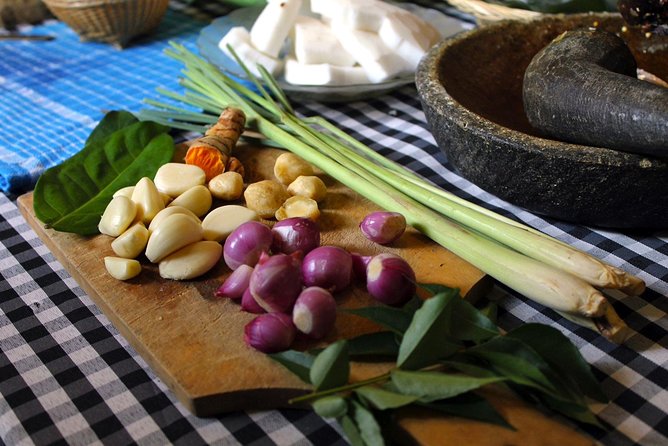
You can choose lunch or dinner based on your schedule. Either way, the class runs about 3 hours total, with about 1.5 hours of cooking hands-on. The rest of the time is built around the meal and the cultural chat before and after.
You’ll eat a shared feast including everything you prepared. And yes, there is a little local alcohol included, typically 1 to 2 glasses, plus non-alcoholic beverages. If you do not want alcohol, ask ahead when you book, since dietary and preference notes can be provided.
One practical plus: you tend to leave full. Several people mention there are leftovers and that food is packed up for later, which is great if you want a low-effort breakfast the next morning.
How the kitchen setup feels, and comfort tips that help
The cooking setup can be simple. Putu’s kitchen may be outdoors or basic, and the cooktop can be limited. That is not a problem if you show up with the right expectations. This is about technique and family food, not stainless-steel show kitchens.
Here are a few practical things I recommend you plan for:
- Wear breathable clothes. You’ll be chopping, standing, and moving in a warm environment.
- Bring something for bugs or humidity if you’re prone to getting bothered outdoors.
- Expect hands-on work, so don’t wear anything you worry about getting spice-scented.
- If you’re doing a night class, look for lighting and comfort needs, since some evenings are run after the sun goes down in an outdoor setup.
Also, communication can matter. Some people suggest having WhatsApp downloaded because Putu uses it for communication. If you rely on email only, it is worth being flexible.
Who should book this private cooking class
This is a good fit if you want more than a meal. You should like this experience if you are:
- A food lover who learns better by doing
- Curious about Balinese Hindu traditions and everyday family life
- Traveling with mixed ages or different cooking comfort levels
- Looking for a private activity that does not feel staged
It also works well for couples and small groups, because you get attention without competing with strangers. One of the big advantages of the private format is that Putu can slow down for questions, explain ingredients in plain language, and adjust pacing when your group needs it.
If you hate any chance of being outdoors or you need an ultra-modern, fully indoor kitchen environment, you might feel impatient here. But if you can handle a rustic setup, it becomes part of the charm.
Should you book Putu’s Authentic Balinese Cooking Class at her home?
I’d book this if you want a Ubud experience that feels local in a real way. The best reason is the mix of hands-on cooking, farm ingredient context, and Balinese household explanations. It is not just how to cook five dishes, it is why they’re cooked that way and how the family frames food in daily life.
Do book it if:
- You’re staying in Ubud and want pickup included
- You want a private class, not a group scramble
- You enjoy learning from a family host who teaches with humor and patience
Hold off if:
- You’re on a hyper tight schedule right in the Ubud center and cannot tolerate travel time
- You only want a fully indoor, modern cooking environment
- You don’t want any alcohol at all and you do not plan to note a preference
If you’re deciding today, this is one of the easiest “yes” calls in Ubud for people who care about food and culture in the same bite. The odds are high you’ll leave with skills, recipes, and a meal you will remember.
FAQ
How long is the cooking class?
The class itself is about 1.5 hours of hands-on cooking, and the overall experience runs about 3 hours including pickup and the meal.
Is pickup included?
Pickup and drop-off are included from Ubud hotels with round-trip private transport. If you are staying outside Ubud, there is an extra transportation charge.
What dishes will I cook?
You’ll prepare about five authentic Balinese dishes. The menu can vary by season, but examples include grilled fish, banana leaf parcels, and curry.
Is there a vegetarian or vegan option?
Yes. Vegetarian and vegan options are available if you notify the provider at the time of booking.
Is local alcohol included?
Yes, the experience includes local alcohol, typically 1 to 2 glasses, along with non-alcoholic beverages.
Is the experience private?
Yes. It’s a private, personalized experience where only your group participates.
Newest reviews out of Ubud
- Ubud Silver Class: Forge Your Personal Silver Keepsake★ 4.9 · 39 reviews
- Amazing Kuber ATV Quad Bike Experience in Bali and Tunnel★ 5.0 · 39 reviews
- Lempuyang Tour : Heaven gate, Tirta Gangga, Goa Raja waterfall★ 5.0 · 39 reviews
- Make Traditional Bali Coconut Oil with a Balinese Family★ 5.0 · 39 reviews
- Private Tour : Bromo Ijen Tour From Bali★ 5.0 · 39 reviews
- Bali Private Car Charter Tour with English Speaking Driver★ 5.0 · 39 reviews
- Ayung Rafting Ubud (Include Lunch & Return Transportation)★ 4.5 · 40 reviews
- Private Bali Tour: The Most Scenic Places★ 5.0 · 40 reviews
Cooking Classes, compared.
Cooking Class with Transfers and Optional Market Visit
Read our review →
Balinese Ubud cooking school (9 Dish Cooking and Market Tour)
Read our review →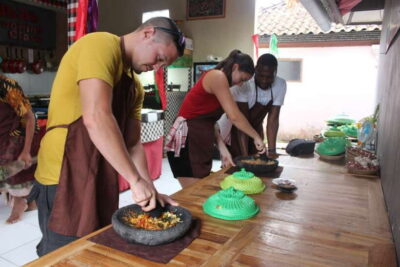
Browse the lists this tour appears in