
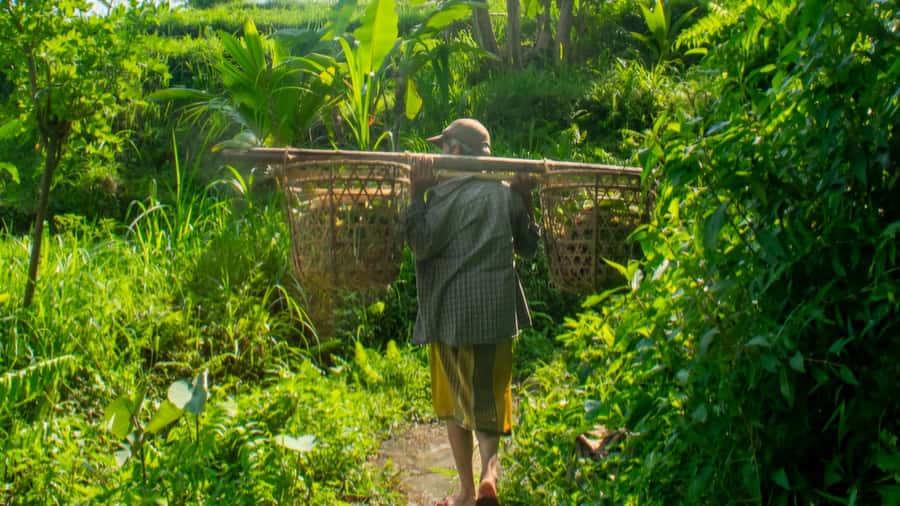
Reviewed · SIDEMEN VALLEY
Sidemen Trekking: A Walk from Different Perspective
Sidemen Trekking is one of those Bali walks that changes your view of the place. Instead of seeing rice terraces from a bus stop, you follow the water and footpaths through real Sidemen village life, with Mount Agung views when the sky is clear.
What I like most is the hands-on feel of learning the Subak irrigation system. Guides such as Darya, Gede, and Adi explain how farming works in everyday terms, from how people plant and harvest to how water is managed. You also get plenty of photo stops that make sense, not just random detours.
The main thing to consider is the walking style. You are on uneven village paths and narrow rice-field edges, and it can get buggy in tall grass, so come in with proper shoes and a little balance. Also, the market stop depends on timing, since the traditional market is open only about 5 AM to 10 AM.
Key Things You’ll Actually Notice on This Sidemen Walk
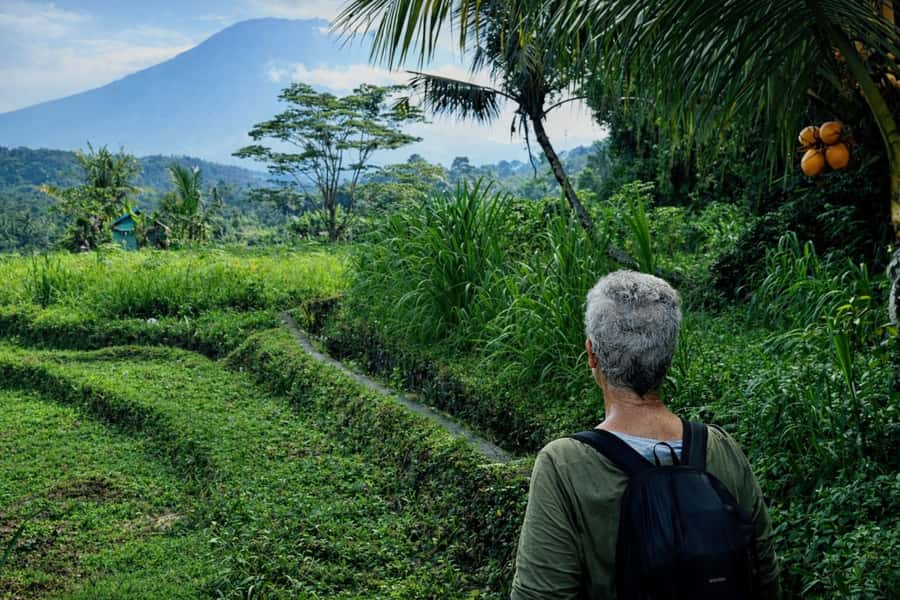
- Subak irrigation in action, explained as you follow the water route for fields
- Small-group pacing (max 10) that keeps questions easy and photos practical
- Mount Agung viewpoints that can look dramatic, especially when clouds cooperate
- Village-to-terrace route, mixing temple/prayer spots with working farmland
- Narrow crossings and narrow paths, where good footwear matters more than speed
Start at the Textile Shop, Then the Sidemen Traditional Market
Your trek begins around Sidemen’s village core, at a meeting point tied to the shop sign UPA BOGA (Toko Upa Boga Pertenunan). The vibe here is local right away, with the walk starting from the rhythm of the morning street.
Next comes Pasar Sidemen, the traditional market stop. You spend about 15 minutes there, just enough time to get oriented and see the food market energy without turning it into a long shopping spree. Since the market is open roughly 5 AM to 10 AM, earlier start times generally make that stop easier, and later start times might mean you miss it.
If you like travel that feels grounded, this market start helps. You see how Sidemen runs before you head into the rice-world. It also sets up the rest of the tour, because farming here is not separate from daily life, it is part of it.
More of the Sidemen valley:
- Sidemen rice terraces trek and local village walk
★ 5.0 · 41 reviews - Bali: Sidemen Jewelry Silver Class with 7 Gram of Silver
★ 4.9 · 194 reviews - Sidemen Trekking: A Walk from a Different Perspective
★ 5.0 · 94 reviews
Following the Water to Mount Agung Views
After the market, you head toward the rice paddy fields with a direction that stays meaningful: Mount Agung as a reference point. This is not a straight hike to one lookout. You move through streets, small village stretches, and farmland edges, so the scenery keeps changing.
One reason this route works is the mix of viewpoints. Along the way, you get scenic photo stops where you can see terrace patterns from farther out, then later you come closer. If the sky is clear, Mount Agung can appear in the distance and makes the walk feel extra “Bali,” but the emphasis is still on the terraces and the people doing the work.
The guide plays a big role here. English-speaking guides are live with you the whole time, and people note that Darya and Gede in particular are great at answering questions. That matters because you are not just walking, you are learning what you are looking at.
The Bridge Moment at Jembatan Kuning, Tukad Yeh Unda
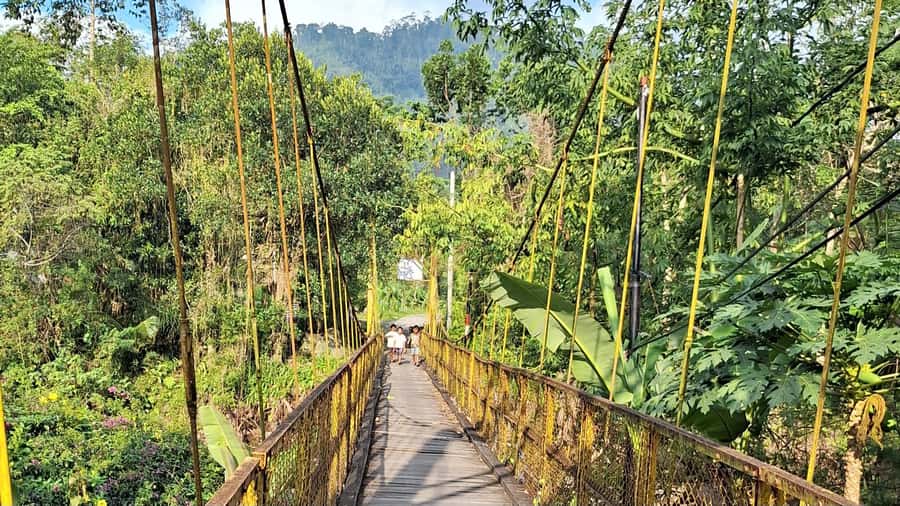
A key highlight arrives in the form of a photo stop at Jembatan Kuning, Tukad Yeh Unda. This is where the trek gives you a classic Sidemen scene, the kind you can frame even if you are not trying to be a photographer.
You also learn something practical about the bridge itself. It is a hanging wooden crossing that is designed for both motorbikes and humans, so it is not just decorative. It is part of how people actually move between areas for daily routines.
Time at this stop is short, about 10 minutes, so treat it like a breather, not a long rest. Bring your sunscreen and take a moment to look around before you move on, because the light can change fast once you start walking again.
Dukuh Village, Temples, and Everyday Farming
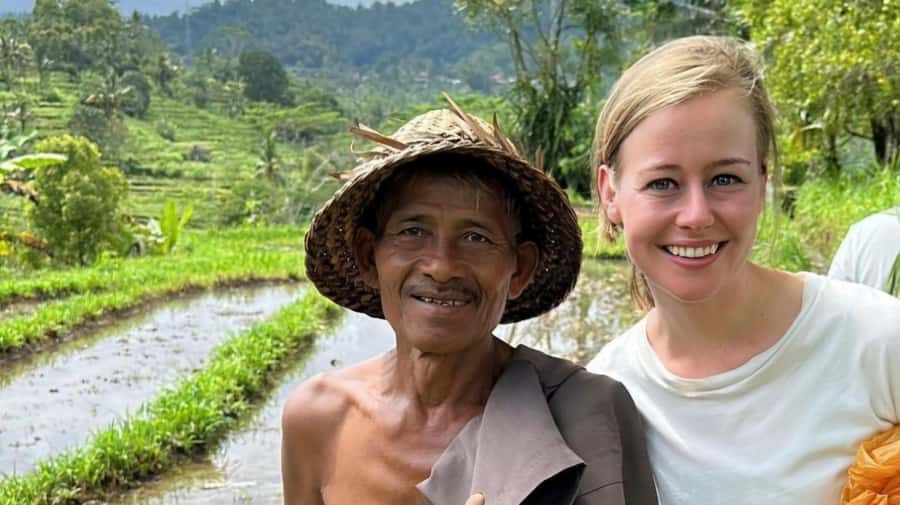
As you continue, you pass through Dukuh village and other neighborhood areas, with a stop that runs about 20 minutes. This is where the tour feels less like “viewing farmland” and more like “walking through farmland.”
On the route you pass a temple used for local praying. You will also see how people move around the fields, sometimes pausing for what looks like everyday chores and sometimes working in active cycles. The trek is designed so you notice the range, not just the final result of a harvest.
What I find useful for your planning is the way the guide connects these scenes to farming steps. You might see people plow, cultivate, plant seeds, and work on toward harvesting. Even when your timing does not match one specific step, you are still getting a clear picture of the seasonal rhythm.
This is also where the guides’ personality adds value. People share that Adi and Darya were funny while still teaching, and that kind of energy makes the walk feel lighter. You are out in the sun and moving on uneven ground, so a guide who keeps things clear and friendly genuinely improves the experience.
More Hiking & Trekking in East Bali:
- Bali: Mount Agung Sunrise Trekking Experience
★ 4.8 · 91 reviews - Bali: Sunrise Mount Batur Guided Hike with Breakfast
★ 4.8 · 9,660 reviews - Bali: Mount Batur Sunrise Guided Hike and Natural Hot Spring
★ 4.8 · 9,284 reviews - Bali: Mount Batur Sunrise Trek With Guide and Breakfast
★ 4.8 · 3,461 reviews
Babakan Dukuh Rice Terrace: Close Views and Photo Stops
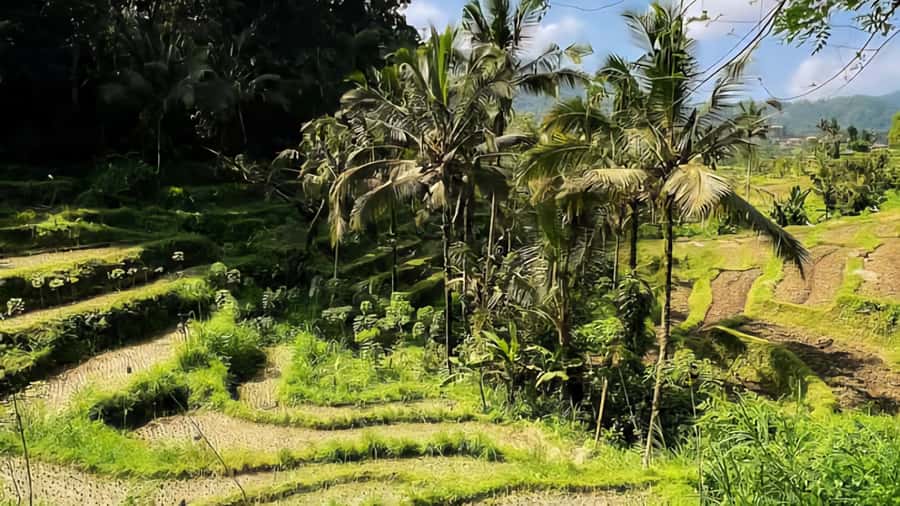
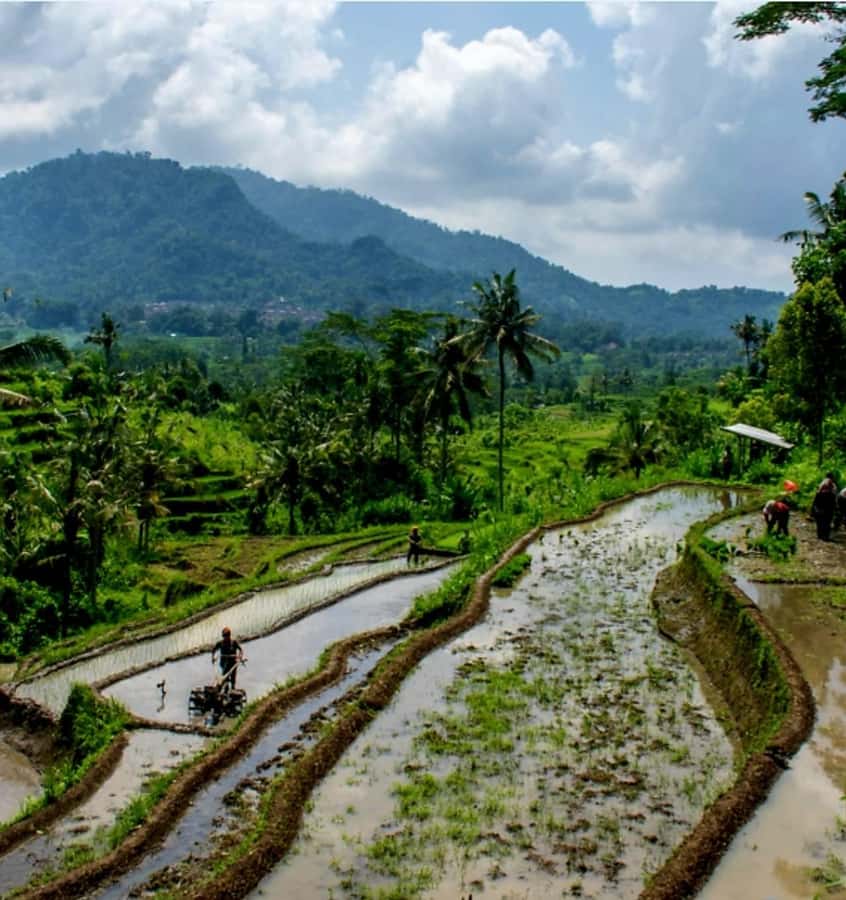
The biggest scenery time comes near Babakan Dukuh Rice Terrace, where you spend roughly 45 minutes. This is where you swap “looking at terraces from far away” for seeing terrace structure up close, and understanding why the steps matter.
You get a mix of photo opportunities, short guided moments, sightseeing, and walking pass-bys through the area. The key is that you are still moving, so you do not get stuck in one spot while everyone else has already moved on.
One practical note from real-world experience on rice paths: some edges can be narrow. You will likely be walking along narrow walls between sections, so pace matters. Take your time with balance, especially if the path feels slippery.
If you want standout photos, this is where you should slow down. Look for angles where the terraces layer into the distance and where Mount Agung (when visible) anchors the horizon. Then re-check your footing before you step onto the thinner edges.
Subak Ogang and the Irrigation Lesson You Can See, Not Just Hear
The tour’s educational value is strongest when you understand the Subak irrigation system as you walk. The route guides you along the water ways, including passing Subak of Ogang, so the explanation stays connected to what you can actually see.
This is not a classroom talk. You follow the irrigation direction, and the guide explains how the traditional system helps manage water flow for the rice terraces. That makes a huge difference, because once you see how water is routed and timed, the terraces stop looking like decoration and start looking like infrastructure.
People consistently praise the guides for teaching farming and local culture in a way that sticks. And because the group is small, you can ask questions like how water is shared, why terraces are shaped this way, or how irrigation affects daily work.
What the Trek Feels Like: Pace, Footing, and Bug-Friendliness
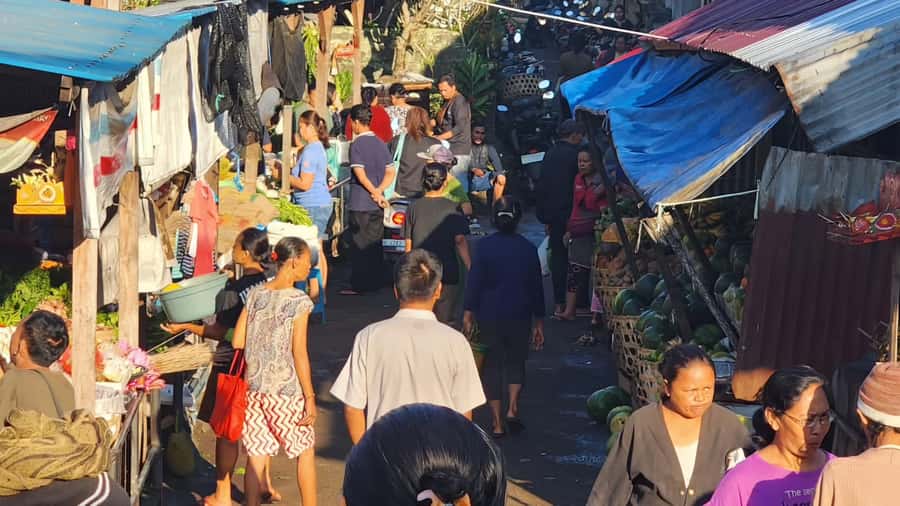
This is a 2-hour trek, but “2 hours” can feel either easy or intense depending on your comfort with uneven ground. Expect going up and down village streets and then continuing through field-side paths.
Good footwear is not optional. The tour specifically says no sandals or flip-flops. Comfortable shoes or hiking shoes are the smart move, and you will thank yourself if your shoes have grip.
From practical field tips, I’d also plan for insects. Tall grass can mean bites, and there have been notes about red ants. Wear long pants if you have them, use sunscreen, and bring a hat. You are in the open often enough that sun protection is not a vibe, it is a necessity.
Price and Value: Why $14 Feels Reasonable Here
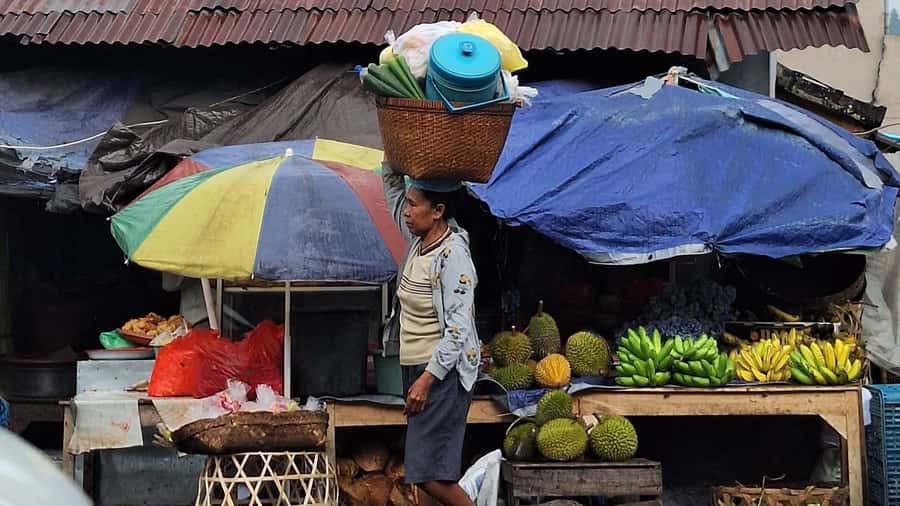
At $14 per person for about two hours, this trek is good value because so much is included that most tours charge extra for. You get an English live guide plus bottled water, and you also get structure: market stop, scenic points, bridge moment, village segment, and terrace time.
The real value is not just the scenery. It is the interpretation. When the guide explains Subak and farming routines while you are literally walking past the system, you leave with a better understanding, not just photos.
Small group size matters too. Limited to 10 participants, you get less crowding at photo spots and more time for questions. That is the difference between “walk past people” and “walk with local context.”
Getting Off the Path: Finish Point, Return, and Transport Reality
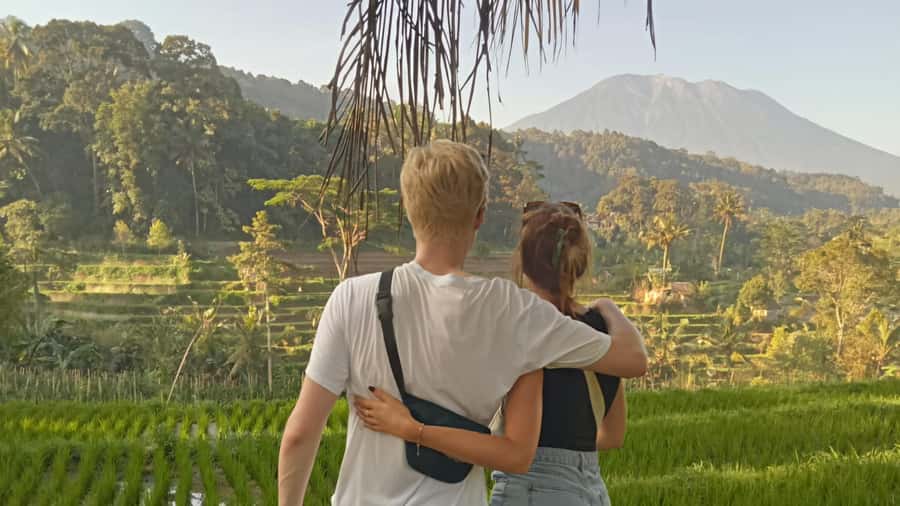
The trek ends back at the meeting area, with the option to finish at Warung Ume Anyar in Ogang Village for a break. If you want food or a cool drink right after, this is a smart place to aim.
If you have a driver, you can arrange collection from the finish point around two hours after your start time. If not, you will need transport back. Grab or Gojek car is recommended, and Grab/Gojek bike is noted as not available in the Sidemen area.
Also, there is a walk-back option. Returning to the start point is about 3 km, roughly 30 to 40 minutes, following the main road. That works if you want one last stroll and you are comfortable with traffic conditions.
Who Should Book This Sidemen Trek?
I think this trek is best for you if you want Bali beyond the checklist. It fits people who like agricultural life, want to learn how irrigation shapes farming, and enjoy asking questions in plain language.
It is also a solid fit for photographers who want both wide terrace layers and close-up village angles. And because the group is small, it suits visitors who do not want to be herded.
It might not be the best choice if you hate uneven ground or you are traveling in sandals. The tour is not suitable for children under 5, and it demands basic balance on narrow paths.
Should You Book Sidemen Trekking?
Yes, if you want a short, grounded walk with real context. The Subak irrigation lesson, the village-and-terrace route, and the guide quality stand out, especially when guides like Darya, Gede, and Adi keep things clear and friendly.
Book it with the right expectations: you are outdoors, you are moving on mixed surfaces, and the views depend on weather for Mount Agung clarity. If you come prepared with proper shoes, sun protection, and long pants if you get bothered by bugs, you’ll get a morning that feels more like understanding Sidemen than just passing through it.
If your plans are flexible, this experience also offers reserve-now and pay-later options, plus free cancellation up to 24 hours in advance.
FAQ
Where do I meet the guide?
Meet at Pasar Sidemen (Sidemen Traditional Market) on the main street. Look for the shop with the sign UPA BOGA. When you arrive, the guide will come over to you.
How long is the trek?
The trek takes about 2 hours. Starting times vary, so check availability for the exact start you want.
What’s included in the price?
Your price includes a live guide (English) and bottled water.
What’s not included?
Hotel pick up and drop off are not included.
Will the guide speak English?
Yes. The tour has a live English-speaking guide.
Is the traditional market visit guaranteed?
The market stop is optional and tied to timing. The traditional market is open around 5 AM to 10 AM, so your start time affects whether you can visit.
What should I bring, and what should I avoid?
Bring comfortable shoes (or hiking shoes), sunglasses, a hat, and sunscreen. Sandals or flip-flops are not allowed.
Newest reviews out of East Bali
- Sidemen rice terraces trek and local village walk★ 5.0 · 41 reviews
- Bali/Amed: Transparent Kayak Experience★ 4.9 · 49 reviews
- East Bali Spear Or Line Fishing Tour At Virgin Beach★ 4.5 · 57 reviews
- 7 Fun Dives in Tulamben (for certified divers) – Premium Value Package★ 5.0 · 69 reviews
- Amed: Tirta Gangga, Jemeluk Bay, & Virgin Beach Day Trip★ 4.8 · 120 reviews
- Advanced Open Water Course – Advanced Certification in Tulamben★ 5.0 · 127 reviews
- Bali/Amed: Underwater Temple Snorkeling Experience★ 4.8 · 134 reviews
- Bali: Cooking Class with 5 Balinese Dishes★ 4.9 · 178 reviews
Sidemen Valley, compared.
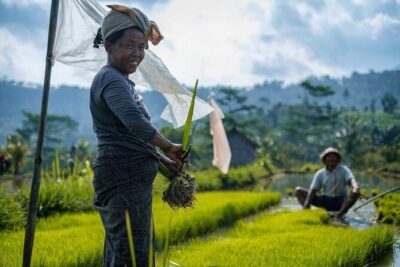
Sidemen Trekking: A Walk from a Different Perspective
Read our review →
Sidemen Jewelry Silver Class with 7 Gram of Silver
Read our review →
Ujung Water Palace, Candidasa and Sidemen Village Tour
Read our review →
Sidemen rice terraces trek and local village walk
Read our review →
Bali Sidemen Silver Class Making with 7 Gram of Silver
Read our review →Browse the lists this tour appears in