
Reviewed · COOKING CLASSES
Pure Bali Village Experience, Cooking & Jamu Class+VIP Transfer
What makes this Bali day trip interesting is the combo of jamu herbal tonic making and real cooking practice, not just watching. I like that the day is built around a small group and hands-on guidance, so you actually do the work, pick the garden herbs, and learn the steps. You get a lot of culture, but it is tied to actions you can repeat at home.
I also like that the day doesn’t end at lunch. You keep moving through village life with rice planting help, a farm stop with animals and stingless Trigona beehives, and a final visit to the sacred Belulang hot spring. The main drawback to consider is that you start early, there is some walking (including a soft downhill trek), and the hot spring timing is weather-dependent.
Key highlights worth your attention
- Jamu class with herb garden picking, plus you craft and taste two types of jamu and fruit tastings
- Paon Bali open-air kitchen cooking, including live bamboo-grill action for Sate Lilit
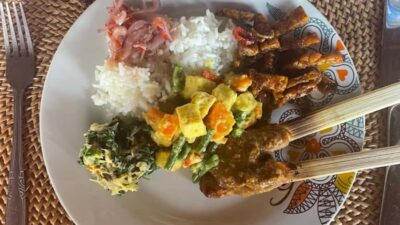
- Lunch you cook yourself, including nasi campur tumping and a dessert made with a traditional clay pot
- Village rhythm activities, like giving a farmer a hand with rice planting
- Farm visit plus stingless bees, where you can see Trigona hives and animals up close
- Belulang hot spring stop with optional bathing, in the Batukaru mountain region
A village day in the Batukaru region, built around hands-on food
This tour works because it treats cooking and wellness as part of daily life, not a show. You start in the mountains around Batukaru, then you spend the day learning how Balinese people use herbs, cook with what is around, and move through the landscape with purpose.
I like that the pace is friendly. You get a scenic drive with a photo stop, time to stroll on arrival, and a gentle flow from instruments and gardens into kitchen work and village activities. You also get a real sense of place, from the herb and spice garden to the architecture visit and the hot spring at the end.
More Cooking Classes in Bali:
- Ubud: Balinese Cooking Class at an Organic Farm
★ 5.0 · 1,786 reviews - From Ubud: Authentic Cooking Class in a Local Village
★ 4.9 · 1,325 reviews - Seminyak: Balinese Cooking Class & Market Tour
★ 4.9 · 458 reviews
Pickup, timing, and what an 12-person cap changes
This is an 8-hour experience that starts around 7:30 am. You will use an air-conditioned vehicle, and hotel pickup and drop-off are included, so you are not playing taxi chess for half the day.
The group size matters. With a maximum of 12 travelers, you should feel less like a number. You are more likely to get personal corrections during cooking and clearer guidance while making jamu, especially because the activities are hands-on.
One practical note: plan for early mornings. If you are used to late starts in Bali, this will feel like a full-day commitment, but it also helps you get out of the busy daytime crowds.
Scenic drive plus a Rindik intro before you touch the herbs
Your day begins with pickup and a scenic drive through tropical terrain, with a photo stop along the way. When you arrive in the mountain village area, you take a relaxed walk and get oriented.
A key early moment is the intro to the Rindik, a Balinese musical instrument. It is not just a fun fact. It frames the day with local culture before you shift into the practical part of the visit.
The herb and spice garden, where jamu actually starts
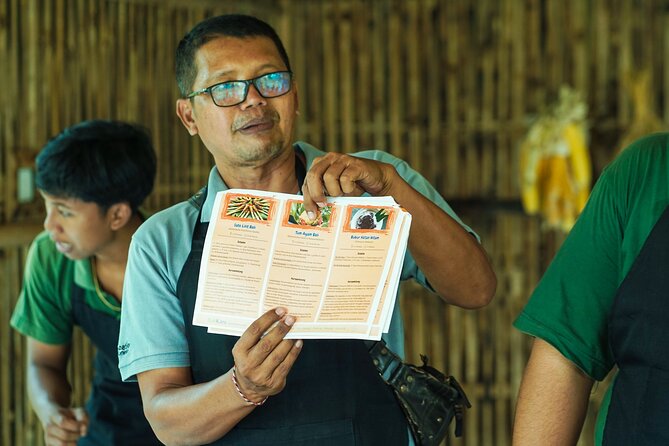
At the herb and spice garden, you tour plants and learn how they connect to Balinese life. The tour includes a guided garden walk covering 40 varieties of plants, which is a big detail because jamu is not one single ingredient.
This is where you start building your own mental recipe book. You learn what people use, what it tastes like, and how herbs become something you can drink. If you usually skip wellness drinks on holiday, this is the moment where jamu stops being a trendy label and becomes a real practice.
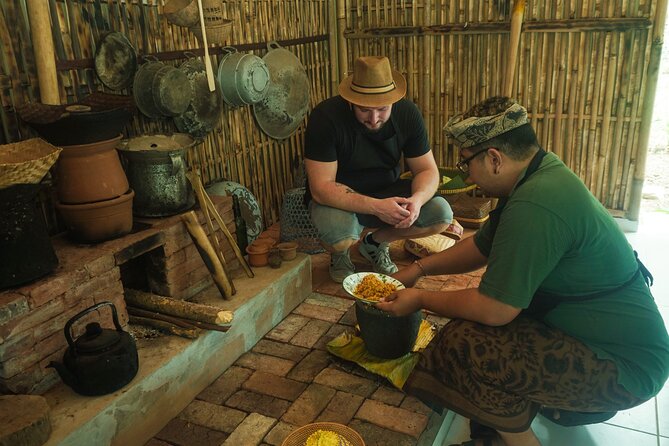
Then comes the jamu stop at the Jamu Pavilion, where you craft and taste two types of jamu. You also get fruit tasting as part of the experience. Expect this to be interactive, not passive, and expect the flavors to be earthy and herb-forward rather than sweet.
Something different for the next Bali day:
- Bali: Sunrise Mount Batur Guided Hike with Breakfast
★ 4.8 · 9,660 reviews - Bali: Mount Batur Sunrise Guided Hike and Natural Hot Spring
★ 4.8 · 9,284 reviews - Bali: Full-Day Instagram Highlights Tour
★ 4.8 · 7,817 reviews - Bali/Nusa Penida: East & West Highlights Full-Day Tour
★ 4.7 · 6,263 reviews
Making jamu and tasting it, what you should look for
Most people think jamu is just a bitter sip. When you make it yourself, you notice the balance is the point. You will likely taste how different herbs change aroma and bite, and you will see how fruit tastings can soften or contrast the herbal profile.
Here is what to do with your senses during this part:
- Pay attention to how the herb smell changes while you work.
- Taste slowly, then taste again after it settles, if your guide lets you.
- Ask how the two jamu types differ, even if the ingredients overlap.
This is also the part of the day where questions make you feel smart fast. You will learn faster because you are actively doing, not only listening.
Paon Bali open-air cooking, bamboo grill time for Sate Lilit
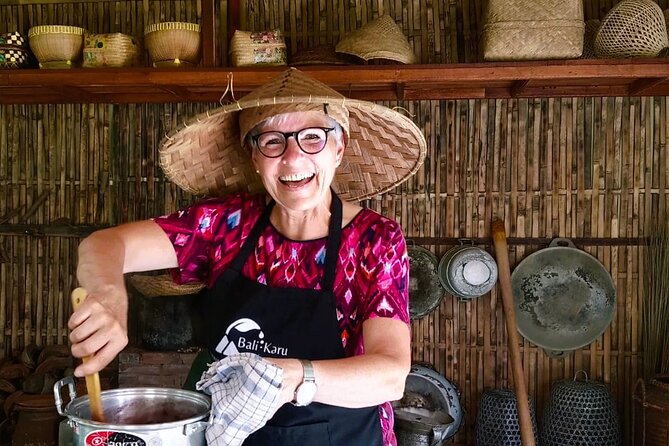
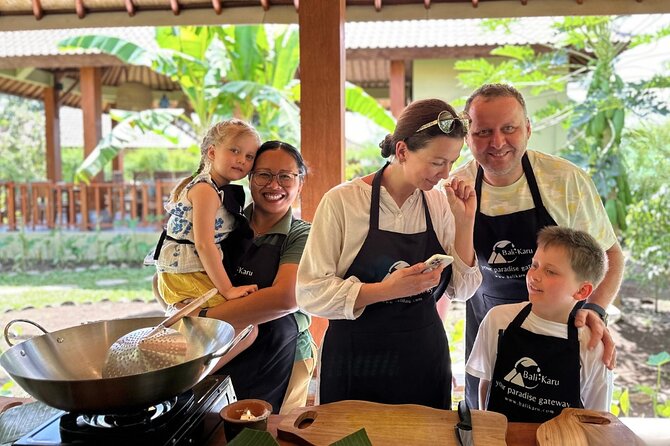
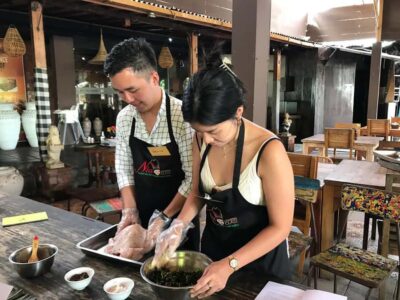
After jamu, the day shifts to the kitchen at Paon Bali, an open-air Bali kitchen setup. This is a real cooking class guided by a chef, so you are not just assembling food. You are learning the steps and the logic behind them.
One standout is the live bamboo grill station. You will help prepare Sate Lilit, a Balinese satay style that people often remember because it is flavorful and very hands-on. If you like the smell of grilling spices, this is one of the best moments of the day.
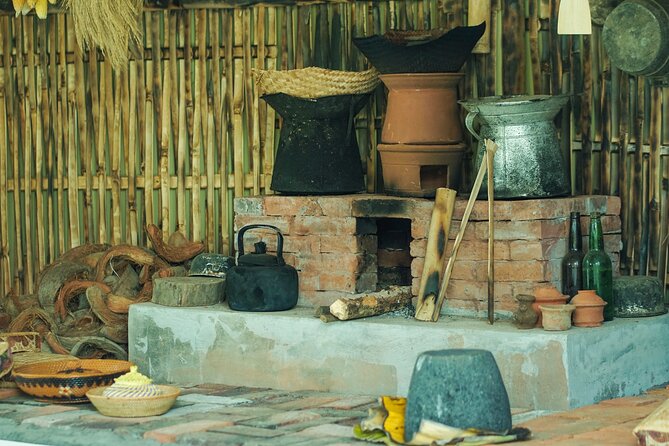
You also learn to make Lak Lak, a dessert prepared using a traditional clay pot. That clay pot detail matters because it changes how heat behaves. Even if you are not a kitchen nerd, you will feel the difference in the process.
Lunch you cook yourself, plus Nasi Campur Tumping
Lunch is included and it is not delivered as a boring buffet. You prepare your own meal during the class, then you eat what you made.
The menu includes Nasi Campur Tumping, plus dessert that is tied to what you learned. The tour format is designed so you cook and then dine like locals, not like you are waiting in line.
A practical takeaway: eat slowly. You will be tired after the garden and cooking work, and it’s easy to rush through lunch. Take a few minutes to look around, because the village setting is part of the experience, and it helps your brain absorb everything you just learned.
After lunch: rice planting help, stingless bees, and a gentle trek
The afternoon is where you earn your appetite. You have enough energy to help with planting rice, a practical activity where you learn why farming routines matter for the community.
Then you visit a farm area at Balikaru, where you can see animals and also learn about stingless Trigona beehives. This is a nice change of pace from cooking. It keeps the day from feeling like a single theme park topic.
There is also a soft trekking segment, about 30 minutes downhill. This is not described as extreme, but it is still a hike. Wear comfortable shoes and plan to take it slow.
Traditional Balinese compound visit and Asta Kosala architecture
Between the farm and the end of the day, you visit an authentic Balinese compound. You also learn about Asta Kosala architecture, influenced by Balinese Feng Shui.
This part can feel like a classroom moment if you only want practical tasks. But it adds value because it helps you understand why buildings and spaces are arranged the way they are, and why spirituality and daily life connect.
I recommend treating it like a map lesson. As you look around, try to spot what matches the principles your guide explains. You will remember the day longer if you connect the architecture to the environment you just walked through.
Belulang hot spring, optional bathing and why timing matters
The final stop is the Belulang hot spring, with an optional bath. This is a classic “reset” moment, especially after cooking, walking, and rice planting.
One important consideration is weather. The experience is described as requiring good weather. If weather conditions are poor, you may be offered a different date or a full refund, so you are not stuck gambling with your vacation days.
If you plan to bathe, bring something you can rinse and dry quickly. If you skip bathing, you can still enjoy the calm of the setting at the end of the day.
Price and value: what $89 includes and why it is not just a cooking demo
At $89 per person, you are paying for more than a single class. This day bundles transport, entry-style experiences, instruction, and multiple activity blocks: jamu crafting and tasting, cooking practice with a chef, lunch you cook, rice planting help, a farm visit with stingless bees, an architecture compound stop, and the hot spring visit.
The best value here is that you are not just observing. You work at the jamu pavilion and at the Paon Bali kitchen. That means you leave with skills, not only photos.
A couple of things that influence value for different people:
- If you care about food technique, Sate Lilit prep and Lak Lak in the clay pot make the class feel grounded.
- If you love culture, the Rindik intro and Asta Kosala architecture stop help the day feel more complete.
- If you want a restful day, this may feel active, because it is packed and includes a trek.
Who this tour suits best, and who might want to skip it
This tour fits best if you want an authentic Bali day that mixes cooking, herbs, and village life, and you enjoy learning by doing. It is especially good for couples, small groups, and anyone staying near Ubud who wants to get away from common tourist routes.
It may be less ideal if you dislike early mornings or walking. The tour includes a downhill trek and multiple outdoor stops, so you should be comfortable moving around for a few hours.
Also, language matters. The guide is English- or German-speaking. If you need a different language, there is a surcharge for other languages, so check before you lock it in.
My booking call: should you book this Pure Bali Village Experience?
I would book it if you want a day where your hands are busy and your head learns real connections between herbs, cooking, and local life. The mix of jamu crafting, chef-led cooking at Paon Bali, and a finish at Belulang hot spring is a strong formula for a one-day Bali experience.
I would think twice if you want a slow, simple day with minimal physical effort. This is active and structured, and it is built for good weather. But if you show up ready for early start energy, comfortable shoes, and curiosity, it is a solid way to spend a day in Bali that feels personal, not packaged.
FAQ
How long is the Pure Bali Village Experience?
It lasts about 8 hours.
What time does the tour start?
The start time is 7:30 am.
Is hotel pickup and drop-off included?
Yes. Hotel pickup and drop-off are included, and you travel by air-conditioned vehicle.
What is the maximum group size?
This experience has a maximum of 12 travelers.
Is lunch included, and do I cook it?
Yes. Lunch is included and you participate in cooking during the class, including Nasi Campur Tumping and dessert that you prepare during the cooking session.
Is the Belulang hot spring bath included?
You visit Belulang hot spring, and a bath there is optional.
What languages are the guides?
The guide is English- or German-speaking, and other languages have a surcharge.
Can you accommodate dietary needs?
Yes. You can request dietary needs such as vegetarian, and you should indicate requirements at booking.
What is the cancellation rule for a full refund?
You can cancel for a full refund up to 24 hours before the experience start time.
Newest reviews out of Bali
- Bali Secret Waterfalls with Ulun Danu Beratan Temple Tour★ 5.0 · 12 reviews
- Bali: Cultural Ritual, Local Cuisine & Firefly Adventure★ 5.0 · 12 reviews
- Canggu: Surfing Class, Tanah Lot & Kecak Dance Sunset Tour★ 3.8 · 12 reviews
- Bali Spiritual: Blessing Ceremony, Pristine Nature and Transfer★ 5.0 · 13 reviews
- Bali: Canyoning Adventure at Aling Waterfall★ 5.0 · 14 reviews
- Bali: Hidden Waterfalls Private Tour (All-Inclusive)★ 4.9 · 14 reviews
- Sunrise Breakfest at kintamani cafe & Ubud private Tour★ 5.0 · 14 reviews
- Bali: Kecak Fire Dance Ticket at Uluwatu Cliff Sunset Point★ 4.1 · 14 reviews
Cooking Classes, compared.
Cooking Class with Transfers and Optional Market Visit
Read our review →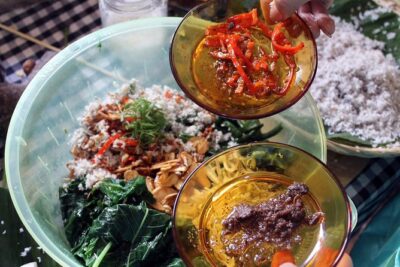
PRIVATE Authentic Balinese Cooking Class in Ubud at Putu’s Home
Read our review →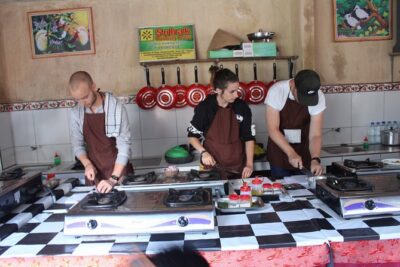
Balinese Ubud cooking school (9 Dish Cooking and Market Tour)
Read our review →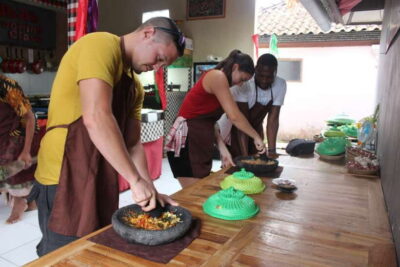
Browse the lists this tour appears in