
Reviewed · COOKING CLASSES
Balinese Authentic Cooking Class in Ubud
This half-day Balinese cooking class in Ubud is interesting because it turns a meal into a full day of food culture, starting at a local market and ending with the dishes you make. I love the market-to-kitchen flow, especially the way spices and produce connect to the menu right away. Seeing the rhythm of daily life in Ubud also makes the cooking feel grounded, not staged.
Second, I really like the hands-on approach, where you learn techniques that Balinese cooks use for flavor, like pounding spices with a Lesung (mortar and pestle). Cooking is taught step by step, and guides such as Ron and Putri have a reputation for patience and making you feel at ease.
One possible drawback to keep in mind: you might not cook every single step yourself. In one case, rice was handled by the team, and at times the pace can feel a bit tight if you like to go very slowly.
Key things to know before you go
- Market tour and spice shopping in the morning (morning classes only)
- Small group up to 15 so questions do not get lost
- Farm walk and spice harvest so the ingredients feel real, not just bought
- Traditional technique practice including chopping and Lesung grinding
- Diet choices on the menu with regular, vegetarian, and vegan options
A half-day cooking class that actually teaches Balinese food
This is not just a cooking show in a classroom. The class is built like a route, market first, then culture stops, then the farm, then cooking. The goal is simple: you understand what you are eating, where key ingredients come from, and why the flavors work together.
The venue is in the west side of Ubud, in countryside-style surroundings with green space around you. That matters, because it helps you slow down between sites, and it makes the cooking feel more like a day outdoors than an indoor activity.
You’ll also have options for morning, afternoon, or evening classes. If you pick morning, you get an extra cultural layer with the traditional market tour. If you do afternoon or evening, you still get the home and farm pieces, just without that morning market component.
More Cooking Classes in Ubud
- Ubud Cooking Class Bali with Balinese Chef
★ 5.0 · 1,609 reviews - Ubud: Cooking Class with Transfers and Optional Market Visit
★ 4.9 · 824 reviews - PRIVATE Authentic Balinese Cooking Class in Ubud at Putu’s Home
★ 5.0 · 644 reviews
Ubud logistics, timing, and how transfers work
Plan for about 5 hours total. The schedule can feel like a lot, but it is paced in stages rather than one long cooking sprint. You are also traveling in an air-conditioned vehicle, which is a nice comfort in Bali’s heat and humidity.
Pickup is included as a free shuttle service for the Ubud area only. If you stay outside Ubud, the tour lists extra transportation fees by region, including:
- Nusa Dua and Jimbaran: IDR 500,000 per car
- Uluwatu: IDR 550,000 per car
- Kuta, Seminyak, Sanur, and Canggu: IDR 450,000 per car
If you want things easy, staying in central Ubud makes this much smoother. If you are farther out, do the math for the extra car cost, and compare it to other Ubud-based experiences you might be considering.
Morning market walk, spices in your hand, and real meal planning
If you book the morning class, you start with a traditional market tour. This is one of the most praised parts because it gives you a mental map for what you will later cook. You also get a chance to buy spices from the local area during the morning market stop.
This matters because Balinese cooking is spice-led. When you see ingredients in their natural setting, you understand why certain flavors show up again and again, and you can pay closer attention while your chef teaches.
One practical tip: go into the market portion hungry, but not starving. You’ll be offered coffee or tea later, and you will end up eating what you make. Also, wear something comfortable for walking and handling small items, because markets are active and surfaces can be uneven.
Balinese family compound visit: how houses shape daily life
After the market stop (morning) or after the initial arrival (other times), you visit a local Balinese house. The focus here is on how the place is set up and how people live day to day.
You’ll typically get a talk over coffee and tea, plus snacks. Guides like Ron are known for sharing background in a way that feels personal, not like a lecture. In other words, you come away with a better sense of why certain cooking ingredients and rituals matter in everyday life.
A small caution: one review noted they could view grounds and garden even if they did not go inside as much as expected. So mentally plan for an outside-and-layout type visit, not a museum-style interior tour.
Something different for the next Ubud day:
- All-Inclusive Ubud Private Tour
★ 5.0 · 14,344 reviews - Best of Ubud Full-Day Tour with Jungle Swing
★ 5.0 · 8,571 reviews - Ubud: Monkey Forest, Jungle Swing, Rice Terrace, and Water Temple
★ 5.0 · 7,160 reviews - Ubud: Waterfalls, Water Temple & Rice Terraces Private Tour
★ 5.0 · 5,484 reviews
Farm time: harvest the spices you will pound later
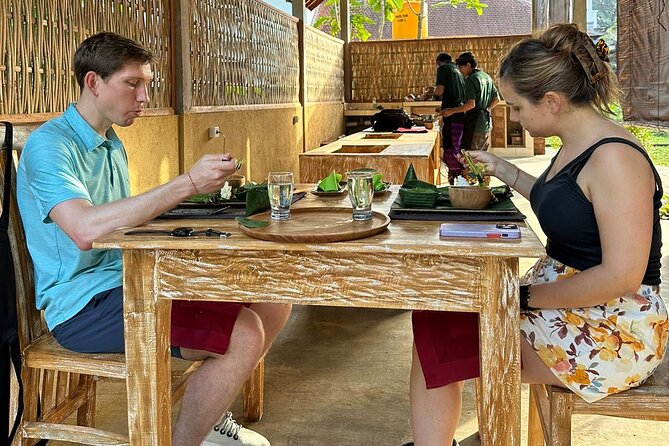
Then comes the farm. This is where the class earns its credibility. You explore the grounds and harvest the spices that match your menu, so your cooking is tied to ingredients you actually collected.
What I like about this farm segment is that it gives you a “source story” for the flavors. When you taste the food at the end, it feels linked to earlier steps: walking the farm, recognizing plants, and then grinding and cooking.
In several experiences with this style of class, the farm setting is clean and pleasant, with gardens that help you reset after the market and house portion. You might also see interesting garden details, and one review even called out fish play as part of the overall estate experience. The farm side is not just a backdrop, it is part of the lesson.
The cooking lesson: Lesung grinding and technique you can repeat
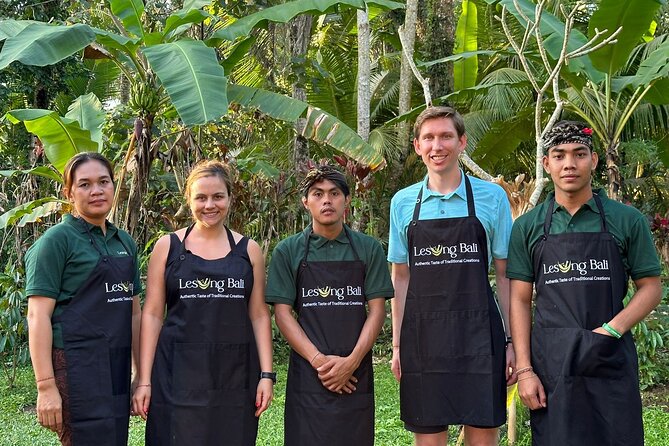
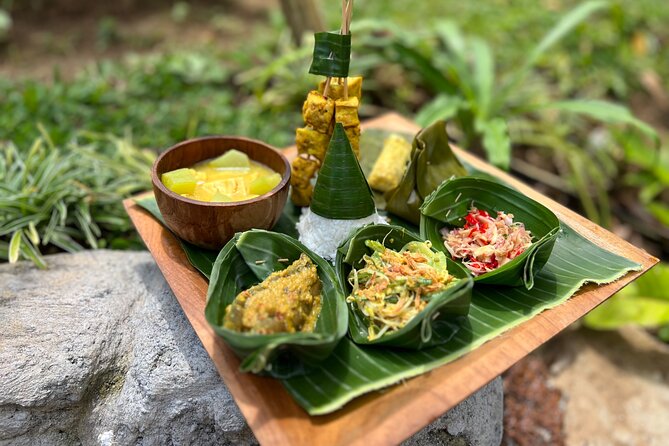
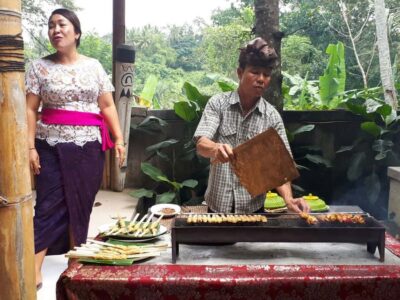
This is where you earn your souvenir, not from a shop, but from your own skills. The chef helps you choose a menu that fits your diet, then you learn Balinese cooking techniques with fresh ingredients.
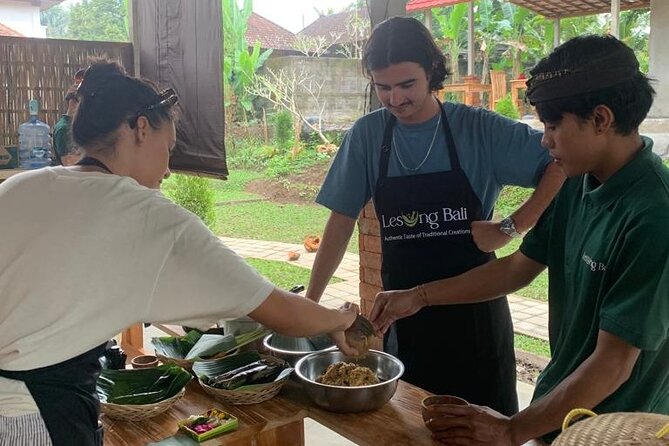
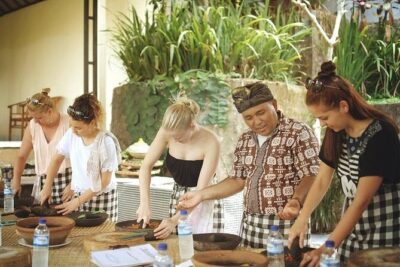
Expect instruction on chopping and pounding spices using a Lesung. That mortar and pestle style is not just traditional, it also changes the texture and aroma of your spice mixes. When you do it yourself, you understand why the base flavors work the way they do.
The class uses a hands-on setup where you each get time doing the cooking, not just watching. You will be walked through steps and helped if you get stuck. One review credited chef Ron with explaining everything clearly, while also keeping the mood relaxed and funny.
How many dishes? The tour describes a variety of menus, and reviews often mention learning to make multiple dishes, frequently around six, plus dessert. Exact counts can vary by the menu you pick, so if you want a specific number, ask when booking what is included in your chosen menu option.
What you are likely to do during cooking
- Grind spices with the Lesung and learn when to stop
- Chop and prep fresh ingredients the Balinese way
- Build your dishes based on a planned menu
- Cook, then taste as you go, depending on the chef’s flow
One consideration: in at least one case, rice was not cooked by the participant. If you prefer total hands-on control over every dish, go in ready to be flexible and focus on the steps the team wants each person to own best.
Also note pacing. Most accounts describe a smooth flow, but one review felt a little rushed and said small spices were added without explanation at certain moments. If you like detailed “why this, why now” coaching, keep asking. The best sessions adjust to your questions.
Eating the meal: coffee, cake, and food that fills you up
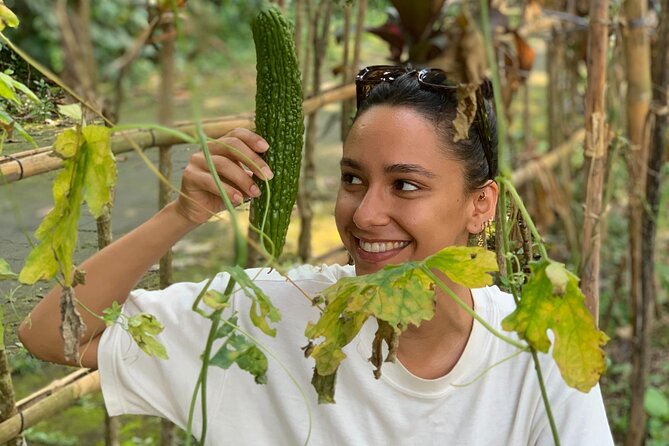
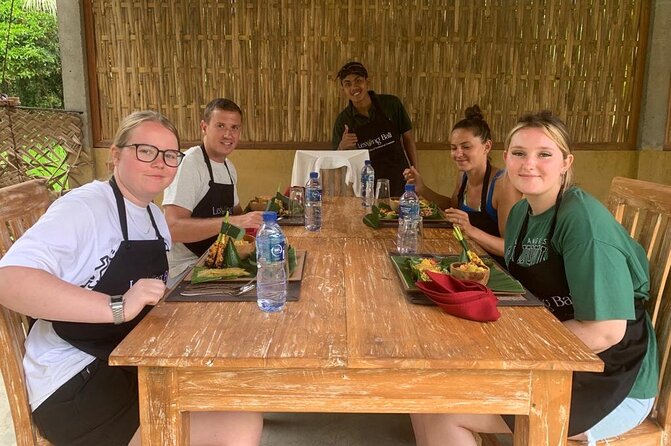
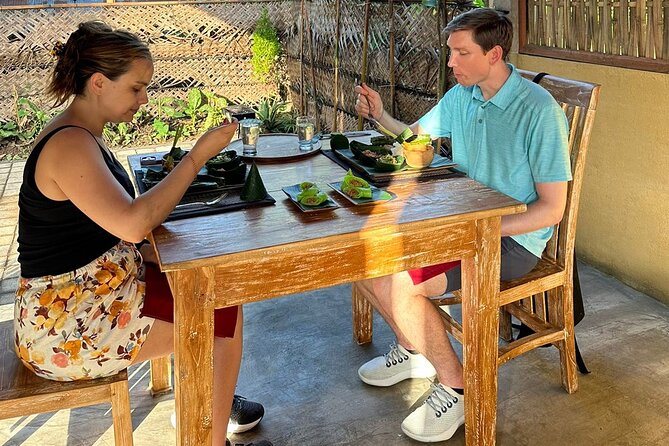
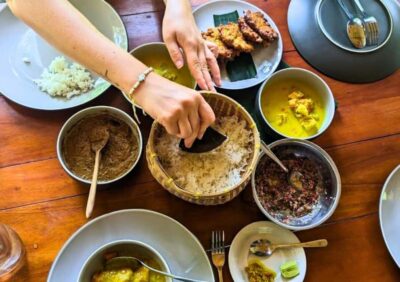
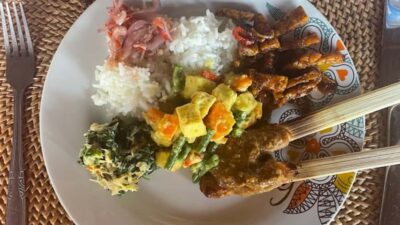
After cooking, you eat what you made. This is a huge part of the value. Many cooking classes end with a small tasting portion. Here, reviews frequently mention lots of food at the end, enough that people recommend coming hungry.
You also get coffee and/or tea during the experience, plus Balinese cake. These small additions matter. They are not just filler, they set the tone for the stops you made earlier, market and farm to cup and dessert.
Practical move: skip a heavy lunch before you arrive. Even if you are not a “big eater,” the meal portion can surprise you in a good way.
Vegetarians and vegans: menu choices are built in
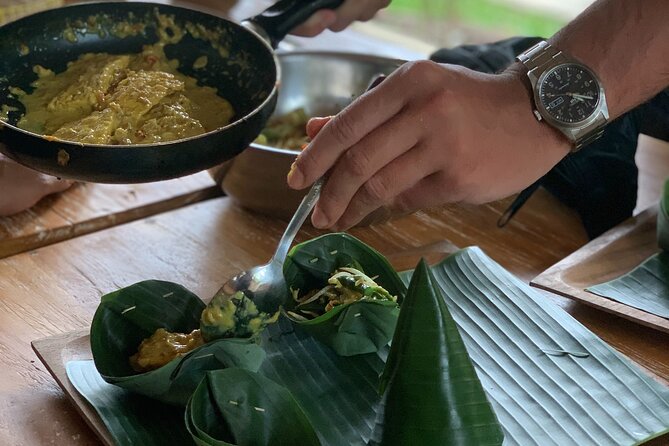
The tour explicitly offers regular, vegetarian, and vegan options. That is important because the class is designed around menu selection during the experience. In other words, you are not stuck with a sad backup meal.
If you have dietary needs, plan to state them clearly at booking so the team can match the menu. If you are vegan, ask how they handle things like dairy or honey, but the data you have confirms at least the existence of vegan menu choices.
For vegetarians, the experience can be a strong way to learn spice blends and cooking techniques that often cross over into meatless dishes without feeling like a compromise.
Small group size and personal attention
This experience caps at 15 travelers. A small group changes how the class feels. You get more chance to ask questions while you are cooking, and you are less likely to be stuck waiting while others get help.
It also affects the flow of culture stops. When group size is controlled, the house visit and farm walk tend to feel more conversational. Several reviews mention personal attention, patience, and a comfortable pace.
If you are traveling solo, this group size also makes it easier to join in without feeling like you are “third-wheeling” a big group dynamic.
Value for $39.71: what you are really paying for
At about $39.71 per person, the pricing looks simple on paper, but the value comes from what is bundled.
You are getting:
- A half-day route with multiple stops (market for morning, home visit, farm walk)
- A guided cooking lesson using fresh ingredients
- Traditional technique instruction, including the Lesung
- Transfers within Ubud (free shuttle)
- Coffee and/or tea, mineral water, and Balinese cake
- All fees and taxes included
So you are not just paying for recipes. You are paying for guided access to ingredients, cultural context, and hands-on learning, in a small group. That is why many people call it one of their best food experiences in Ubud.
Where value can drop a bit: if you are outside Ubud and need extra transportation. The extra car fees listed by region can add a noticeable chunk to your total. If you are staying in those areas, run the numbers before booking.
Who should book this cooking class, and who might not
Book this if you want a practical, hands-on way to learn Balinese flavors and techniques. It is especially good for people who enjoy food markets, cooking instruction, and learning why ingredients matter.
It also fits couples and small friend groups, because the class keeps the atmosphere intimate. One review even described a group of four making it especially friendly and personal.
You might want to reconsider if you strongly prefer total control over every cooking step, or if you are extremely time-sensitive. The experience is only around five hours, and that means the schedule has to move. For most people it feels efficient and fun, but if you hate any feeling of being rushed, go for the session where you have the most relaxed morning or afternoon window.
Should you book Lesung Bali in Ubud?
If you like cooking and you also care about the food culture behind it, I think it is a smart Ubud choice. The market to home to farm structure gives you a clearer story for what ends up on your plate, and the hands-on technique practice, including Lesung grinding, is the kind of skill you can take home.
I’d only hesitate if you are outside Ubud and the extra transportation cost will outweigh the savings, or if you want the class to be ultra slow with maximum, step-by-step involvement for every single dish. For everyone else, this is the type of half-day experience that ends with full stomachs and new kitchen habits.
FAQ
How long is the Balinese cooking class in Ubud?
It runs for about 5 hours (approx.).
Are there morning, afternoon, and evening classes?
Yes. You can choose a morning, afternoon, or evening option.
Is there a market tour?
Yes, but it is for morning classes only. The morning schedule includes a traditional market visit and spice buying.
What food options are available for different diets?
The class offers regular, vegetarian, and vegan menu options.
Is pickup included?
There is a free shuttle service for the Ubud area only. Pickup and drop-off outside Ubud are not included, with extra transportation fees listed by region.
What’s included in the price?
Included items are coffee and/or tea, mineral water, air-conditioned vehicle, Balinese cake, all fees and taxes, and the free shuttle service within Ubud.
Can I cancel for a full refund?
Yes, you can cancel for a full refund up to 24 hours in advance. The experience may also be rescheduled or refunded if canceled due to poor weather.
Newest reviews out of Ubud
- Ubud Silver Class: Forge Your Personal Silver Keepsake★ 4.9 · 39 reviews
- Amazing Kuber ATV Quad Bike Experience in Bali and Tunnel★ 5.0 · 39 reviews
- Lempuyang Tour : Heaven gate, Tirta Gangga, Goa Raja waterfall★ 5.0 · 39 reviews
- Make Traditional Bali Coconut Oil with a Balinese Family★ 5.0 · 39 reviews
- Private Tour : Bromo Ijen Tour From Bali★ 5.0 · 39 reviews
- Bali Private Car Charter Tour with English Speaking Driver★ 5.0 · 39 reviews
- Ayung Rafting Ubud (Include Lunch & Return Transportation)★ 4.5 · 40 reviews
- Private Bali Tour: The Most Scenic Places★ 5.0 · 40 reviews
Cooking Classes, compared.
Cooking Class with Transfers and Optional Market Visit
Read our review →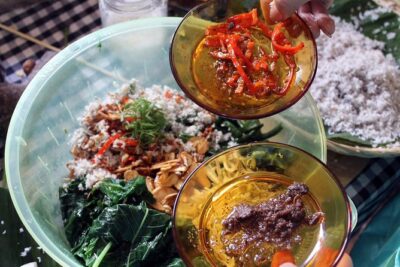
PRIVATE Authentic Balinese Cooking Class in Ubud at Putu’s Home
Read our review →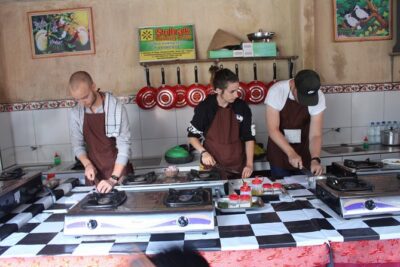
Balinese Ubud cooking school (9 Dish Cooking and Market Tour)
Read our review →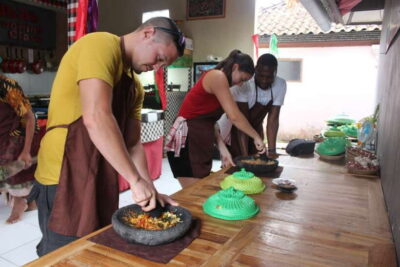
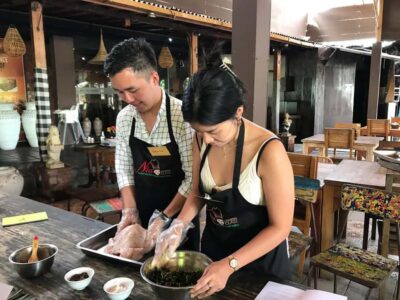
Browse the lists this tour appears in