
Reviewed · IJEN CRATER TOURS
Banyuwangi : Mt Ijen Hike, Blue Fire & Panoramic Lake Guided
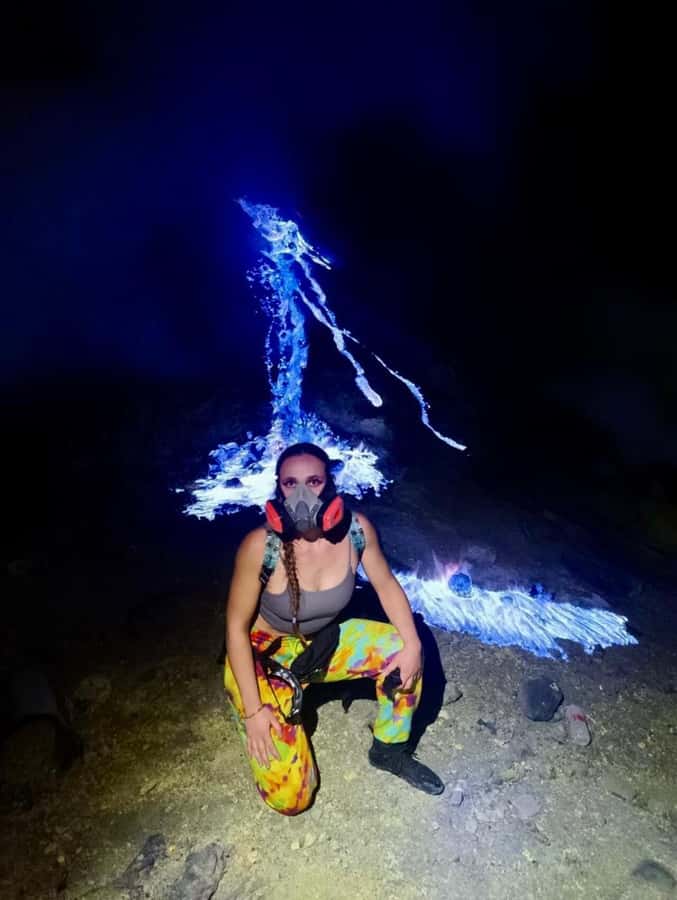
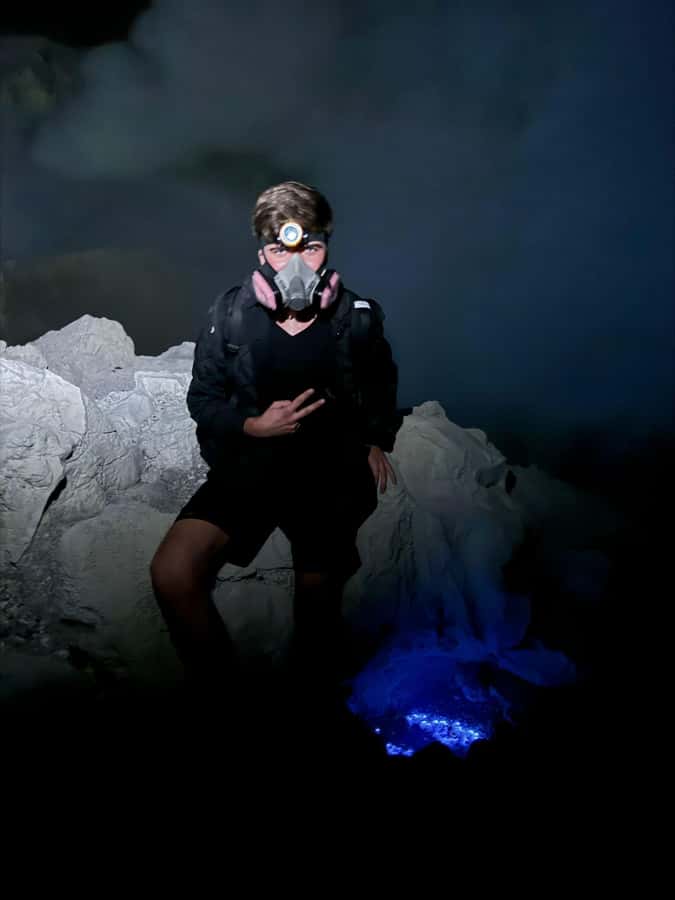
Mount Ijen is interesting because you start before sunrise and chase one of Earth’s strangest sights, blue fire, inside an active sulfur mine. I love the early dark start that helps you reach the viewpoints before the biggest rush, and I love how much you learn from being right there at ground level near the crater.
The drawback is the reality check: the blue fire is not guaranteed, and going down into the crater depends on safety conditions and whether you can handle a steep 900 meter descent. Guides like Qim Qim and Malik run the schedule tightly, but you still have to be ready for cold air, steep steps, and strict instructions.
Key things I’d plan around
- Midnight departure from Banyuwangi with a headlamp, because this is a pre-dawn hike
- Gear included: gas mask, headlamp, and hot coffee or tea at the viewpoint
- Crater descent has rules after recent earthquake concerns, and it may be refused if fumes are unsafe
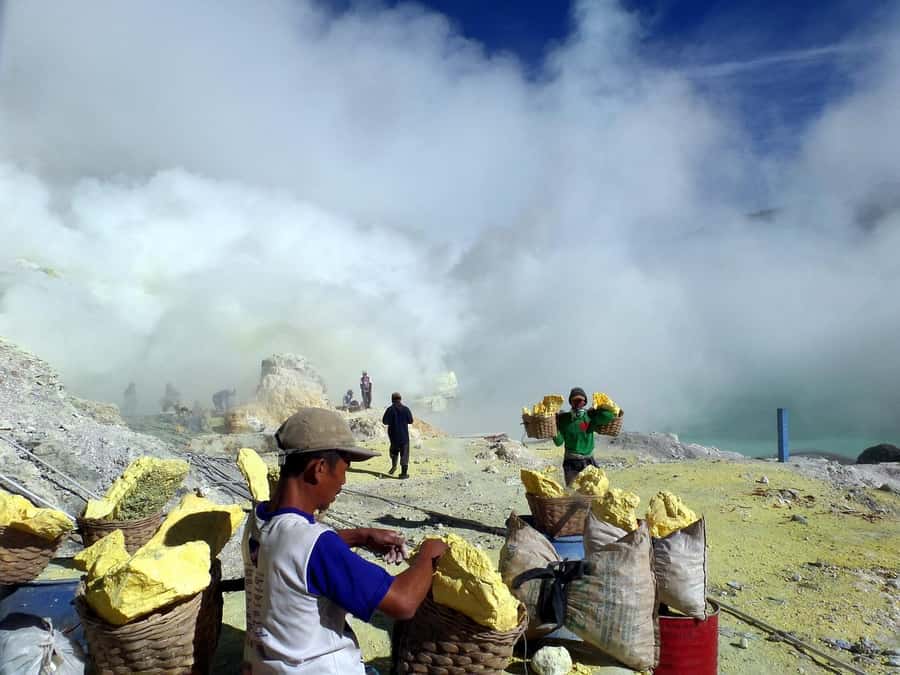
- Sulfur mining firsthand: watch traditional harvesting and how miners work near volcanic activity
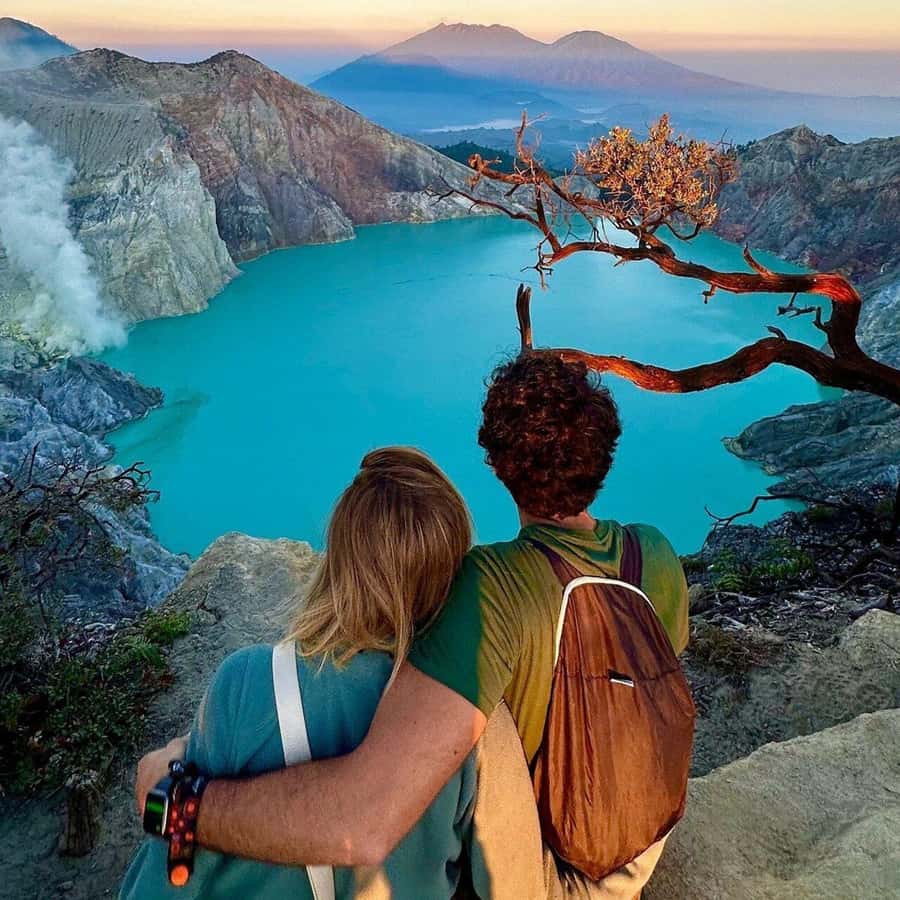
- Sunrise at around 2,386 m with photo time and guide explanations
- Blue fire depends on volcanic activity and miners may extinguish flames to keep mining productive
Why Mount Ijen Blue Fire at Midnight Feels Different Than a Typical Sunrise Trip
This is not a slow walk with a pretty sky at the end. The day starts around 23:00 to 23:30, then you hike in the dark, descend toward the crater area, and only later do you get the sunrise payoff.
I like that the tour does not sell just one moment. You’re there for the volcanic setting, the sulfur miners’ reality, and the eerie color changes in the crater light, not only for a single photo.
More Hiking & Trekking in Banyuwangi
- Banyuwangi: Mt. Ijen Sunrise Hike with Pickup & Health Check
★ 4.9 · 109 reviews - Banyuwangi: Ijen Crater Bluefire and Sunrise Guided Trek
★ 4.9 · 65 reviews - From Banyuwangi or Bali Sunrise Ijen Vulcano Hiking All Inclusive
★ 5.0 · 50 reviews
Banyuwangi Pickups at 23:30, Shared Car, and What the Timing Really Means
Your day begins in the night. After pickup, you travel by shared car to the Ijen area, and the goal is simple: arrive early enough to start moving before the biggest crowds.
Here’s what that means for you on the ground. You’ll be wearing a headlamp before you see anything clearly, then switching to sunrise light when the crater opens up. If you’re the kind of person who needs a relaxed morning routine, this tour will feel like a jump cut into adventure.
Also note: Ijen is known for being busy at popular hours. The route you’re on to reach viewpoints can get crowded, and the narrow paths mean timing matters.
Paltuding Base Stop: Safety Briefing, Coffee, and Gear That Is Not Optional
One of the tour’s smartest parts is the early buffer time once you reach the parking area. After arriving around 01:30, you get a briefing, time to relax, and then gear up for the hike.
This is where included items matter. You’ll get a gas mask and a headlamp, so you can focus on moving and not on hunting for supplies at the last minute. You’re also served hot coffee or tea later at the viewpoint, which is a lifesaver in the cold pre-sunrise air.
Practical tip: dress for early morning chill. The stated temperature range is about 8 to 13 C, so a warm layer is not a suggestion.
The Hike to the Summit and the Crater Area: What to Expect Before Sunrise
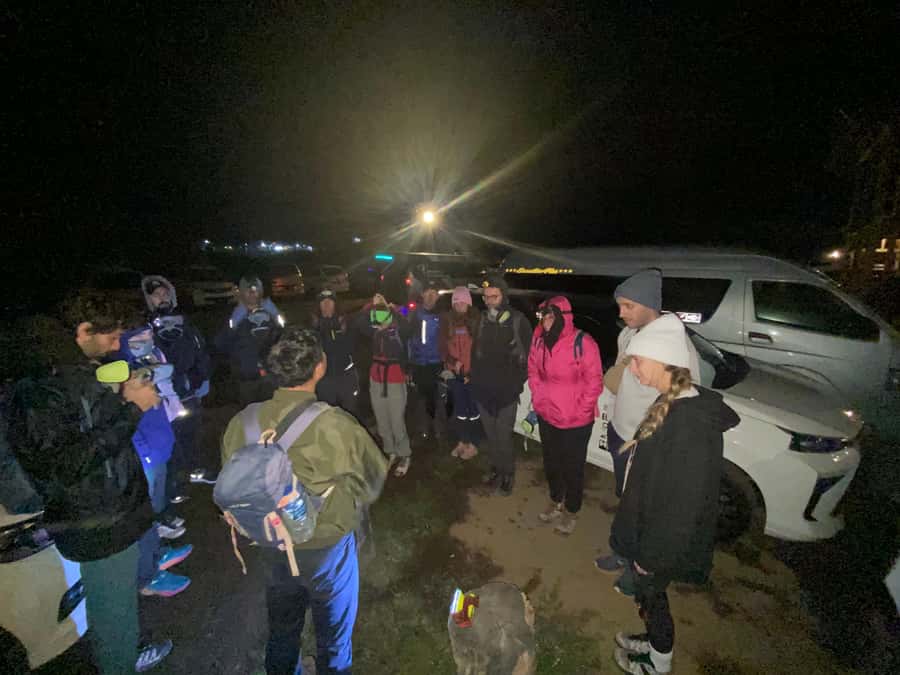
The schedule is tight and very “workout first, view second.” You begin hiking around 02:00. By about 03:00, you reach the summit area and then descend toward the crater.
You’ll hike through steep volcanic terrain on a path that can be slick and steep. In the reviews, people repeatedly mention that the climb is harder than expected if you’re not in shape, and that good footwear helps.
One more thing you should understand before you go: even though you’re heading for dramatic scenery, the crater environment is serious. The tour includes a health certificate, and the rules around descent emphasize that you’re in an active volcanic zone with fumes.
More Ijen crater hikes:
- Banyuwangi/Bali: Ijen Volcano Midnight Blue Fire Guided Tour
★ 5.0 · 502 reviews - Banyuwangi/Bali: Ijen Blue Fire Tour With Transport Option
★ 4.5 · 51 reviews - Ijen Crater Blue Fire Night Hike
★ 5.0 · 49 reviews - Ijen Blue Fire Trekking
★ 5.0 · 44 reviews
Crater Descent Rules After Instability: When You May or May Not Go Down
This tour includes a crucial safety note. After a recent earthquake, conditions at the crater have become unstable. That affects who can descend and what the guide will allow.
Here’s the rule set you need to take seriously:
- Descent into the crater is only allowed if the sulfur fumes are deemed safe
- The descent requires physical fitness because it includes a steep 900 meter descent
- You should not have a fear of heights
- The data explicitly says avoid if you have asthma or heart conditions
- You must follow the guide’s instructions strictly
This is one of the tour’s most valuable aspects. It’s not just “follow the trail.” Your guide is actively monitoring safety conditions.
So when you think about whether this tour is right for you, don’t focus only on the blue fire. Focus on whether you can safely manage steep terrain in cold, low visibility with limited room for mistakes.
Sulfur Miners and Volcanic Activity: The Part That Gives the Trip Meaning
Yes, the blue fire is the headline. But the most human part of the experience is the miners.
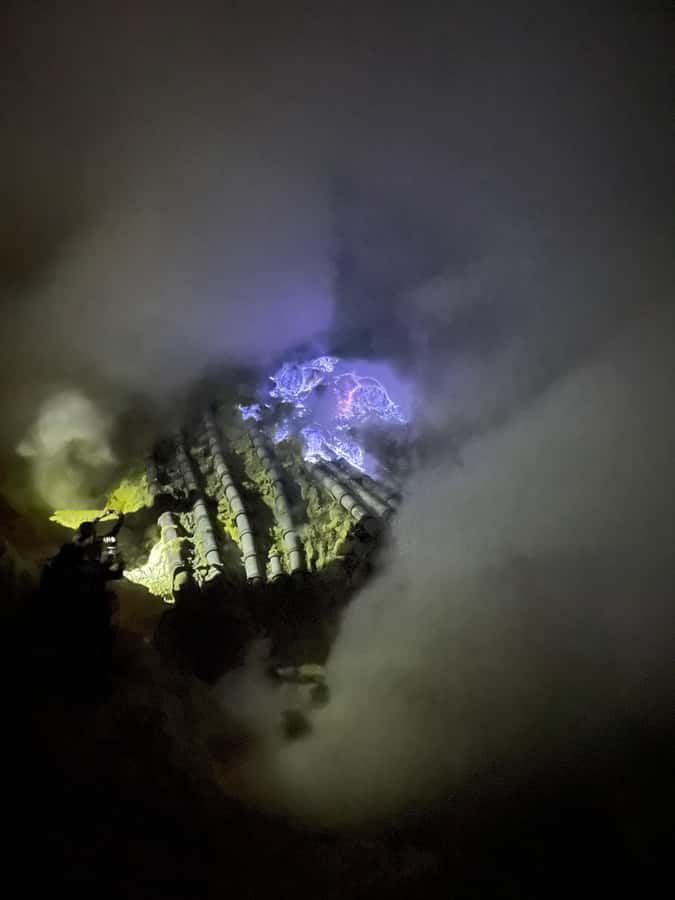
Once you’re near the crater area, you’ll see miners harvesting sulfur using traditional methods. You’ll also hear explanations tied to how Ijen functions as one of the world’s most active volcanoes and why volcanic activity is monitored there.
The tour also makes an honest point about the blue fire: if miners extinguish flames to protect sulfur mining productivity, the show might not happen. That means you should go with the mindset that the real win is being there during the early hours when the entire crater feels alive.
If you like travel that includes real working landscapes and local livelihoods, this part is a strong reason to book.
Blue Fire: How to Set Expectations and Still Be Happy If It’s Quiet
The tour does not promise blue fire. It says the phenomenon depends on volcanic activity, and you might not see it.
If you do see it, expect it to feel unreal in the dark. People often time their trip because early arrivals can mean a better chance to catch the flames before crowds build and visibility changes.
But even if you don’t see it, you’re still getting:
- dramatic volcanic views from the crater area
- a sunrise transition over the crater rim
- time to understand the mining reality and volcanic conditions
The best way to make peace with the blue fire uncertainty is to treat it like weather. You’re planning for a hike, a crater morning, and a volcanic story. Blue fire is the bonus.
Sunrise Viewpoint Timing: Coffee at 05:00 and Photos Before the Crowd
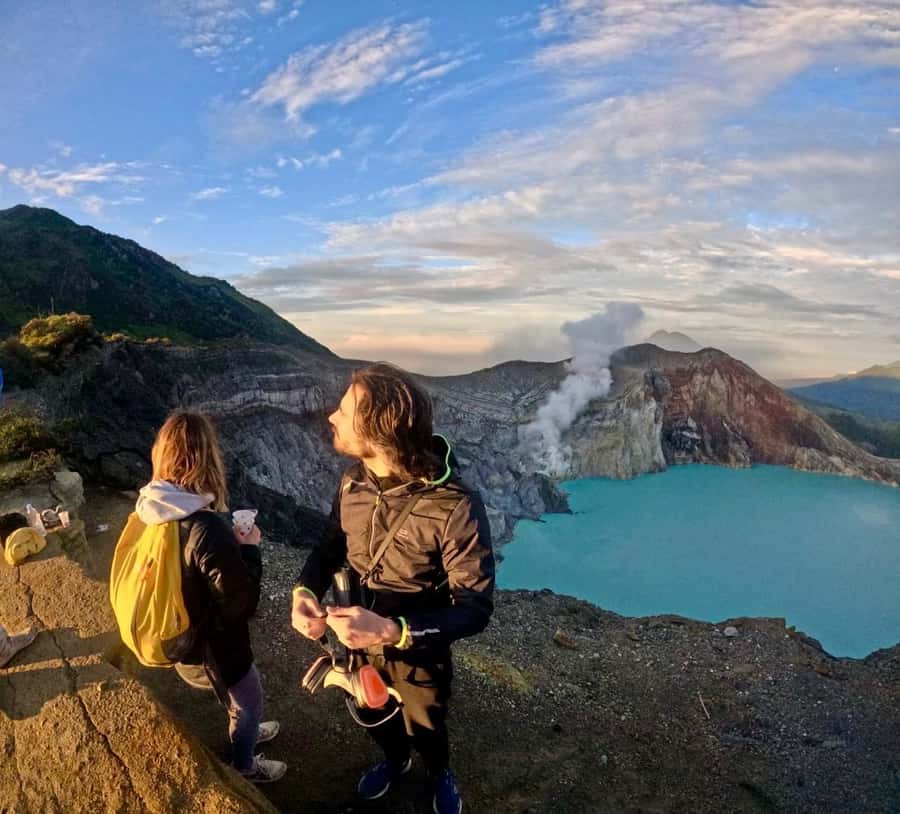
The itinerary builds toward the moment most people wait for. Around 04:00 to 04:30, you start climbing toward the sunrise viewpoint. By about 05:00, you get a coffee break, then sunrise runs from roughly 05:00 to 06:00.
A big practical advantage is the amount of photo time you get during the most magical lighting. The data says you’ll have free time for photos and to listen to guide explanations while you enjoy sunrise.
You’ll be at about 2,386 meters above sea level for these panoramic views. That altitude is another reason warm layers matter, because cold air and wind can creep in fast.
Lake and Crater Rim Views: Why the Color Changes Feel Like Part of the Story
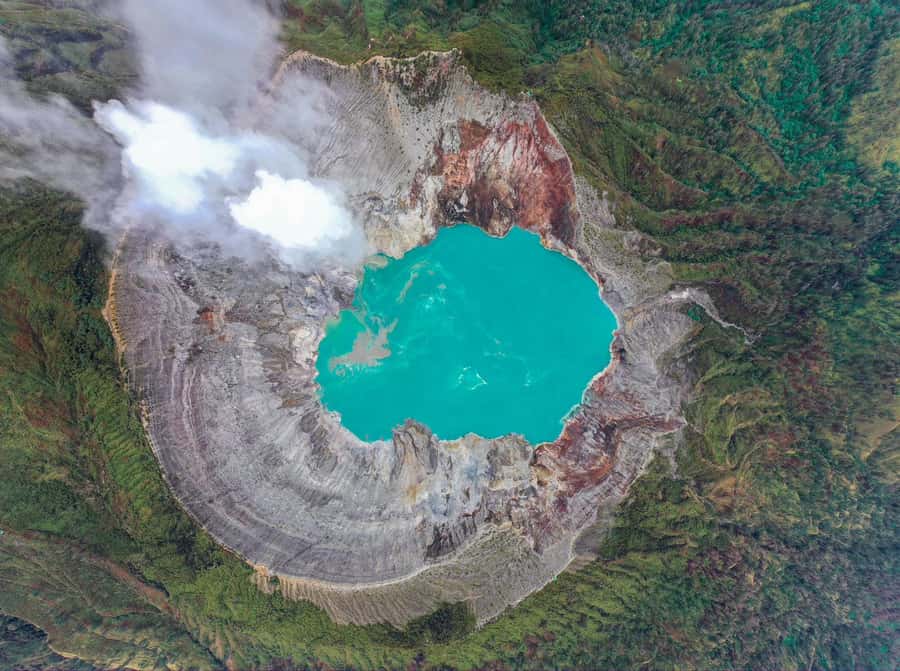
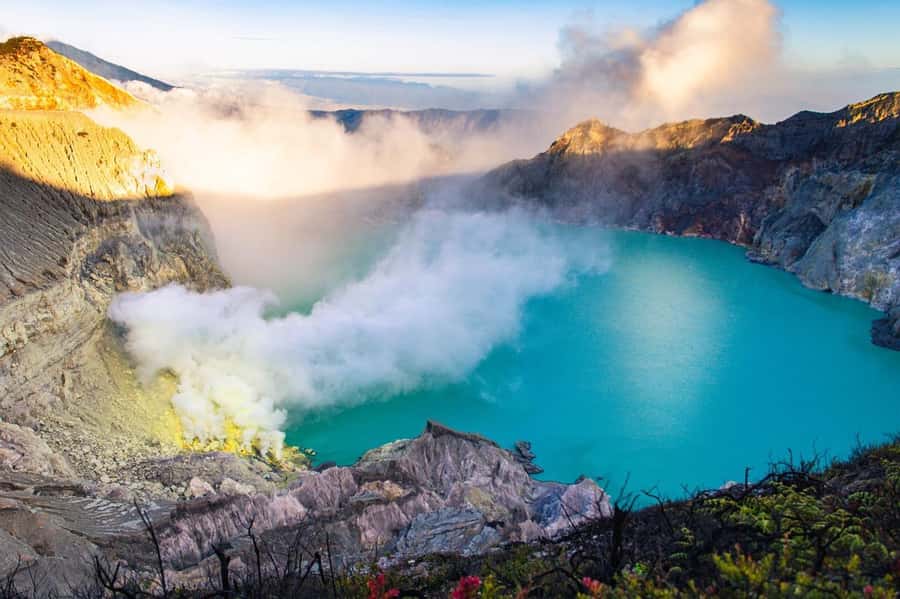
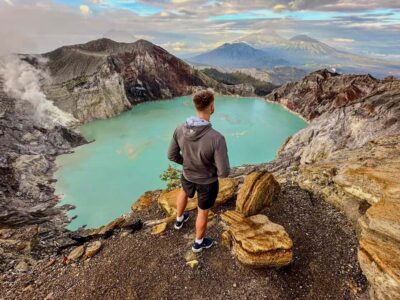
The lake is part of the Ijen visual identity, and you’ll enjoy panoramic views that include the crater setting and the turquoise tones described in the tour highlights.
The guide’s explanation adds context. At sunrise, when visibility is best, you’ll learn how Ijen’s volcanic activity shapes the environment, and why the sulfur area looks and smells the way it does.
This is also the moment when you’ll feel the payoff of the hard part. The hike, the cold, and the steep terrain all become background noise when you’re watching the crater wake up.
Price and Value at About $20: What You’re Really Paying For
At around $20 per person, this tour can feel like a bargain for what’s included, but only if you value the right things.
You’re paying for:
- Pickup and drop-off service from multiple areas
- Park entry fees
- An English speaking expert mountaineering guide (languages also include Indonesian and Malay)
- Gas mask and headlamp
- Hot coffee or tea
- Parking fees
- A tour that is built around one of the world’s most famous volcanic mornings
What’s not included is also clear. Food and drinks are not included, and tipping for the guide is not included. So you should still budget for snacks or a drink upgrade for after the hike.
Also, if your accommodation is in the Ijen resort villas area near Licin, there is an extra 150,000 IDR per group pick-up cost. That’s worth factoring in if you’re staying farther out.
Fitness Level, Health Conditions, and Who Should Skip This One
This tour is best for people who can handle steep and uneven trails in the dark. The data calls the trek physically challenging and recommends a moderate fitness level.
It is explicitly not suitable for:
- children under 7
- pregnant women
- people with mobility impairments
- wheelchair users
- people with low level of fitness
- anyone with a condition that makes crater descent unsafe, especially asthma or heart conditions
- anyone who has a fear of heights (because the descent rules mention it)
If you can handle uphill and downhill trekking, you’ll probably find the day doable, especially with an energetic guide. In the reviews, guides like Qim Qim, Malik, and Raffi are praised for keeping the group moving, staying safe, and helping people manage the steep parts.
But if you cannot commit to steep terrain and strict safety rules, you’ll be much happier choosing a different Ijen experience that keeps you higher and safer.
What to Bring for a Cold, Dark Hike (Even If It Sounds Like Overkill)
The tour’s packing list is short, but it hits the right points:
- Warm clothing
- Warm jacket
- Long pants
- Hiking shoes
- Drinks
- Cash
You’ll be in temperatures around 8 to 13 C early in the morning. Warm layers matter more than fashion here. Also, bring grippy shoes if you have them. Volcanic paths can be slippery, especially when you’re moving quickly in the dark and later during descent decisions.
The Guide Makes the Difference: Why the Qim Qim Style Works
One theme that comes through strongly is guide energy and pacing. People describe Qim Qim as funny, upbeat, and highly motivated, with team members like Malik and Raffi providing steady support.
For you, that matters because timing is everything on Ijen. Getting to key moments early can improve your experience, whether that’s maximizing your time near the blue fire area or getting a clear sunrise window before the biggest crowd surge.
Guides also handle a less glamorous skill: keeping the group together when some people move faster than others. The day is long, and fatigue grows quickly when you start at midnight.
Friday Closure: The One Calendar Detail That Can Save Your Trip
Mount Ijen is closed every Friday of the month. If you’re planning around a fixed schedule, check the calendar first.
This is not a small detail. It’s the difference between a plan that works and a trip where you have no valid alternative at Ijen under the tour’s structure.
Should You Book This Mount Ijen Blue Fire and Sunrise Guided Hike?
Book it if you want a real volcanic morning, not just a quick Instagram stop. The best value here is the combination of a guided crater experience, included safety gear like gas masks and headlamps, and the sunrise timing that supports amazing crater views.
Skip it or reconsider if you’re sensitive to steep terrain, cold mornings, or you have health conditions like asthma or heart problems. Also think twice if the crater descent rules are a worry for you. The tour includes safety flexibility based on fumes and conditions, and you must be prepared for the possibility that you might not go down as far as you hoped.
If you can handle an early start and you’re okay with blue fire not guaranteed, this is a high-impact day trip from Banyuwangi that blends natural drama with the real working side of Ijen.
FAQ
What time does the tour start and what time do we get back to Banyuwangi?
The pickup starts late evening, around 23:00 to 23:30, and the day finishes with arrival back in Banyuwangi at about 09:00.
Is blue fire guaranteed on this tour?
No. The tour states that blue fire is not guaranteed and depends on volcanic activity. It may also be extinguished by miners to support sulfur mining productivity.
Will I definitely be able to descend into the crater?
No. After recent earthquake-related instability, crater descent is only allowed if the sulfur fumes are deemed safe, and if you are physically fit for the steep 900 meter descent. The guide’s instructions are mandatory.
What weather should I expect?
The tour notes early morning temperatures around 8 to 13 C, so you should bring warm clothing and a jacket.
What is included in the price?
Included items are pickup and drop-off, Mount Ijen National Park entry fees, an English speaking mountaineering guide, gas mask, headlamp, parking fees, and hot coffee or tea.
What should I bring, and what is not included?
Bring warm clothing, hiking shoes, long pants, drinks, and cash. Food and drink are not included, so plan for your own meals or snacks outside the included coffee or tea.
Newest reviews out of Banyuwangi
- Ijen Blue Fire Trekking★ 5.0 · 44 reviews
- Ijen Crater Blue Fire Night Hike★ 5.0 · 49 reviews
- From Banyuwangi or Bali Sunrise Ijen Vulcano Hiking All Inclusive★ 5.0 · 50 reviews
- Banyuwangi/Bali: Ijen Blue Fire Tour With Transport Option★ 4.5 · 51 reviews
- The Authentic Sunset Of Baluran National Park Banyuwangi★ 4.9 · 70 reviews
- Banyuwangi: Mt. Ijen Sunrise Hike with Pickup & Health Check★ 4.9 · 109 reviews
- Banyuwangi: Ijen Crater Bluefire and Sunrise Guided Trek★ 4.9 · 65 reviews
- Banyuwangi/Bali: Ijen Volcano Midnight Blue Fire Guided Tour★ 5.0 · 502 reviews
Ijen Crater Tours, compared.
Surabaya or Malang: Tumpak Sewu Bromo & Ijen 3-Day Trip
Read our review →
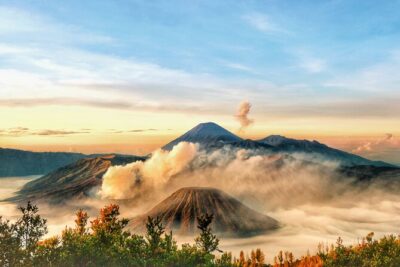
3Days – Tumpaksewu Bromo Ijen Adventure via Malang or Surabaya
Read our review →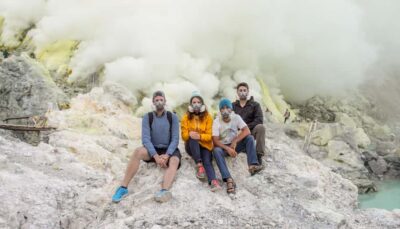
24-Hour Trip to Ijen Crater & Javanese Breakfast
Read our review →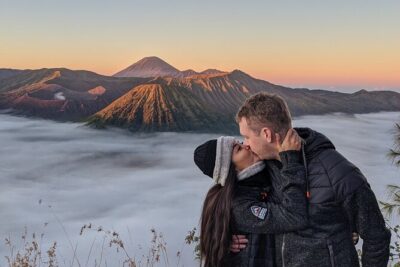
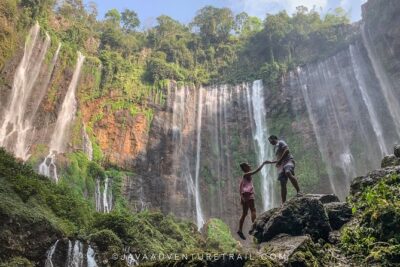
Mount Bromo – Tumpak Sewu Waterfall – Ijen Bluefire Tour – Bali 4d3n
Read our review →
Browse the lists this tour appears in