
Reviewed · COOKING CLASSES
From Garden to Table: Indonesian Cooking Class in Yogyakarta
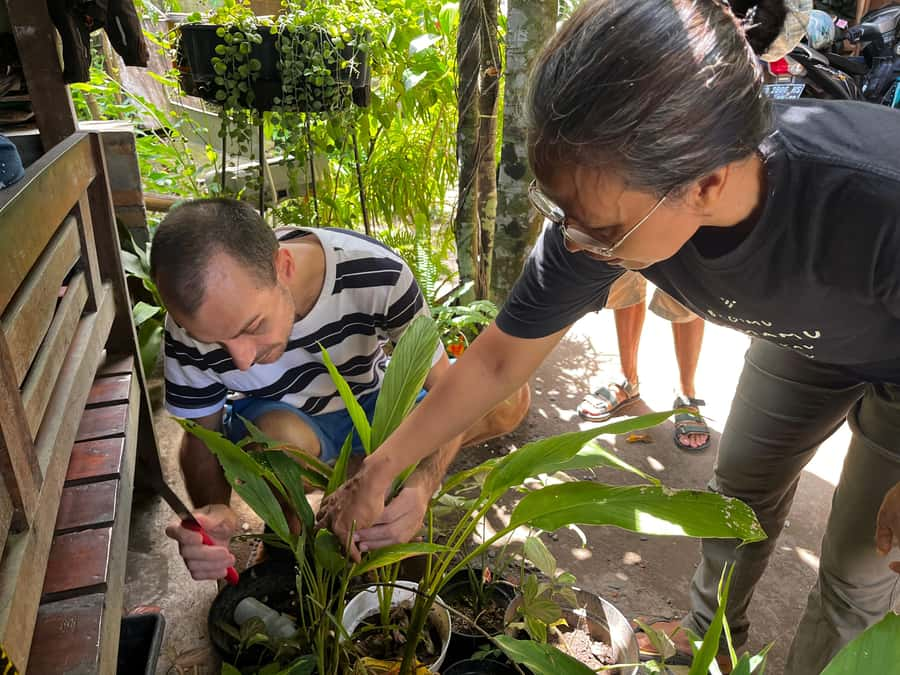
This Yogyakarta cooking class is interesting because it starts in a garden. You pick herbs and fresh ingredients first, then you cook real food, eat what you make, and talk about how Javanese and Indonesian flavors work in daily life.
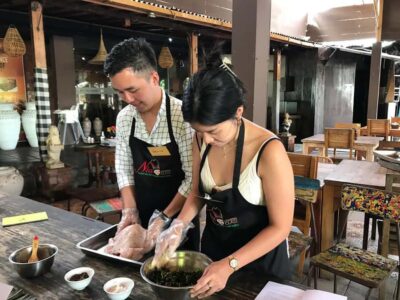
I really like the hands-on style, you do the cutting, mixing, frying, and plating, not just watching. I also like that you choose from menus ahead of time, so you can steer your class toward what you want to learn. One consideration is that it is not air-conditioned, so plan for heat and bring something to stay comfortable.
Key things I’d circle before you book
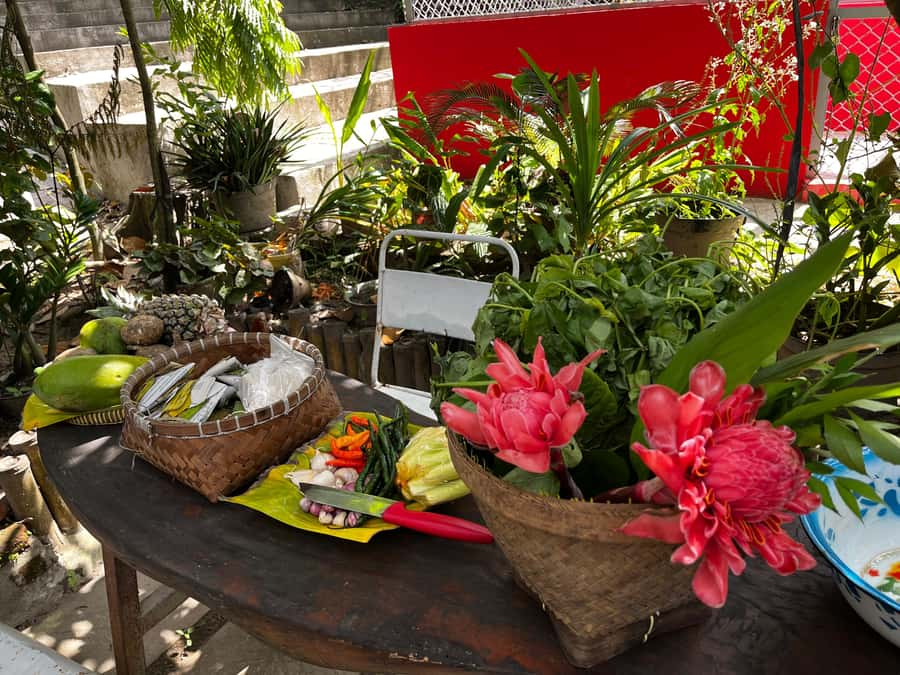
- Harvest herbs and edible plants onsite, so you connect the flavor to the source
- Cook 6 local dishes, including spice-heavy sauces and dips you can recreate later
- Endah’s family-style hospitality, warm, relaxed, and focused on you learning
- English instruction with menu options and spice level awareness
- Nature and animals on the property, including cats and a calm garden setting
From Garden Harvest to Lunch Plates in Yogyakarta
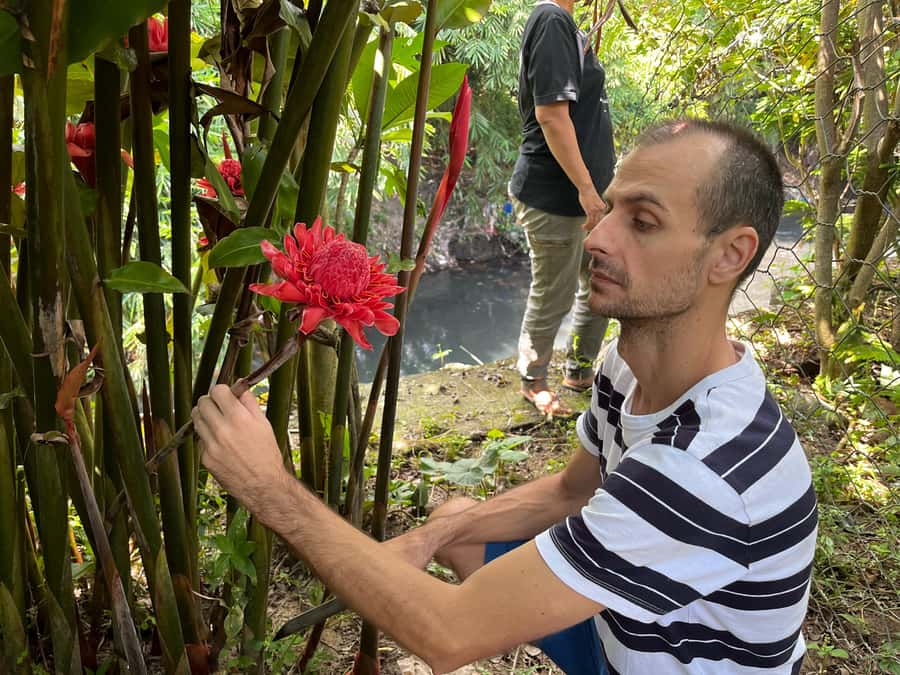
If you want a cooking class that feels practical instead of performative, this one hits the mark. You do not just study Indonesian cuisine on a worksheet. You touch the ingredients, smell them as you prep, and then you cook them into meals you actually sit down to eat. The farm-to-table angle matters here because the flavors are not abstract. They are in your hands first.
The best part is the flow. It typically goes like this: you arrive, get a welcome drink, then you head into the garden to pick herbs and plants used in the meal. After that, you get cooking, with your instructor guiding you step-by-step while you actively help. By the end, you eat a lunch built from the dishes you made, so there is no awkward part where you leave hungry or wonder what you did wrong.
This is also a private-group experience. That tends to change the whole vibe. You get more attention, and it is easier to ask questions like why a sauce thickens a certain way or how to adjust spice without ruining the flavor.
More Cooking Classes in Yogyakarta:
- Yogyakarta Cooking Class and Market Tour
★ 5.0 · 99 reviews - Yogyakarta: 3-hour Cooking Class with Market Tour
★ 4.9 · 84 reviews - Yogyakarta: Javanese Cooking Class & Market Tour
★ 4.9 · 23 reviews
The $46 price makes sense, if you want real hands-on learning
At $46 per person for 5 hours, this is priced like a serious half-day meal experience, not a quick demo class. What you are paying for is labor and ingredients plus the host’s time: garden harvesting, ingredient prep, cooking guidance, lunch, and drinks. You also get the equipment and cooking materials, so you are not showing up and then realizing you have to buy everything yourself.
Here is how I judge the value. If you want a cooking class where the main benefit is recipes to take home, the value can be hit or miss depending on how much you actually cook. In this class, you are involved in the cooking process, and you eat what you cook. That usually means the class is worth it even if you do not consider yourself a confident cook.
One more value point: the menu is not locked in stone forever. You receive a full set of menu choices after booking, then you pick what you want. That makes a fixed-price class feel more flexible and personal.
Meet Endah and the family vibe that makes you feel at home
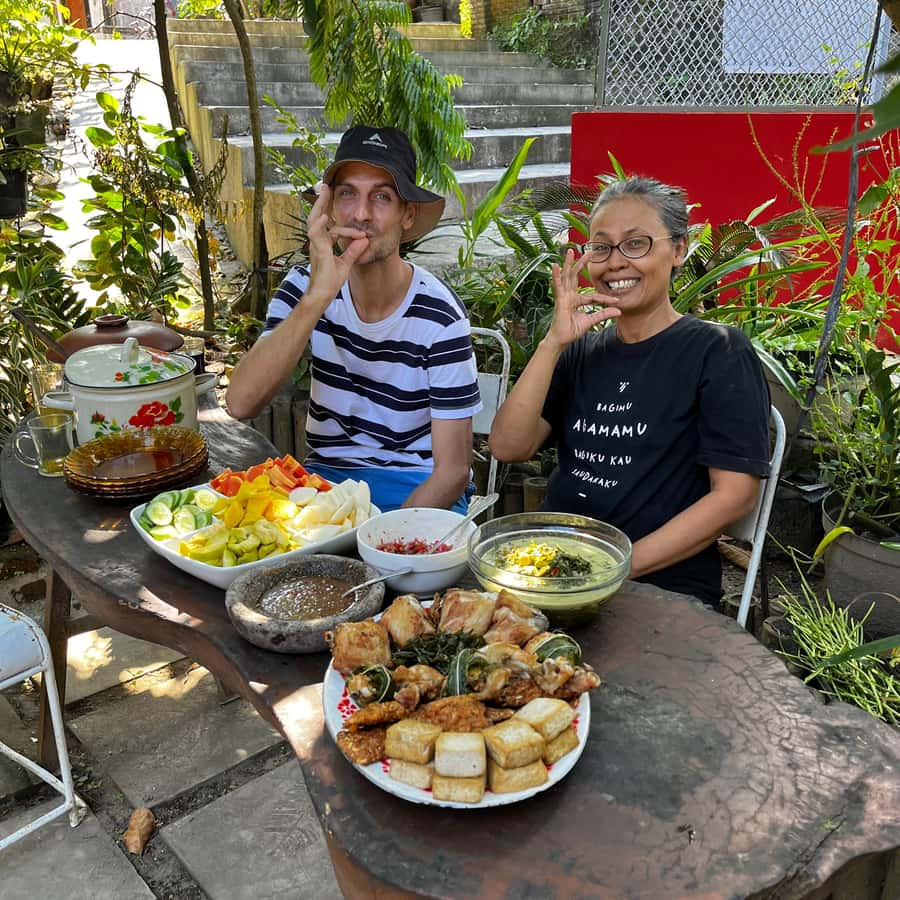
This class is run by Endah, and she is central to the experience. People repeatedly describe her hospitality as warm and family-like, the kind where you feel comfortable asking questions and laughing while you work. In a few accounts, the cooking atmosphere included sing-along moments with music in the background, which sounds like exactly the type of detail that makes a class memorable.
Even the practical rhythm feels more like cooking with a relative than taking a formal lesson. You are not only learning recipes. You are learning habits, like how to prep ingredients efficiently and how to taste and adjust as you go.
Because it is a small, private group, Endah also tends to personalize what you make. Some reviews mention options were adjusted for a couple who booked together, which tells me the host is paying attention to what you want to eat and learn, not forcing everyone into the same narrow path.
Garden Harvest: herbs, rhizomes, and the smell test
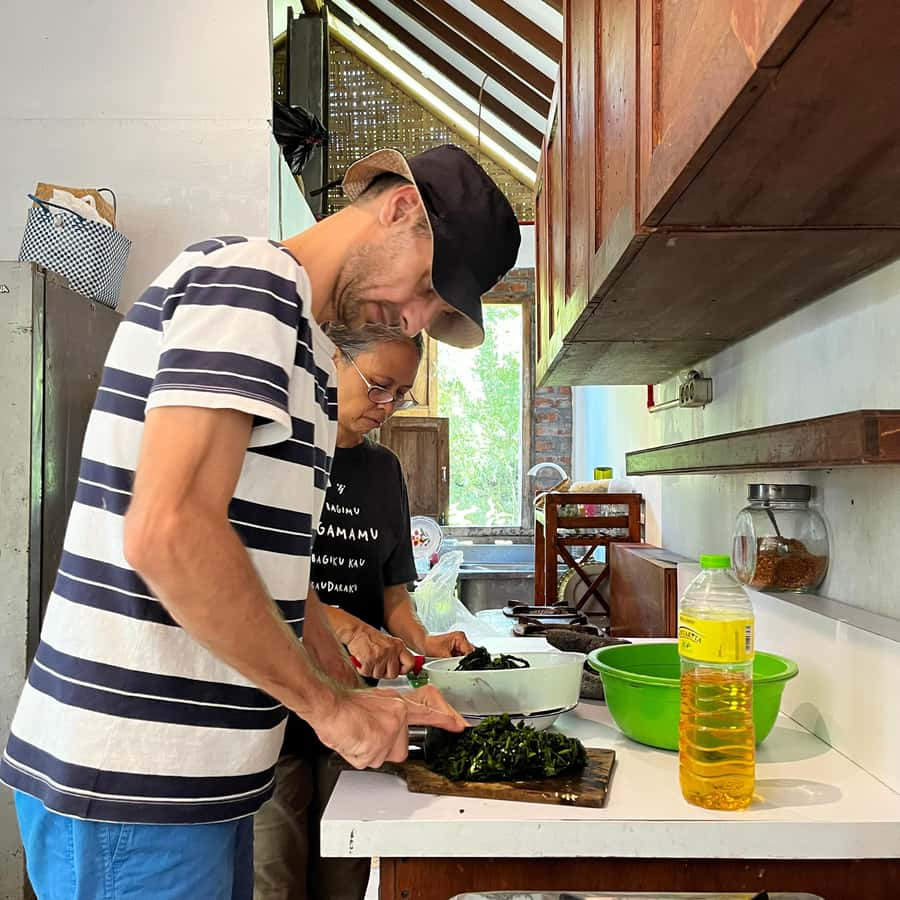
The garden start is the key to why this class is more than a standard cooking lesson. You harvest native herbs and fresh ingredients directly from the property. This matters because Indonesian cooking often depends on aromatic starters: fresh roots, leaves, and spices that change the entire dish.
You will also handle rhizomes, spices, and raw ingredients as part of the experience. That is not just sensory fun. It trains your cooking instincts. When you smell an ingredient before cooking it, you understand later why the dish tastes the way it does.
You might notice small differences between what you think you know from packaged versions and what you get fresh. That is often where the biggest learning happens. Fresh ingredients behave differently: they release aroma fast, they carry flavors more cleanly, and they can taste brighter than dried or pre-ground spices.
If nature and animals are your thing, you get that too. The experience includes cute cats and a serene garden setting, which helps the class feel calm even when you are working.
Something different for the next Yogyakarta day:
- Yogyakarta: Borobudur sunrise(guarantee climb up)& Prambanan
★ 4.9 · 1,545 reviews - Borobudur Sunrise from setumbu Hill , Merapi Volcano & Prambanan Full Day Tour
★ 5.0 · 1,030 reviews - Yogyakarta: Jomblang Cave and Pindul Cave all inclusive Trip
★ 4.9 · 854 reviews - Yogyakarta: Borobudur and Prambanan Temples Guided Tour
★ 4.9 · 828 reviews
The welcome drink set the tone (and it’s included)
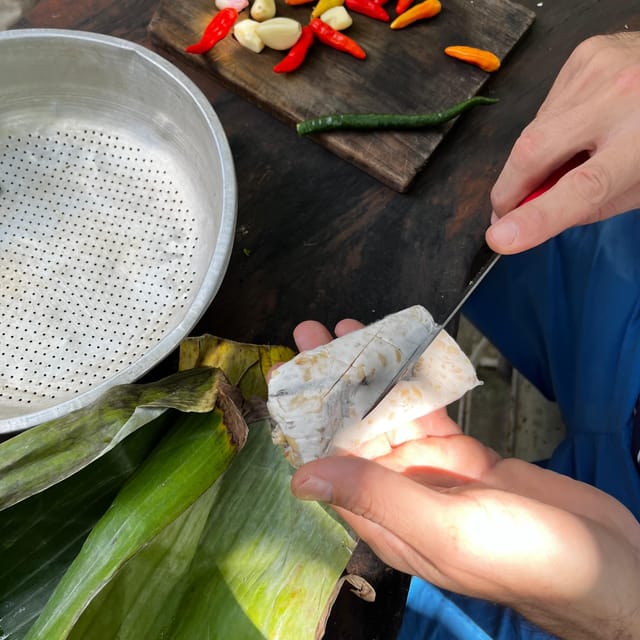
Before you cook, you get a welcome drink, and you can choose from three options:
- tamarind turmeric
- tamarind sugar
- lemongrass tea
The class also includes refreshing beverages during the session. In reviews, people mention extras like home-brewed coffee or fruit from the garden, so you may get little thoughtful touches in addition to the standard included drinks.
This is not a small detail. In hot tropical places, a good welcome drink makes the rest of the lesson feel easier, and it signals that the host wants you comfortable and ready.
What dishes you’ll cook, and how to choose your menu
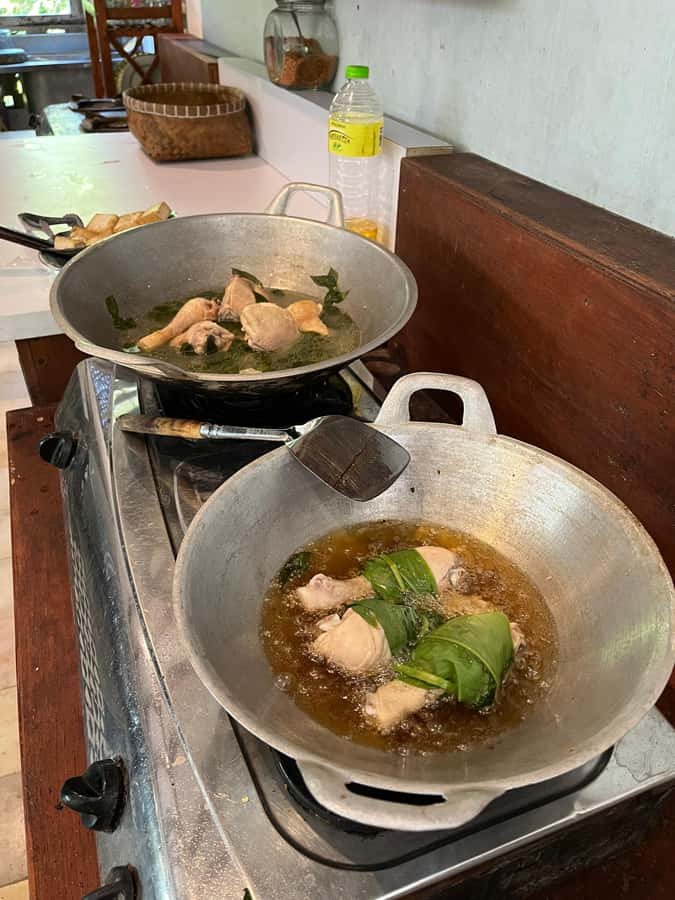
The class menu is designed around 6 local dishes. The listed options include:
- vegetable rujak with peanut sauce
- fried chicken with curry leaves
- fried or boiled tofu
- tempeh
- Balinese lemongrass chili sauce
- local fruit rujak
A few details are worth knowing. First, you choose from menus after booking, so you might not get the exact same mix every time. Second, spice level matters. Endah is mindful about it, so if you are sensitive to heat, you can ask for adjustments during the lesson.
Based on reviews, you might also see other Indonesian dishes offered among the menu choices. One person mentioned rawon, a beef black soup, as something they encountered as part of their class experience. Because menus can vary, the safest way to use this info is to treat it as a hint: when you get the menu list, pick what genuinely sounds new and exciting to you.
Rujak is not one thing
If you have tried fruit rujak in tourist settings, you might assume you already know it. In this class, rujak appears in both a vegetable version and a fruit version. Expect peanuts, spice, tang, and texture. Cooking it yourself is the fast track to understanding how Indonesian sweet-sour-spicy balance works.
How the 5-hour session typically moves (so you know what to expect)
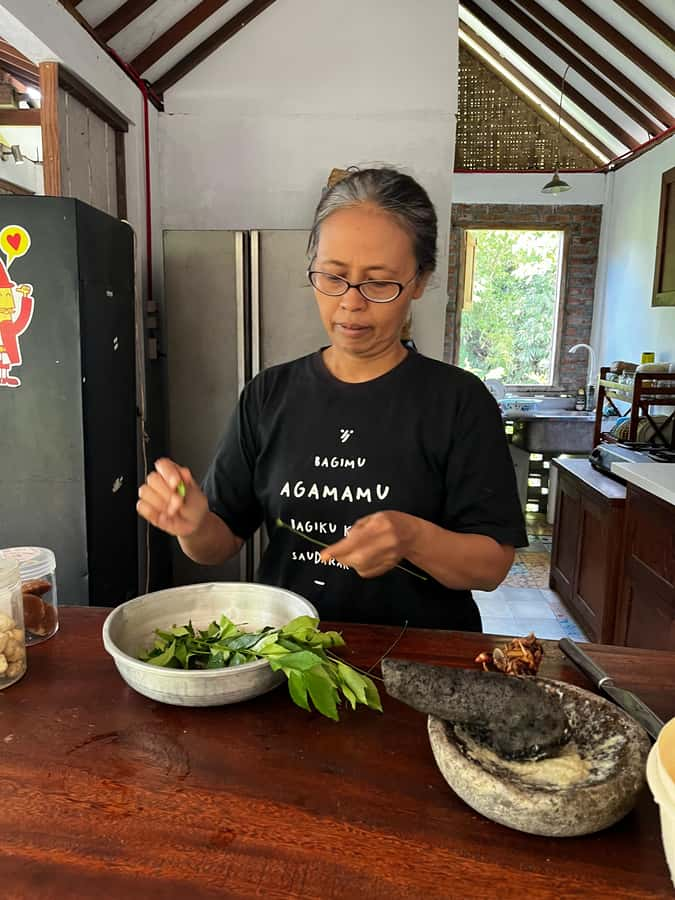
While the exact minutes can vary, the overall structure stays consistent with what is described:
- Arrival and welcome drink
- Garden tour and harvesting fresh herbs and ingredients
- Hands-on prep and cooking of the chosen menu dishes
- Lunch on what you cooked, plus included drinks
The important point is that you are not relegated to chopping herbs for five minutes and then waiting. You are actively cooking, especially with sauces and the steps that build flavor.
One review also notes that some people end up doing a lot of prep across multiple dishes at once. If you are the kind of person who wants to follow a single dish end-to-end without switching tasks, you might want to ask for clarity early. Still, the upside is you learn how several parts of an Indonesian meal come together within the same class session.
Also note: the cooking environment is not air-conditioned. You will likely work in warm conditions, so the experience is best if you can handle heat and sweat.
Culture talk that actually connects to food
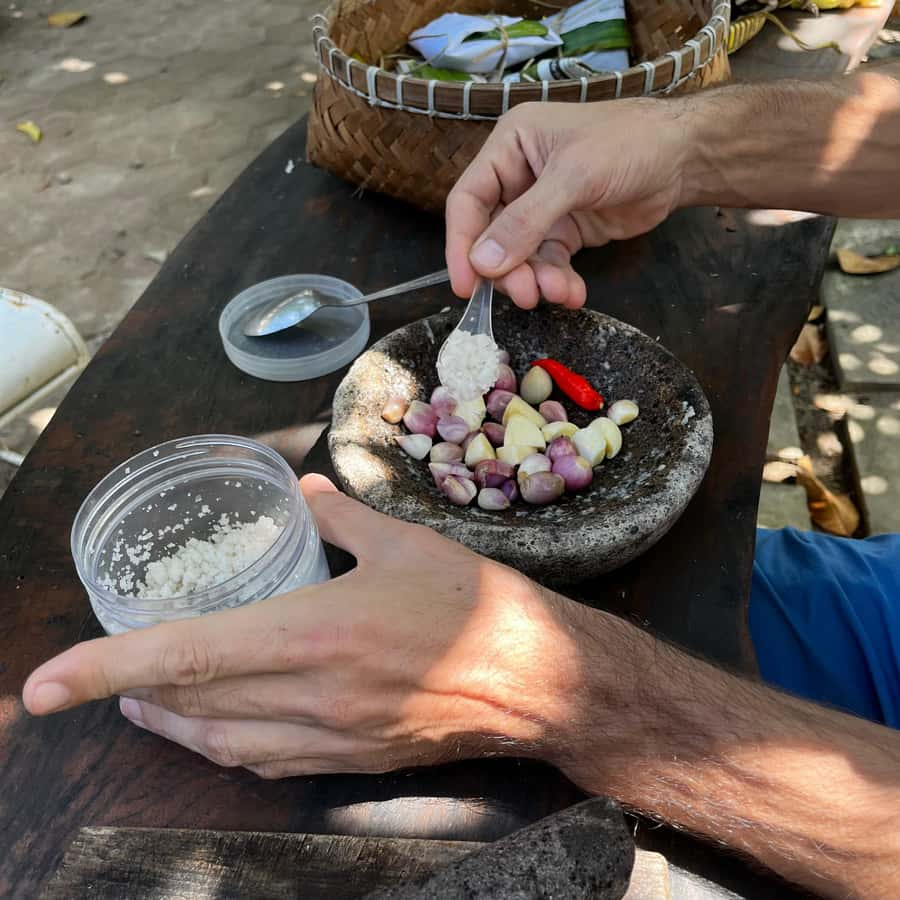
This is not a lecture class. But there is cultural insight as you prepare your meal, and it helps to have that context while you cook. Indonesian flavors often come from how communities use fresh ingredients, how they balance sweet, sour, salty, and spicy, and how meals work socially.
In reviews, people mention the class brought together participants from different backgrounds, with a respectful, friendly atmosphere. If you like learning through conversation, this class delivers. You can ask questions about ingredients, cooking techniques, and what something means locally, and it usually stays relaxed.
Spice control: you can learn without suffering
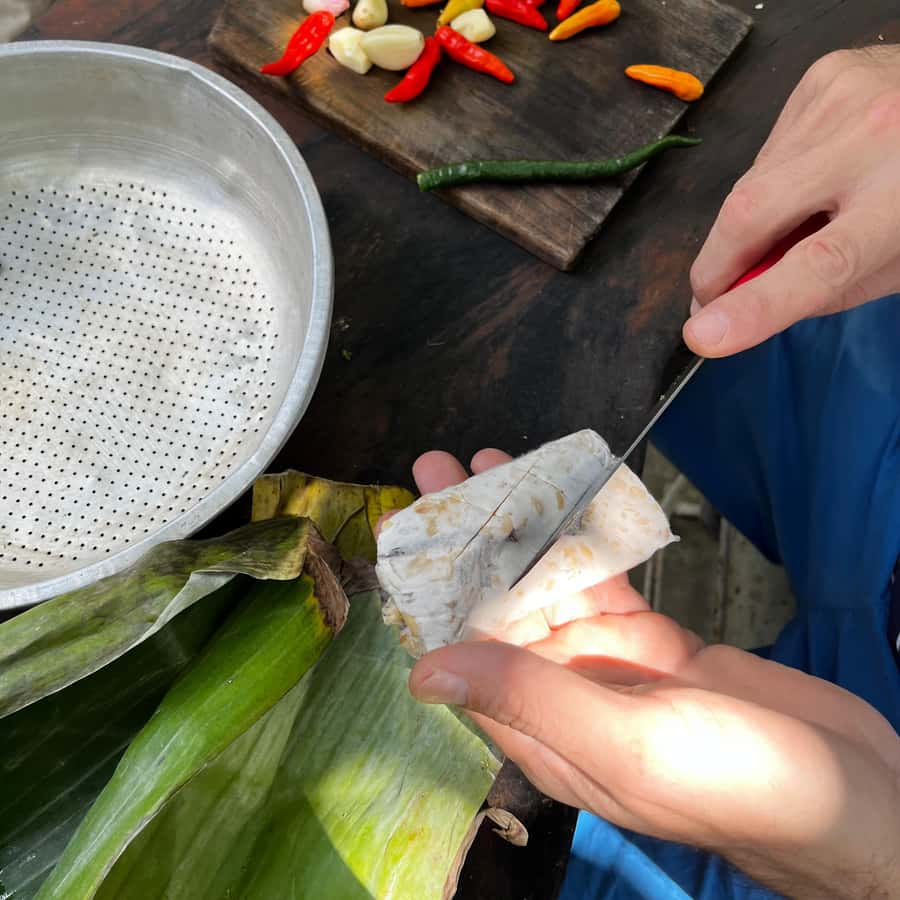
One of the best practical perks is that Endah is mindful of spice levels. Indonesian cooking can go from mild to mouth-on-fire quickly, especially once sambal and chili sauces enter the mix. Having an instructor who can calibrate heat means you get to learn the flavor structure without being punished for it.
If you are spice-shy, tell her early. If you like it hot, you can usually say so too. Either way, the goal is to help you understand how spice changes the dish, not just survive it.
Recipes to take home, plus how to recreate the flavor
After the class, you are given recipes. That is a major part of why a cooking class like this is worth your time. You are not just enjoying lunch today. You are building a small Indonesian cooking toolkit you can use later.
To recreate dishes at home, you will benefit from the fact that you handled fresh ingredients in the garden. Even if your local market does not carry the exact same herb, you will know what kind of aroma to aim for. That is often more helpful than simply reading ingredient lists.
If you do choose a menu item that includes chili sauce, rujak, or peanut-based flavors, those tend to be the most repeatable at home. You can make them as a base for other meals and snacks once you understand the ratios.
Practical tips so your half-day goes smoothly
Here are the things I would prepare for based on how the class is described.
- Plan for heat. The cooking space is not air-conditioned, and you will be moving around. Bring a personal fan if you have one.
- Choose your menu thoughtfully. You get options after booking, and different people will want different kinds of dishes, like sauces versus mains.
- Expect hands-on work. Even when tasks shift across dishes, you will do real prep and cooking, so wear comfortable clothes you do not mind getting a little messy.
- Bring questions. The cultural talk and ingredient explanations are part of the value, not an extra bonus.
Who this cooking class is best for
This is ideal for you if:
- you want farm-to-table flavor learning, not just a restaurant tasting
- you like hands-on cooking where you actually cook and eat your dishes
- you want English instruction and a comfortable, family-style atmosphere
- you enjoy ingredient discovery, especially herbs, spices, and fresh raw ingredients
It may not be ideal if:
- you hate spice and do not want to adjust heat at all (even if the instructor is mindful)
- you prefer strictly one dish at a time, end-to-end, without switching tasks
Also, it is not suitable for children under 5 and it is not meant for people over 70, so plan accordingly.
Should you book this Yogyakarta garden-to-table cooking class?
I think you should book it if you want a 5-hour food experience that teaches you how Indonesian flavors are built, one ingredient and one step at a time. The garden harvest makes the learning stick, and the fact that you eat what you make turns the class into a full meal experience, not just entertainment.
Skip it or reconsider if heat is a deal-breaker for you, since there is no air-conditioning and the work is active. Also, if you are looking for a purely formal cooking school style with tightly sequenced steps for only one dish, you might find the class more task-sharing than that.
If you do book, take the menu-choice seriously. Pick dishes you genuinely want to taste and learn, because the best outcome is not just a good lunch. It is the ability to recreate something you could not cook before, using the same kind of fresh ingredients that start in the garden.
FAQ
How much does the Indonesian cooking class in Yogyakarta cost?
The price is $46 per person.
How long is the experience?
The class lasts 5 hours.
What is included in the class?
Lunch is included, along with drink(s). You also get a welcome drink, the cooking materials (ingredients and equipment), and instruction while you cook.
Which welcome drinks can I choose?
You can choose from tamarind turmeric, tamarind sugar, or lemongrass tea.
What dishes will I cook during the class?
The menu includes 6 local dishes: vegetable rujak with peanut sauce, fried chicken with curry leaves, fried or boiled tofu, tempeh, Balinese lemongrass chili sauce, and local fruit rujak. You will receive the full menu range after booking and you choose your options.
Will I receive recipes after the class?
Yes. Recipes are sent to you after the class.
Is the instructor available in English?
Yes, the instructor teaches in English.
Is it a private group, and is it wheelchair accessible?
Yes. It is listed as a private group, and it is wheelchair accessible.
Is a hotel shuttle included?
No. Hotel shuttle service is not included.
Who is it not suitable for, and what is the cancellation window?
It is not suitable for children under 5 years old and people over 70 years old. You can cancel up to 24 hours in advance for a full refund.
Newest reviews out of Yogyakarta
- Ramayana Ballet Performance – Purawisata Jogjakarta★ 4.5 · 12 reviews
- Yogyakarta: Sunrise Inside Borobudur with breakfast★ 5.0 · 12 reviews
- Borobudur Private Tour From Semarang Port★ 4.5 · 12 reviews
- Yogyakarta: Jomblang Cave Day Trip with Pickup and Entry Fee★ 5.0 · 13 reviews
- Yogyakarta: Borobudur Sunrise Inside Temple & Prambanan tour★ 4.9 · 13 reviews
- Traditional Javanese Archery Class★ 5.0 · 13 reviews
- From Yogyakarta: Dieng Plateau Golden Sunrise Private Day Trip★ 5.0 · 13 reviews
- From Yogyakarta: Mount Bromo Sunrise and ijen crater Blue Fire – 3 Days★ 5.0 · 14 reviews
Cooking Classes, compared.
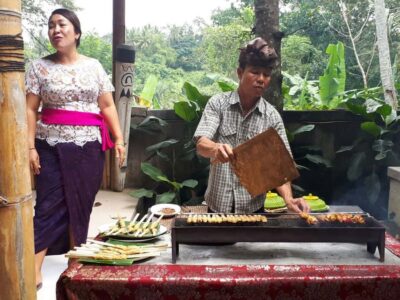
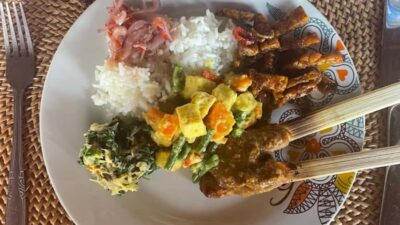
Cooking Class with Transfers and Optional Market Visit
Read our review →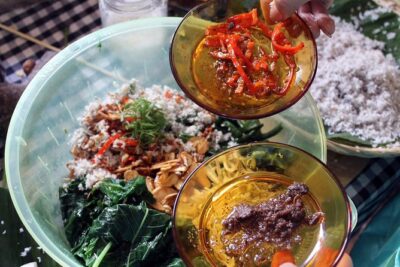
PRIVATE Authentic Balinese Cooking Class in Ubud at Putu’s Home
Read our review →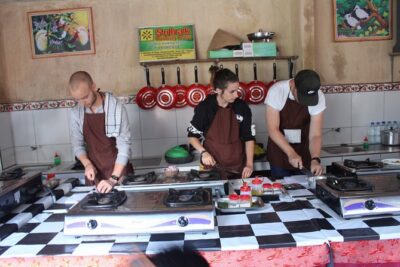
Balinese Ubud cooking school (9 Dish Cooking and Market Tour)
Read our review →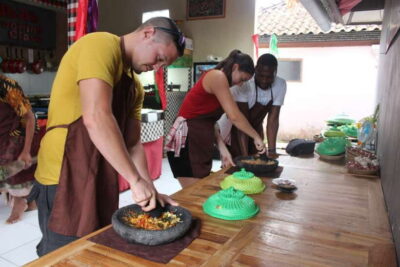
Browse the lists this tour appears in